
 German
  French
  English
  Spanish
  Hindi
Hindi  Italian
  Japanese
  Korean
  Norwegian
  Chinese
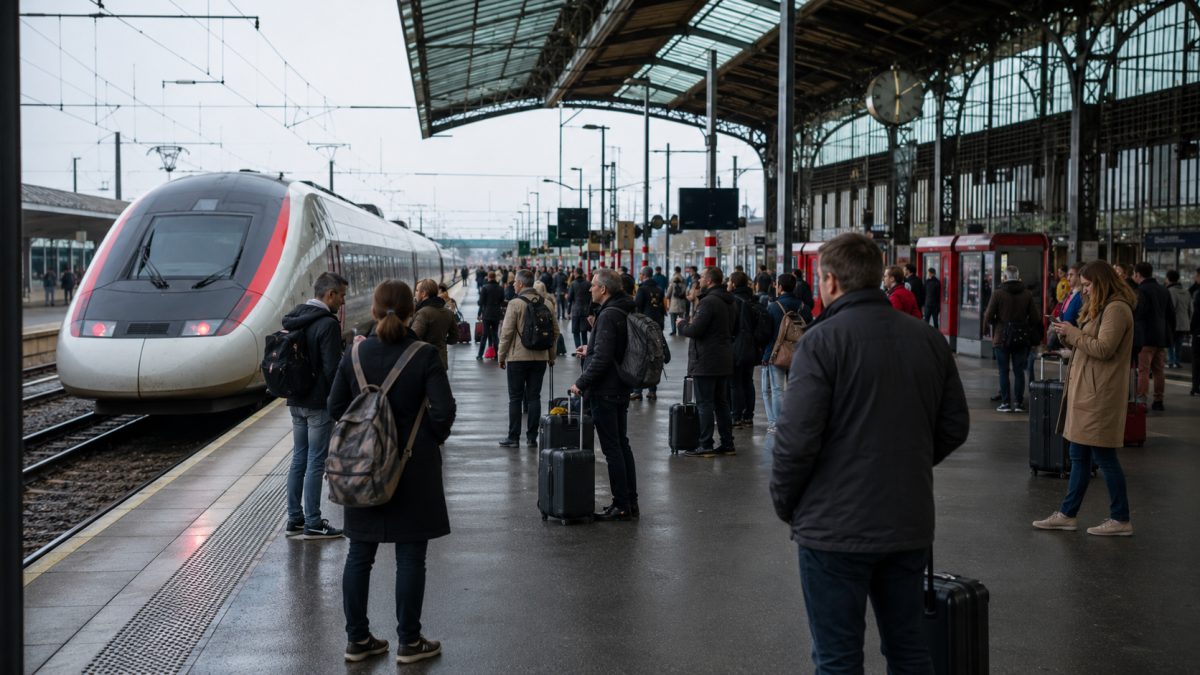
SNCF strike on June 10, 2026: disruptions and advice for travelers
This Wednesday, June 10, 2026, the SNCF is hit by a united national strike. The four main representative unions — CGT Cheminots, UNSA Ferroviaire, SUD-Rail and CFDT Cheminots — filed a joint strike notice on May 6, 2026, a rare mobilization that reflects the depth of unease within the rail company. Millions of travelers are affected by major disruptions throughout the day across the whole network: TGV, Intercités, RER, Transilien and TER.
Why are rail workers striking?
The reasons for this social movement are multiple and have been building up for several months. The unions denounce a set of tensions which, according to them, have received no satisfactory response from SNCF management.
- Internal reorganizations: rail workers oppose restructurings they consider too brutal, disrupting daily working conditions and threatening some jobs.
- Deteriorating working conditions: workload, lack of staff, constant pressure on driving and maintenance agents — the situation is considered unsustainable by staff representatives.
- Pay rises deemed insufficient: management proposes a 2.57% increase, far below union expectations given persistent inflation and the cost of living.
This union unity — relatively rare in the rail sector — underlines the scale of discontent. The four organizations are speaking with one voice to demand better working conditions and a salary revaluation worthy of rail workers' commitment.
What disruptions should be expected on lines this June 10?
The impact of the strike is considerable across the French rail network. Here is a line-by-line overview.
TGV and mainline trains
On average, one TGV in three will be canceled throughout the day. Paris-Lyon, Paris-Bordeaux, Paris-Marseille and Paris-Lille services are all affected. SNCF strongly recommends that travelers check their train status before going to the station, especially via the SNCF Connect app.
Intercités
Intercités trains are even more heavily affected, with one train in two running, including night trains connecting major French cities.
RER and Transilien in Île-de-France
The situation is particularly difficult for commuters in the Paris region. Almost all RER and Transilien lines will face major disruptions:
- RER D: between 1 train in 2 and 1 train in 5 depending on branches
- RER A, B, C, E: heavily disrupted with reduced frequencies
- Transilien (lines H, J, K, L, N, P, R, U): reduced traffic across the network
In Hauts-de-France, the situation is critical: only 1 TER in 5 will run across the region. Grand Est and Normandy are also heavily affected.
What to do if your train is canceled?
SNCF has put concrete measures in place to limit the impact on travelers. Here is what you can do.
Free exchange or refund
All customers with a ticket for June 10 can cancel or exchange it free of charge, whether or not their train is directly canceled. This measure applies to all ticket types, including promotional fares.
Postpone the trip
If your trip is not urgent, it is strongly advised to postpone it to Thursday, June 11, or the following days. Traffic should gradually return to normal from the next morning.
Alternative solutions
For unavoidable journeys, several alternatives exist:
- Carpooling: BlaBlaCar and competitors offer many routes on axes usually served by trains.
- Long-distance buses: Flixbus, BlaBlaBus and regional express coaches are economical solutions for connecting major cities.
- Remote work: if your employer allows it, it is often the least stressful solution on a strike day.
A broader social context
This SNCF strike takes place in a national context of persistent social tensions. Since the beginning of 2026, several sectors have seen strikes: teachers, hospital staff and civil servants. The transport sector is particularly mobilized, with recurring stoppages at RATP and in civil aviation.
SNCF, engaged in a deep transformation with the opening of rail competition and reorganization into separate subsidiaries, faces growing internal opposition. Rail workers fear these structural changes will lead to lasting deterioration of their social rights and working conditions.
The unions have not ruled out filing new strike notices if management does not return to the negotiating table with concrete and substantial proposals. The ball is now in SNCF management's court.
Our practical advice to get through the day
Here are a few simple recommendations to better manage this day of disruption:
- Check SNCF Connect regularly to follow your train status in real time.
- Leave earlier if you absolutely must travel by train: the few trains running will be crowded.
- Warn your employer in advance if you may be late or absent.
- Stay informed through official @SNCF accounts on social media and continuous news outlets.
- Favor off-peak hours if you must travel: early morning and late evening are generally less disrupted.
The June 10, 2026 strike once again illustrates the challenges of social dialogue in a public company undergoing transformation. For the millions of travelers who depend on trains every day, this situation is a reminder to anticipate rail transport uncertainties and always have a fallback solution.



SNCF strike on June 10, 2026: disruptions and advice for travelers
This Wednesday, June 10, 2026, the SNCF is hit by a united national strike. The four main representative unions — CGT Cheminots, UNSA Ferroviaire, SUD-Rail and CFDT Cheminots — filed a joint strike notice on May 6, 2026, a rare mobilization that reflects the depth of unease within the rail company. Millions of travelers are affected by major disruptions throughout the day across the whole network: TGV, Intercités, RER, Transilien and TER.
Why are rail workers striking?
The reasons for this social movement are multiple and have been building up for several months. The unions denounce a set of tensions which, according to them, have received no satisfactory response from SNCF management.
- Internal reorganizations: rail workers oppose restructurings they consider too brutal, disrupting daily working conditions and threatening some jobs.
- Deteriorating working conditions: workload, lack of staff, constant pressure on driving and maintenance agents — the situation is considered unsustainable by staff representatives.
- Pay rises deemed insufficient: management proposes a 2.57% increase, far below union expectations given persistent inflation and the cost of living.
This union unity — relatively rare in the rail sector — underlines the scale of discontent. The four organizations are speaking with one voice to demand better working conditions and a salary revaluation worthy of rail workers' commitment.
What disruptions should be expected on lines this June 10?
The impact of the strike is considerable across the French rail network. Here is a line-by-line overview.
TGV and mainline trains
On average, one TGV in three will be canceled throughout the day. Paris-Lyon, Paris-Bordeaux, Paris-Marseille and Paris-Lille services are all affected. SNCF strongly recommends that travelers check their train status before going to the station, especially via the SNCF Connect app.
Intercités
Intercités trains are even more heavily affected, with one train in two running, including night trains connecting major French cities.
RER and Transilien in Île-de-France
The situation is particularly difficult for commuters in the Paris region. Almost all RER and Transilien lines will face major disruptions:
- RER D: between 1 train in 2 and 1 train in 5 depending on branches
- RER A, B, C, E: heavily disrupted with reduced frequencies
- Transilien (lines H, J, K, L, N, P, R, U): reduced traffic across the network
In Hauts-de-France, the situation is critical: only 1 TER in 5 will run across the region. Grand Est and Normandy are also heavily affected.
What to do if your train is canceled?
SNCF has put concrete measures in place to limit the impact on travelers. Here is what you can do.
Free exchange or refund
All customers with a ticket for June 10 can cancel or exchange it free of charge, whether or not their train is directly canceled. This measure applies to all ticket types, including promotional fares.
Postpone the trip
If your trip is not urgent, it is strongly advised to postpone it to Thursday, June 11, or the following days. Traffic should gradually return to normal from the next morning.
Alternative solutions
For unavoidable journeys, several alternatives exist:
- Carpooling: BlaBlaCar and competitors offer many routes on axes usually served by trains.
- Long-distance buses: Flixbus, BlaBlaBus and regional express coaches are economical solutions for connecting major cities.
- Remote work: if your employer allows it, it is often the least stressful solution on a strike day.
A broader social context
This SNCF strike takes place in a national context of persistent social tensions. Since the beginning of 2026, several sectors have seen strikes: teachers, hospital staff and civil servants. The transport sector is particularly mobilized, with recurring stoppages at RATP and in civil aviation.
SNCF, engaged in a deep transformation with the opening of rail competition and reorganization into separate subsidiaries, faces growing internal opposition. Rail workers fear these structural changes will lead to lasting deterioration of their social rights and working conditions.
The unions have not ruled out filing new strike notices if management does not return to the negotiating table with concrete and substantial proposals. The ball is now in SNCF management's court.
Our practical advice to get through the day
Here are a few simple recommendations to better manage this day of disruption:
- Check SNCF Connect regularly to follow your train status in real time.
- Leave earlier if you absolutely must travel by train: the few trains running will be crowded.
- Warn your employer in advance if you may be late or absent.
- Stay informed through official @SNCF accounts on social media and continuous news outlets.
- Favor off-peak hours if you must travel: early morning and late evening are generally less disrupted.
The June 10, 2026 strike once again illustrates the challenges of social dialogue in a public company undergoing transformation. For the millions of travelers who depend on trains every day, this situation is a reminder to anticipate rail transport uncertainties and always have a fallback solution.
SNCF strike on June 10, 2026: disruptions and advice for travelers
This Wednesday, June 10, 2026, the SNCF is hit by a united national strike. The four main representative unions — CGT Cheminots, UNSA Ferroviaire, SUD-Rail and CFDT Cheminots — filed a joint strike notice on May 6, 2026, a rare mobilization that reflects the depth of unease within the rail company. Millions of travelers are affected by major disruptions throughout the day across the whole network: TGV, Intercités, RER, Transilien and TER.
Why are rail workers striking?
The reasons for this social movement are multiple and have been building up for several months. The unions denounce a set of tensions which, according to them, have received no satisfactory response from SNCF management.
- Internal reorganizations: rail workers oppose restructurings they consider too brutal, disrupting daily working conditions and threatening some jobs.
- Deteriorating working conditions: workload, lack of staff, constant pressure on driving and maintenance agents — the situation is considered unsustainable by staff representatives.
- Pay rises deemed insufficient: management proposes a 2.57% increase, far below union expectations given persistent inflation and the cost of living.
This union unity — relatively rare in the rail sector — underlines the scale of discontent. The four organizations are speaking with one voice to demand better working conditions and a salary revaluation worthy of rail workers' commitment.
What disruptions should be expected on lines this June 10?
The impact of the strike is considerable across the French rail network. Here is a line-by-line overview.
TGV and mainline trains
On average, one TGV in three will be canceled throughout the day. Paris-Lyon, Paris-Bordeaux, Paris-Marseille and Paris-Lille services are all affected. SNCF strongly recommends that travelers check their train status before going to the station, especially via the SNCF Connect app.
Intercités
Intercités trains are even more heavily affected, with one train in two running, including night trains connecting major French cities.
RER and Transilien in Île-de-France
The situation is particularly difficult for commuters in the Paris region. Almost all RER and Transilien lines will face major disruptions:
- RER D: between 1 train in 2 and 1 train in 5 depending on branches
- RER A, B, C, E: heavily disrupted with reduced frequencies
- Transilien (lines H, J, K, L, N, P, R, U): reduced traffic across the network
In Hauts-de-France, the situation is critical: only 1 TER in 5 will run across the region. Grand Est and Normandy are also heavily affected.
What to do if your train is canceled?
SNCF has put concrete measures in place to limit the impact on travelers. Here is what you can do.
Free exchange or refund
All customers with a ticket for June 10 can cancel or exchange it free of charge, whether or not their train is directly canceled. This measure applies to all ticket types, including promotional fares.
Postpone the trip
If your trip is not urgent, it is strongly advised to postpone it to Thursday, June 11, or the following days. Traffic should gradually return to normal from the next morning.
Alternative solutions
For unavoidable journeys, several alternatives exist:
- Carpooling: BlaBlaCar and competitors offer many routes on axes usually served by trains.
- Long-distance buses: Flixbus, BlaBlaBus and regional express coaches are economical solutions for connecting major cities.
- Remote work: if your employer allows it, it is often the least stressful solution on a strike day.
A broader social context
This SNCF strike takes place in a national context of persistent social tensions. Since the beginning of 2026, several sectors have seen strikes: teachers, hospital staff and civil servants. The transport sector is particularly mobilized, with recurring stoppages at RATP and in civil aviation.
SNCF, engaged in a deep transformation with the opening of rail competition and reorganization into separate subsidiaries, faces growing internal opposition. Rail workers fear these structural changes will lead to lasting deterioration of their social rights and working conditions.
The unions have not ruled out filing new strike notices if management does not return to the negotiating table with concrete and substantial proposals. The ball is now in SNCF management's court.
Our practical advice to get through the day
Here are a few simple recommendations to better manage this day of disruption:
- Check SNCF Connect regularly to follow your train status in real time.
- Leave earlier if you absolutely must travel by train: the few trains running will be crowded.
- Warn your employer in advance if you may be late or absent.
- Stay informed through official @SNCF accounts on social media and continuous news outlets.
- Favor off-peak hours if you must travel: early morning and late evening are generally less disrupted.
The June 10, 2026 strike once again illustrates the challenges of social dialogue in a public company undergoing transformation. For the millions of travelers who depend on trains every day, this situation is a reminder to anticipate rail transport uncertainties and always have a fallback solution.