 English
  French
  German
  Spanish
  Hindi
Hindi  Italian
  Japanese
  Korean
  Norwegian
  Chinese
African herbaria: plant archives that remain underused
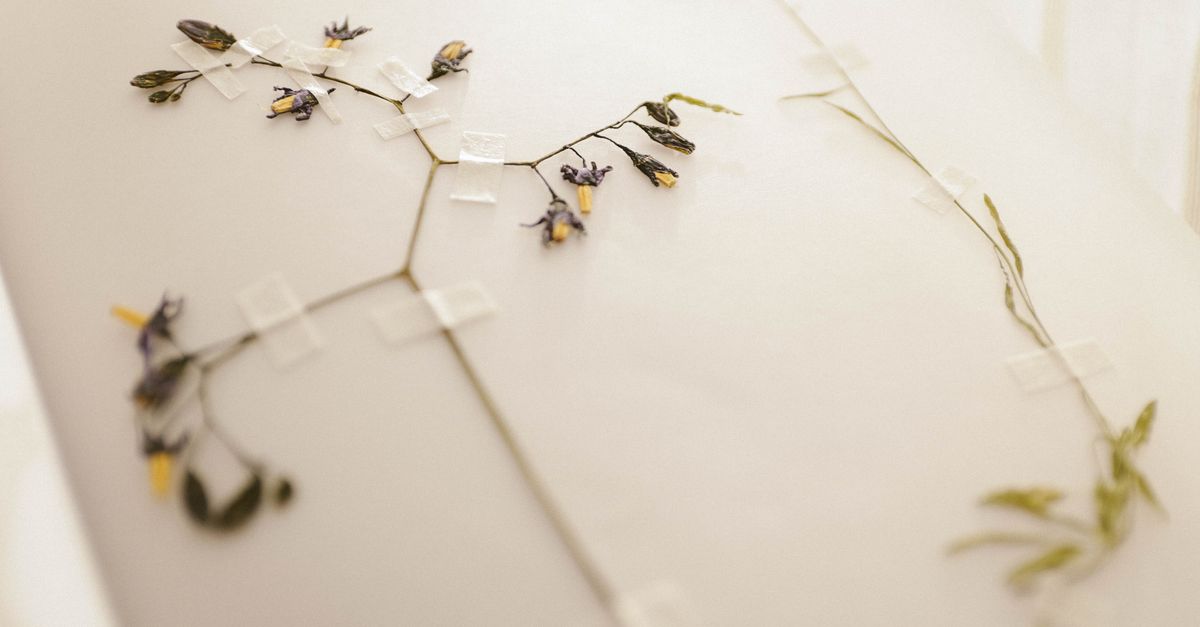
A dried plant seems silent. Mounted on a sheet of cardboard and flattened for decades or centuries, it can appear to belong more to heritage than to active science. Yet that is a mistake of perspective. A herbarium is not merely a museum of plants: it is a material archive of living organisms, tied to a species identity, a date and a collection site. Taken together, these specimens tell us where plants grew and how ecosystems have changed over time.
In South Africa, the scale is staggering: 66 herbaria hold around 3.2 million specimens representing some 21,600 species. Some reach far back into the past; at the National Herbarium in Pretoria, one specimen dates from the early 1800s. This means that part of the plant landscape from two centuries ago still physically exists, stored in scientific collections.
A time machine… but with very real limitations
Today’s fascination with herbaria partly comes from a powerful idea: an old plant may contain far more than its label reveals. DNA, precision imaging, chemical signatures, traces of pollution and clues about past climates immediately come to mind. These avenues are scientifically plausible in principle, but rigor matters: the information available here does not document these techniques or their results. It therefore does not support claims that the cited specimens have already been used to reconstruct epidemics, pollution levels or climate parameters.
What can be stated is already substantial. Each specimen links a plant to a place and a period in time. This apparently simple pairing is what turns a botanical collection into a historical series. When the same area is represented at different dates, scientists have concrete evidence about the presence or absence of species and about how ecosystems have evolved.
In my view, this is precisely what makes herbaria so distinctive: their value does not come only from what could be measured at the time of collection. It also comes from the fact that the material still exists. A leaf collected one hundred and fifty years ago can now be examined using questions the collector never imagined. The future potential of an archive therefore depends first on its preservation, and then on its ability to be found.
The real problem: science locked away in drawers
This is where Africa faces an urgency that is less spectacular than the disappearance of a forest, but just as decisive: a large share of these collections remains insufficiently digitized, indexed or accessible online. For many researchers and public officials, the information is therefore literally invisible, because specimen sheets must be consulted one by one and often require travel to the institution that stores them.
Digitization completely changes this situation. It allows information to be shared among researchers, institutions and decision-makers, reduces costs related to travel and physical loans, and protects specimens by limiting handling. It can also help assess species decline, plan protected areas, process environmental permits or improve the management of invasive species.
The issue is not limited to South Africa either. Recent work also focuses on collections from South Africa and the island states of the western Indian Ocean: Réunion, Madagascar, Mauritius, Mayotte, the Comoros and the Seychelles. South African collections also contain specimens from other African countries. This reinforces an obvious point: a herbarium is not merely a local archive. It forms a network of scattered traces, sometimes far from the place where the plant was collected.
Digitize before the living world changes faster than the archives
The urgency comes from a troubling mismatch. Ecosystems continue to transform while millions of historical records remain difficult to consult. Yet a botanical archive reaches its greatest scientific value only when it can be cross-referenced with other observations, compared over time and mobilized quickly for conservation or public decision-making.
In other words, a well-preserved plant that cannot be found in information systems is almost a dormant archive. It exists, but its use remains constrained by time, travel, staff availability and the fragility of the physical document. By contrast, a digitized collection can be consulted remotely, compared with other holdings and integrated into collaborative research.
It is also important to resist an overly technical view of digitization. Scanning a specimen sheet is not an end in itself. The information must be indexed, the image linked to the species, date and collection site, and the whole dataset made genuinely usable. The difference between a photo stored somewhere and a usable scientific archive lies precisely in this structuring.
Global access, local control: the question digitization cannot solve on its own
Another question arises as soon as African collections are made accessible worldwide: who controls the data, their uses and the scientific benefits that result? The available information does not explicitly discuss this dimension of sovereignty or the risk of reproducing a logic of appropriation inherited from colonial history. It would therefore be misleading to present established rules or a consensus that are not documented.
But the issue deserves to be raised. Making a collection accessible does not necessarily mean losing control over it; everything depends on governance rules, the institutions hosting the data, usage rights and the place given to researchers and decision-makers in the countries concerned. Digitization can become a tool of scientific empowerment if it strengthens local capacities. It can also create a new asymmetry if global access mainly benefits those who already have the strongest analytical resources.
The right question is therefore not “should we open or close?”, but rather: how can we open without dispossessing? African herbaria have global value, but they are also part of the natural and scientific heritage of the territories whose plant history they document.
Old collections, a very current urgency
The paradox is striking: we already possess some of the data that science and conservation need, yet it is still locked away in boxes and cabinets. Each sheet tells a fragment of a territory, a species present at a given date, a past state of the living world. At the scale of millions of specimens, these fragments become an infrastructure of knowledge.
We can imagine what new analytical methods may one day extract from these dried plants. But even before those promises, a more urgent task stands out: bringing these archives out of invisibility, digitizing them, indexing them, preserving them and organizing access to them fairly. The scientific future of herbaria may depend less on spectacular technology than on patient work in preservation, documentation and governance.