 German
  French
  English
  Spanish
  Chinese
  Japanese
  Korean
  Hindi
Hindi  Norwegian
G7 in Évian: Macron and Trump meet in a world in crisis
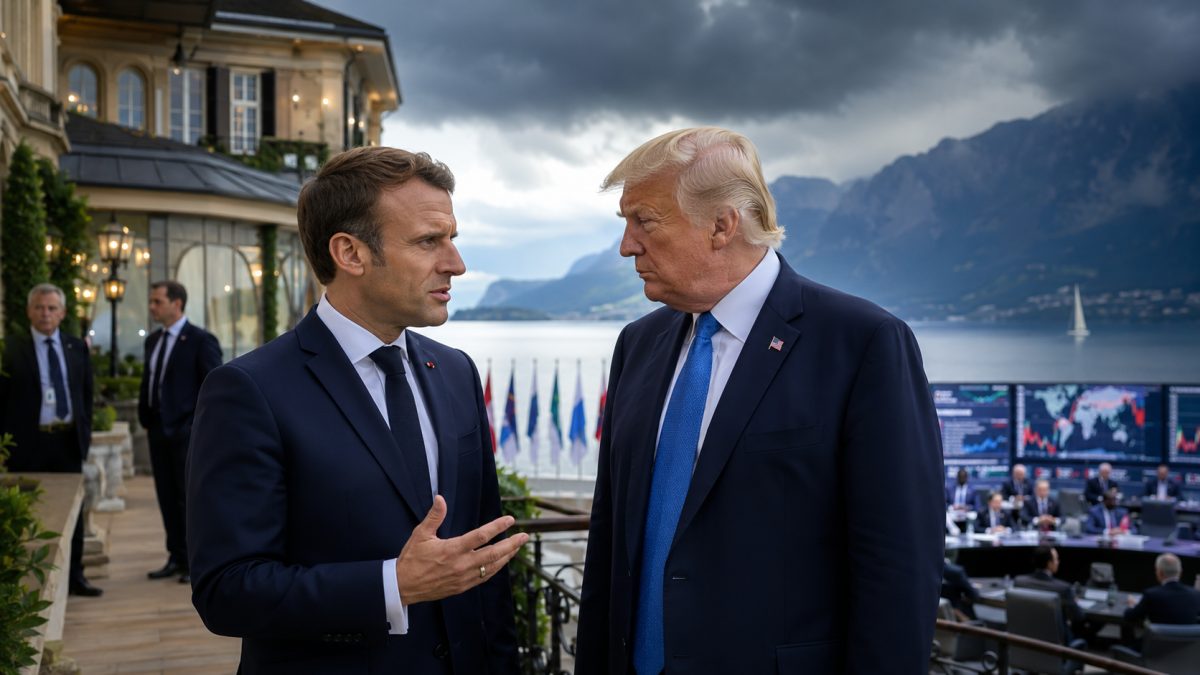
From June 15 to 17, 2026, the spa town of Évian-les-Bains, on the shores of Lake Geneva, is hosting the 52nd G7 summit. France, which holds this year’s rotating presidency, has set the bar high: in a geopolitical context strained by the conflicts in Iran and Ukraine, the meeting of the world’s seven most industrialized countries is expected to be crucial. Donald Trump, newly arrived after his 80th birthday, and Emmanuel Macron, the attentive host, are opening talks that could reshape the world order.
A historic agreement between Iran and the United States
On the eve of the summit, Sunday, June 14, Donald Trump announced the conclusion of a preliminary agreement aimed at ending the war between the United States and Iran. The announcement immediately changed the atmosphere of the G7. Emmanuel Macron welcomed “a very important step for peace throughout the world”, while stressing that many questions remain open.
Among the most sensitive issues are the future of Iran’s nuclear program, the unfreezing of Iranian assets blocked for years, and above all the demining of the Strait of Hormuz. This strategic passage, through which a large share of the world’s oil passes, had been mined during the conflict, triggering an unprecedented international energy crisis. France and the United Kingdom have already expressed their willingness to take part in demining operations once the truce is confirmed.
For Trump, who is attending the G7 in person for the fifth time, this agreement represents an opportunity to turn the page on a costly conflict. “This is a chance for the United States to redefine its relationship with a long-standing adversary,” the American president’s entourage said in Évian.
Ukraine and the question of peace in Europe
Iran is not the only crisis on the negotiating table. The conflict in Ukraine, now entering its fourth year, weighs heavily on the G7 agenda. European leaders — with Macron in the lead — hope to obtain additional guarantees from Trump for military and economic support for Kyiv. Ukrainian President Volodymyr Zelensky is expected to speak on the sidelines of the summit to argue for an intensification of Western aid.
The American position remains nuanced. While the Trump administration has maintained a certain level of support for Ukraine, domestic pressure and the focus on the Iranian file have somewhat pushed Kyiv into the background. Europe, and particularly France and Germany, are seeking to put the Ukrainian question back at the heart of the international debate.
An ambitious agenda: governance, AI and child protection
Beyond geopolitical emergencies, the French G7 presidency wanted to make its mark by placing several structural issues on the agenda:
- Reducing global imbalances: the widening gaps between developed and developing countries, particularly in access to technology, are a priority focus of the French presidency.
- Regulating artificial intelligence: G7 leaders are due to discuss a common framework for overseeing the development of AI, especially the most advanced models, which raise unprecedented ethical and security questions.
- Protecting children online: faced with the rise of dangerous content on social networks, the Seven are committing to strengthen their cooperation to protect minors in the digital world.
- Fighting transnational organized crime: drug trafficking, human trafficking and cyberattacks are at the heart of the security discussions.
Macron, master of ceremonies in an enchanting setting
The choice of Évian-les-Bains is no accident. The town, famous for its mineral water and Alpine landscapes, offers a setting that is both secure and symbolic. In 2003, a previous G8 summit had already been held there, during a period of comparable international tensions. Macron wanted to reconnect with this place steeped in diplomatic history.
The leaders’ welcome began with a working dinner on Monday evening. Around the table were representatives of the United Kingdom, Germany, Italy, Canada, Japan, the United States and, of course, France. The European Union is also represented. Security is at its highest level: thousands of police officers and gendarmes have been mobilized throughout the Lake Geneva region, following demonstrations in Geneva that degenerated on the eve of the summit.
Tensions in Geneva, a mirror of global fractures
Because while Évian is intended to be a space for calm dialogue, the reality of the world has reminded the organizers of itself. In Geneva, on the other side of Lake Geneva, anti-G7 protesters set a vehicle on fire and smashed windows in the offices of a UN agency. Security forces used tear gas to disperse the crowd.
These incidents reflect the growing mistrust of part of the world’s population toward the traditional institutions of multilateralism. For many, the G7 embodies a “club of the rich” disconnected from the daily realities of billions of people. Macron is trying to counter that criticism by inviting several countries from the Global South on the sidelines of the official discussions.
What to expect from Évian 2026
G7 summits do not always produce immediate tangible results. But they serve as a barometer of the state of international relations. In 2026, the stakes are particularly high:
If the Iran-USA agreement holds, the entire geopolitics of the Middle East could be reshaped. If the G7 manages to agree on a common AI framework, it will be a world first. And if Macron succeeds in maintaining the group’s unity despite disagreements with Trump on trade and climate, he will have met a major diplomatic challenge.
The summit is scheduled to close on Wednesday, June 17. The final communiqués should provide a clearer idea of the commitments made. But until then, behind closed doors, in the hushed rooms of Évian, part of the world’s future is being decided.



G7 in Évian: Macron and Trump meet in a world in crisis
From June 15 to 17, 2026, the spa town of Évian-les-Bains, on the shores of Lake Geneva, is hosting the 52nd G7 summit. France, which holds this year’s rotating presidency, has set the bar high: in a geopolitical context strained by the conflicts in Iran and Ukraine, the meeting of the world’s seven most industrialized countries is expected to be crucial. Donald Trump, newly arrived after his 80th birthday, and Emmanuel Macron, the attentive host, are opening talks that could reshape the world order.
A historic agreement between Iran and the United States
On the eve of the summit, Sunday, June 14, Donald Trump announced the conclusion of a preliminary agreement aimed at ending the war between the United States and Iran. The announcement immediately changed the atmosphere of the G7. Emmanuel Macron welcomed “a very important step for peace throughout the world”, while stressing that many questions remain open.
Among the most sensitive issues are the future of Iran’s nuclear program, the unfreezing of Iranian assets blocked for years, and above all the demining of the Strait of Hormuz. This strategic passage, through which a large share of the world’s oil passes, had been mined during the conflict, triggering an unprecedented international energy crisis. France and the United Kingdom have already expressed their willingness to take part in demining operations once the truce is confirmed.
For Trump, who is attending the G7 in person for the fifth time, this agreement represents an opportunity to turn the page on a costly conflict. “This is a chance for the United States to redefine its relationship with a long-standing adversary,” the American president’s entourage said in Évian.
Ukraine and the question of peace in Europe
Iran is not the only crisis on the negotiating table. The conflict in Ukraine, now entering its fourth year, weighs heavily on the G7 agenda. European leaders — with Macron in the lead — hope to obtain additional guarantees from Trump for military and economic support for Kyiv. Ukrainian President Volodymyr Zelensky is expected to speak on the sidelines of the summit to argue for an intensification of Western aid.
The American position remains nuanced. While the Trump administration has maintained a certain level of support for Ukraine, domestic pressure and the focus on the Iranian file have somewhat pushed Kyiv into the background. Europe, and particularly France and Germany, are seeking to put the Ukrainian question back at the heart of the international debate.
An ambitious agenda: governance, AI and child protection
Beyond geopolitical emergencies, the French G7 presidency wanted to make its mark by placing several structural issues on the agenda:
- Reducing global imbalances: the widening gaps between developed and developing countries, particularly in access to technology, are a priority focus of the French presidency.
- Regulating artificial intelligence: G7 leaders are due to discuss a common framework for overseeing the development of AI, especially the most advanced models, which raise unprecedented ethical and security questions.
- Protecting children online: faced with the rise of dangerous content on social networks, the Seven are committing to strengthen their cooperation to protect minors in the digital world.
- Fighting transnational organized crime: drug trafficking, human trafficking and cyberattacks are at the heart of the security discussions.
Macron, master of ceremonies in an enchanting setting
The choice of Évian-les-Bains is no accident. The town, famous for its mineral water and Alpine landscapes, offers a setting that is both secure and symbolic. In 2003, a previous G8 summit had already been held there, during a period of comparable international tensions. Macron wanted to reconnect with this place steeped in diplomatic history.
The leaders’ welcome began with a working dinner on Monday evening. Around the table were representatives of the United Kingdom, Germany, Italy, Canada, Japan, the United States and, of course, France. The European Union is also represented. Security is at its highest level: thousands of police officers and gendarmes have been mobilized throughout the Lake Geneva region, following demonstrations in Geneva that degenerated on the eve of the summit.
Tensions in Geneva, a mirror of global fractures
Because while Évian is intended to be a space for calm dialogue, the reality of the world has reminded the organizers of itself. In Geneva, on the other side of Lake Geneva, anti-G7 protesters set a vehicle on fire and smashed windows in the offices of a UN agency. Security forces used tear gas to disperse the crowd.
These incidents reflect the growing mistrust of part of the world’s population toward the traditional institutions of multilateralism. For many, the G7 embodies a “club of the rich” disconnected from the daily realities of billions of people. Macron is trying to counter that criticism by inviting several countries from the Global South on the sidelines of the official discussions.
What to expect from Évian 2026
G7 summits do not always produce immediate tangible results. But they serve as a barometer of the state of international relations. In 2026, the stakes are particularly high:
If the Iran-USA agreement holds, the entire geopolitics of the Middle East could be reshaped. If the G7 manages to agree on a common AI framework, it will be a world first. And if Macron succeeds in maintaining the group’s unity despite disagreements with Trump on trade and climate, he will have met a major diplomatic challenge.
The summit is scheduled to close on Wednesday, June 17. The final communiqués should provide a clearer idea of the commitments made. But until then, behind closed doors, in the hushed rooms of Évian, part of the world’s future is being decided.
G7 in Évian: Macron and Trump meet in a world in crisis
From June 15 to 17, 2026, the spa town of Évian-les-Bains, on the shores of Lake Geneva, is hosting the 52nd G7 summit. France, which holds this year’s rotating presidency, has set the bar high: in a geopolitical context strained by the conflicts in Iran and Ukraine, the meeting of the world’s seven most industrialized countries is expected to be crucial. Donald Trump, newly arrived after his 80th birthday, and Emmanuel Macron, the attentive host, are opening talks that could reshape the world order.
A historic agreement between Iran and the United States
On the eve of the summit, Sunday, June 14, Donald Trump announced the conclusion of a preliminary agreement aimed at ending the war between the United States and Iran. The announcement immediately changed the atmosphere of the G7. Emmanuel Macron welcomed “a very important step for peace throughout the world”, while stressing that many questions remain open.
Among the most sensitive issues are the future of Iran’s nuclear program, the unfreezing of Iranian assets blocked for years, and above all the demining of the Strait of Hormuz. This strategic passage, through which a large share of the world’s oil passes, had been mined during the conflict, triggering an unprecedented international energy crisis. France and the United Kingdom have already expressed their willingness to take part in demining operations once the truce is confirmed.
For Trump, who is attending the G7 in person for the fifth time, this agreement represents an opportunity to turn the page on a costly conflict. “This is a chance for the United States to redefine its relationship with a long-standing adversary,” the American president’s entourage said in Évian.
Ukraine and the question of peace in Europe
Iran is not the only crisis on the negotiating table. The conflict in Ukraine, now entering its fourth year, weighs heavily on the G7 agenda. European leaders — with Macron in the lead — hope to obtain additional guarantees from Trump for military and economic support for Kyiv. Ukrainian President Volodymyr Zelensky is expected to speak on the sidelines of the summit to argue for an intensification of Western aid.
The American position remains nuanced. While the Trump administration has maintained a certain level of support for Ukraine, domestic pressure and the focus on the Iranian file have somewhat pushed Kyiv into the background. Europe, and particularly France and Germany, are seeking to put the Ukrainian question back at the heart of the international debate.
An ambitious agenda: governance, AI and child protection
Beyond geopolitical emergencies, the French G7 presidency wanted to make its mark by placing several structural issues on the agenda:
- Reducing global imbalances: the widening gaps between developed and developing countries, particularly in access to technology, are a priority focus of the French presidency.
- Regulating artificial intelligence: G7 leaders are due to discuss a common framework for overseeing the development of AI, especially the most advanced models, which raise unprecedented ethical and security questions.
- Protecting children online: faced with the rise of dangerous content on social networks, the Seven are committing to strengthen their cooperation to protect minors in the digital world.
- Fighting transnational organized crime: drug trafficking, human trafficking and cyberattacks are at the heart of the security discussions.
Macron, master of ceremonies in an enchanting setting
The choice of Évian-les-Bains is no accident. The town, famous for its mineral water and Alpine landscapes, offers a setting that is both secure and symbolic. In 2003, a previous G8 summit had already been held there, during a period of comparable international tensions. Macron wanted to reconnect with this place steeped in diplomatic history.
The leaders’ welcome began with a working dinner on Monday evening. Around the table were representatives of the United Kingdom, Germany, Italy, Canada, Japan, the United States and, of course, France. The European Union is also represented. Security is at its highest level: thousands of police officers and gendarmes have been mobilized throughout the Lake Geneva region, following demonstrations in Geneva that degenerated on the eve of the summit.
Tensions in Geneva, a mirror of global fractures
Because while Évian is intended to be a space for calm dialogue, the reality of the world has reminded the organizers of itself. In Geneva, on the other side of Lake Geneva, anti-G7 protesters set a vehicle on fire and smashed windows in the offices of a UN agency. Security forces used tear gas to disperse the crowd.
These incidents reflect the growing mistrust of part of the world’s population toward the traditional institutions of multilateralism. For many, the G7 embodies a “club of the rich” disconnected from the daily realities of billions of people. Macron is trying to counter that criticism by inviting several countries from the Global South on the sidelines of the official discussions.
What to expect from Évian 2026
G7 summits do not always produce immediate tangible results. But they serve as a barometer of the state of international relations. In 2026, the stakes are particularly high:
If the Iran-USA agreement holds, the entire geopolitics of the Middle East could be reshaped. If the G7 manages to agree on a common AI framework, it will be a world first. And if Macron succeeds in maintaining the group’s unity despite disagreements with Trump on trade and climate, he will have met a major diplomatic challenge.
The summit is scheduled to close on Wednesday, June 17. The final communiqués should provide a clearer idea of the commitments made. But until then, behind closed doors, in the hushed rooms of Évian, part of the world’s future is being decided.