
Proprioception: the sense you use without ever seeing it
Try something. Close your eyes. Slowly raise your right hand and touch the tip of your nose. Without hesitating, you have just performed a movement involving dozens of muscles, millimetre-precise coordination, and constant awareness of exactly where every part of your body is in space — without looking even once.
That is proprioception. The sixth sense no one ever taught you about, that you have never consciously noticed, yet use every second of your waking life.
A sense with no visible organ
At school, we are taught that there are five senses: sight, hearing, smell, taste, and touch. This list, inherited from Aristotle, is so deeply rooted that it feels like a natural truth. Yet it is incomplete.
In 1906, British physiologist Charles Scott Sherrington — who would receive the Nobel Prize in Physiology in 1932 — published his work on the nervous system and coined a new term: proprioception. The word comes from the Latin proprius (one's own) and capio (to grasp, to perceive). Literally: the perception of oneself.
Sherrington distinguished three broad categories of senses: exteroceptive senses (what comes from the outside world — sight, hearing, surface touch), interoceptive senses (internal sensations — hunger, visceral pain), and proprioceptive senses — the perception of the position, movement, and muscular effort of our own body.
What makes this sense so unusual is that it has no visible organ. No eyes, no ears, no taste buds. It is distributed throughout the body: in the muscle spindles (receptors wrapped around muscle fibres), the Golgi tendon organs (which measure the tension placed on tendons), and the joint receptors housed in the capsules of our joints.
These thousands of tiny sensors continuously send information to the brain: Where is the knee? At what angle is the elbow bent? How much effort are the back muscles exerting right now? The brain processes all of this in real time, without you having to think about it.
Ian Waterman, or living without this sense
To understand just how fundamental proprioception is, we need to meet Ian Waterman. In 1971, at the age of 19, this Englishman came down with an ordinary fever. A few days later, he woke in a terrifying state: he could no longer move.
The doctors were baffled. His muscles worked. His legs were not paralysed. But the moment he closed his eyes, he collapsed. His body no longer knew where it was in space.
The diagnosis came later: a severe sensory neuropathy, probably autoimmune in origin. The disease had destroyed the nerve fibres responsible for proprioception and light touch, from his neck down to his feet. Ian's vision was intact, and so were his muscles — but the link between his brain and the position of his body had been severed.
What Ian Waterman achieved next was truly extraordinary. Over seventeen months of relentless rehabilitation, he relearned how to walk and move — by watching every part of his body. Constantly. To sit down, he has to watch his legs. To reach for a glass, he must follow his arm with his eyes. In complete darkness, he remains motionless — not because of fear, but because movement is physically impossible.
Ian Waterman worked for decades as a civil servant, drove a car, and led an independent life. His case, documented in neurologist Jonathan Cole's book Pride and a Daily Marathon, became one of the most important studies in the neuroscience of movement. It illustrates a truth we often forget: we do not control our bodies through willpower alone. We control them because they are constantly talking to us.
Why your body escapes your control when you drink
If you have ever been slightly tipsy, you know the feeling: the ground seems unstable, your gait goes awry, and your movements become imprecise. The reason is not only that alcohol slows the brain. Alcohol directly disrupts the cerebellum, the brain structure that integrates proprioceptive information to coordinate movement.
That is why law enforcement officers give suspected drunk drivers proprioceptive tests: walking heel-to-toe in a straight line, touching the nose with the eyes closed, standing on one leg. These tasks do not test strength or reasoning — they test the quality of proprioceptive feedback, which alcohol measurably degrades long before a person actually feels drunk.
It can be trained — and that is crucial
What is fascinating about proprioception is that it can be trained. Elite athletes know this well: balancing on unstable platforms, exercising blindfolded, training barefoot on uneven surfaces — all of these practices are designed to refine proprioceptive circuits.
In sport and physiotherapy, proprioceptive rehabilitation has become a cornerstone of care after an ankle sprain, ligament tear, or knee operation. It is not only a matter of muscle strength: after a joint injury, proprioceptive receptors are often damaged. The body partly loses its local awareness — which explains why sprains recur so often. Mobility returns, but deep sensation does not always come back with it.
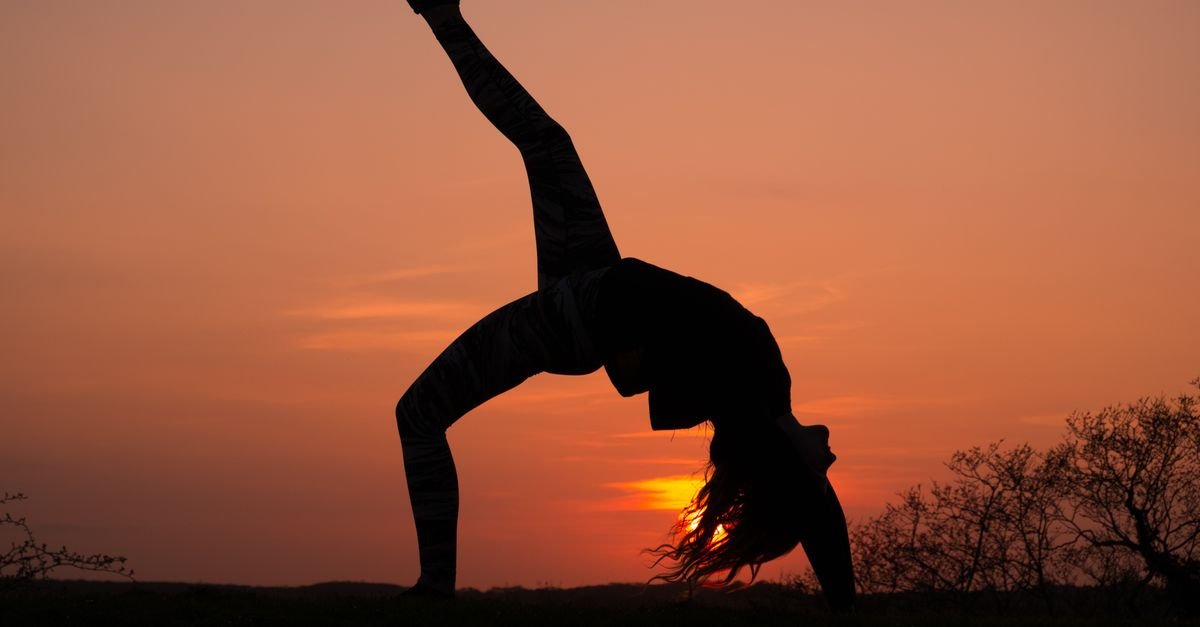
Practices such as yoga, tai chi, and classical dance are also, fundamentally, forms of proprioceptive training. They demand fine bodily awareness, attention to the exact position of each limb, and balance in unfamiliar postures.
The sense that fades in the dark
There is a simple experiment you can try tonight. Stand with your feet together and close your eyes. Most people begin to sway slightly — that is normal. The brain loses its visual input and must rely entirely on proprioceptive and vestibular signals to maintain balance.
Now imagine that proprioception is absent. That is exactly what older people experience as proprioceptive sensitivity declines — a major source of falls. After the age of 65, the quality and speed of proprioceptive signals naturally decrease. The body becomes less reliable in darkness, on uneven ground, and in situations requiring rapid adjustments of balance.
Proprioception is the silent, perpetual dialogue the body carries on with itself — the most intimate conversation there is, and one we never hear directly.
A sense that defines us
Philosophy long treated the body as a mere vehicle for the mind — a machine driven from within. Modern neuroscience shows us something else: the body is not merely driven; it participates. Our awareness of ourselves is partly built from this constant flow of proprioceptive signals.
Some researchers in neurophenomenology — particularly those following the tradition of Maurice Merleau-Ponty — argue that proprioception is one of the foundations of what might be called the sense of the embodied self: the feeling not of having a body, but of being a body.
We do not need to name it to benefit from it. Proprioception works in the shadows like an invisible conductor. But the next time you pick up a cup without looking, walk down stairs while reading your phone, or turn over in bed without even waking up — take a moment to notice this quiet miracle: your body knows exactly where it is, and keeps you informed without ever disturbing you.
Proprioception: the sense you use without ever seeing it
Try something. Close your eyes. Slowly raise your right hand and touch the tip of your nose. Without hesitating, you have just performed a movement involving dozens of muscles, millimetre-precise coordination, and constant awareness of exactly where every part of your body is in space — without looking even once.
That is proprioception. The sixth sense no one ever taught you about, that you have never consciously noticed, yet use every second of your waking life.
A sense with no visible organ
At school, we are taught that there are five senses: sight, hearing, smell, taste, and touch. This list, inherited from Aristotle, is so deeply rooted that it feels like a natural truth. Yet it is incomplete.
In 1906, British physiologist Charles Scott Sherrington — who would receive the Nobel Prize in Physiology in 1932 — published his work on the nervous system and coined a new term: proprioception. The word comes from the Latin proprius (one's own) and capio (to grasp, to perceive). Literally: the perception of oneself.
Sherrington distinguished three broad categories of senses: exteroceptive senses (what comes from the outside world — sight, hearing, surface touch), interoceptive senses (internal sensations — hunger, visceral pain), and proprioceptive senses — the perception of the position, movement, and muscular effort of our own body.
What makes this sense so unusual is that it has no visible organ. No eyes, no ears, no taste buds. It is distributed throughout the body: in the muscle spindles (receptors wrapped around muscle fibres), the Golgi tendon organs (which measure the tension placed on tendons), and the joint receptors housed in the capsules of our joints.
These thousands of tiny sensors continuously send information to the brain: Where is the knee? At what angle is the elbow bent? How much effort are the back muscles exerting right now? The brain processes all of this in real time, without you having to think about it.
Ian Waterman, or living without this sense
To understand just how fundamental proprioception is, we need to meet Ian Waterman. In 1971, at the age of 19, this Englishman came down with an ordinary fever. A few days later, he woke in a terrifying state: he could no longer move.
The doctors were baffled. His muscles worked. His legs were not paralysed. But the moment he closed his eyes, he collapsed. His body no longer knew where it was in space.
The diagnosis came later: a severe sensory neuropathy, probably autoimmune in origin. The disease had destroyed the nerve fibres responsible for proprioception and light touch, from his neck down to his feet. Ian's vision was intact, and so were his muscles — but the link between his brain and the position of his body had been severed.
What Ian Waterman achieved next was truly extraordinary. Over seventeen months of relentless rehabilitation, he relearned how to walk and move — by watching every part of his body. Constantly. To sit down, he has to watch his legs. To reach for a glass, he must follow his arm with his eyes. In complete darkness, he remains motionless — not because of fear, but because movement is physically impossible.
Ian Waterman worked for decades as a civil servant, drove a car, and led an independent life. His case, documented in neurologist Jonathan Cole's book Pride and a Daily Marathon, became one of the most important studies in the neuroscience of movement. It illustrates a truth we often forget: we do not control our bodies through willpower alone. We control them because they are constantly talking to us.
Why your body escapes your control when you drink
If you have ever been slightly tipsy, you know the feeling: the ground seems unstable, your gait goes awry, and your movements become imprecise. The reason is not only that alcohol slows the brain. Alcohol directly disrupts the cerebellum, the brain structure that integrates proprioceptive information to coordinate movement.
That is why law enforcement officers give suspected drunk drivers proprioceptive tests: walking heel-to-toe in a straight line, touching the nose with the eyes closed, standing on one leg. These tasks do not test strength or reasoning — they test the quality of proprioceptive feedback, which alcohol measurably degrades long before a person actually feels drunk.
It can be trained — and that is crucial
What is fascinating about proprioception is that it can be trained. Elite athletes know this well: balancing on unstable platforms, exercising blindfolded, training barefoot on uneven surfaces — all of these practices are designed to refine proprioceptive circuits.
In sport and physiotherapy, proprioceptive rehabilitation has become a cornerstone of care after an ankle sprain, ligament tear, or knee operation. It is not only a matter of muscle strength: after a joint injury, proprioceptive receptors are often damaged. The body partly loses its local awareness — which explains why sprains recur so often. Mobility returns, but deep sensation does not always come back with it.
Practices such as yoga, tai chi, and classical dance are also, fundamentally, forms of proprioceptive training. They demand fine bodily awareness, attention to the exact position of each limb, and balance in unfamiliar postures.
The sense that fades in the dark
There is a simple experiment you can try tonight. Stand with your feet together and close your eyes. Most people begin to sway slightly — that is normal. The brain loses its visual input and must rely entirely on proprioceptive and vestibular signals to maintain balance.
Now imagine that proprioception is absent. That is exactly what older people experience as proprioceptive sensitivity declines — a major source of falls. After the age of 65, the quality and speed of proprioceptive signals naturally decrease. The body becomes less reliable in darkness, on uneven ground, and in situations requiring rapid adjustments of balance.
Proprioception is the silent, perpetual dialogue the body carries on with itself — the most intimate conversation there is, and one we never hear directly.
A sense that defines us
Philosophy long treated the body as a mere vehicle for the mind — a machine driven from within. Modern neuroscience shows us something else: the body is not merely driven; it participates. Our awareness of ourselves is partly built from this constant flow of proprioceptive signals.
Some researchers in neurophenomenology — particularly those following the tradition of Maurice Merleau-Ponty — argue that proprioception is one of the foundations of what might be called the sense of the embodied self: the feeling not of having a body, but of being a body.
We do not need to name it to benefit from it. Proprioception works in the shadows like an invisible conductor. But the next time you pick up a cup without looking, walk down stairs while reading your phone, or turn over in bed without even waking up — take a moment to notice this quiet miracle: your body knows exactly where it is, and keeps you informed without ever disturbing you.
Proprioception: the sense you use without ever seeing it
Try something. Close your eyes. Slowly raise your right hand and touch the tip of your nose. Without hesitating, you have just performed a movement involving dozens of muscles, millimetre-precise coordination, and constant awareness of exactly where every part of your body is in space — without looking even once.
That is proprioception. The sixth sense no one ever taught you about, that you have never consciously noticed, yet use every second of your waking life.
A sense with no visible organ
At school, we are taught that there are five senses: sight, hearing, smell, taste, and touch. This list, inherited from Aristotle, is so deeply rooted that it feels like a natural truth. Yet it is incomplete.
In 1906, British physiologist Charles Scott Sherrington — who would receive the Nobel Prize in Physiology in 1932 — published his work on the nervous system and coined a new term: proprioception. The word comes from the Latin proprius (one's own) and capio (to grasp, to perceive). Literally: the perception of oneself.
Sherrington distinguished three broad categories of senses: exteroceptive senses (what comes from the outside world — sight, hearing, surface touch), interoceptive senses (internal sensations — hunger, visceral pain), and proprioceptive senses — the perception of the position, movement, and muscular effort of our own body.
What makes this sense so unusual is that it has no visible organ. No eyes, no ears, no taste buds. It is distributed throughout the body: in the muscle spindles (receptors wrapped around muscle fibres), the Golgi tendon organs (which measure the tension placed on tendons), and the joint receptors housed in the capsules of our joints.
These thousands of tiny sensors continuously send information to the brain: Where is the knee? At what angle is the elbow bent? How much effort are the back muscles exerting right now? The brain processes all of this in real time, without you having to think about it.
Ian Waterman, or living without this sense
To understand just how fundamental proprioception is, we need to meet Ian Waterman. In 1971, at the age of 19, this Englishman came down with an ordinary fever. A few days later, he woke in a terrifying state: he could no longer move.
The doctors were baffled. His muscles worked. His legs were not paralysed. But the moment he closed his eyes, he collapsed. His body no longer knew where it was in space.
The diagnosis came later: a severe sensory neuropathy, probably autoimmune in origin. The disease had destroyed the nerve fibres responsible for proprioception and light touch, from his neck down to his feet. Ian's vision was intact, and so were his muscles — but the link between his brain and the position of his body had been severed.
What Ian Waterman achieved next was truly extraordinary. Over seventeen months of relentless rehabilitation, he relearned how to walk and move — by watching every part of his body. Constantly. To sit down, he has to watch his legs. To reach for a glass, he must follow his arm with his eyes. In complete darkness, he remains motionless — not because of fear, but because movement is physically impossible.
Ian Waterman worked for decades as a civil servant, drove a car, and led an independent life. His case, documented in neurologist Jonathan Cole's book Pride and a Daily Marathon, became one of the most important studies in the neuroscience of movement. It illustrates a truth we often forget: we do not control our bodies through willpower alone. We control them because they are constantly talking to us.
Why your body escapes your control when you drink
If you have ever been slightly tipsy, you know the feeling: the ground seems unstable, your gait goes awry, and your movements become imprecise. The reason is not only that alcohol slows the brain. Alcohol directly disrupts the cerebellum, the brain structure that integrates proprioceptive information to coordinate movement.
That is why law enforcement officers give suspected drunk drivers proprioceptive tests: walking heel-to-toe in a straight line, touching the nose with the eyes closed, standing on one leg. These tasks do not test strength or reasoning — they test the quality of proprioceptive feedback, which alcohol measurably degrades long before a person actually feels drunk.
It can be trained — and that is crucial
What is fascinating about proprioception is that it can be trained. Elite athletes know this well: balancing on unstable platforms, exercising blindfolded, training barefoot on uneven surfaces — all of these practices are designed to refine proprioceptive circuits.
In sport and physiotherapy, proprioceptive rehabilitation has become a cornerstone of care after an ankle sprain, ligament tear, or knee operation. It is not only a matter of muscle strength: after a joint injury, proprioceptive receptors are often damaged. The body partly loses its local awareness — which explains why sprains recur so often. Mobility returns, but deep sensation does not always come back with it.
Practices such as yoga, tai chi, and classical dance are also, fundamentally, forms of proprioceptive training. They demand fine bodily awareness, attention to the exact position of each limb, and balance in unfamiliar postures.
The sense that fades in the dark
There is a simple experiment you can try tonight. Stand with your feet together and close your eyes. Most people begin to sway slightly — that is normal. The brain loses its visual input and must rely entirely on proprioceptive and vestibular signals to maintain balance.
Now imagine that proprioception is absent. That is exactly what older people experience as proprioceptive sensitivity declines — a major source of falls. After the age of 65, the quality and speed of proprioceptive signals naturally decrease. The body becomes less reliable in darkness, on uneven ground, and in situations requiring rapid adjustments of balance.
Proprioception is the silent, perpetual dialogue the body carries on with itself — the most intimate conversation there is, and one we never hear directly.
A sense that defines us
Philosophy long treated the body as a mere vehicle for the mind — a machine driven from within. Modern neuroscience shows us something else: the body is not merely driven; it participates. Our awareness of ourselves is partly built from this constant flow of proprioceptive signals.
Some researchers in neurophenomenology — particularly those following the tradition of Maurice Merleau-Ponty — argue that proprioception is one of the foundations of what might be called the sense of the embodied self: the feeling not of having a body, but of being a body.
We do not need to name it to benefit from it. Proprioception works in the shadows like an invisible conductor. But the next time you pick up a cup without looking, walk down stairs while reading your phone, or turn over in bed without even waking up — take a moment to notice this quiet miracle: your body knows exactly where it is, and keeps you informed without ever disturbing you.
English
French
German
Spanish
Hindi
Italian
Japanese
Korean
Norwegian
Chinese