 English
  French
  German
  Spanish
  Hindi
Hindi  Italian
  Japanese
  Korean
  Norwegian
  Chinese
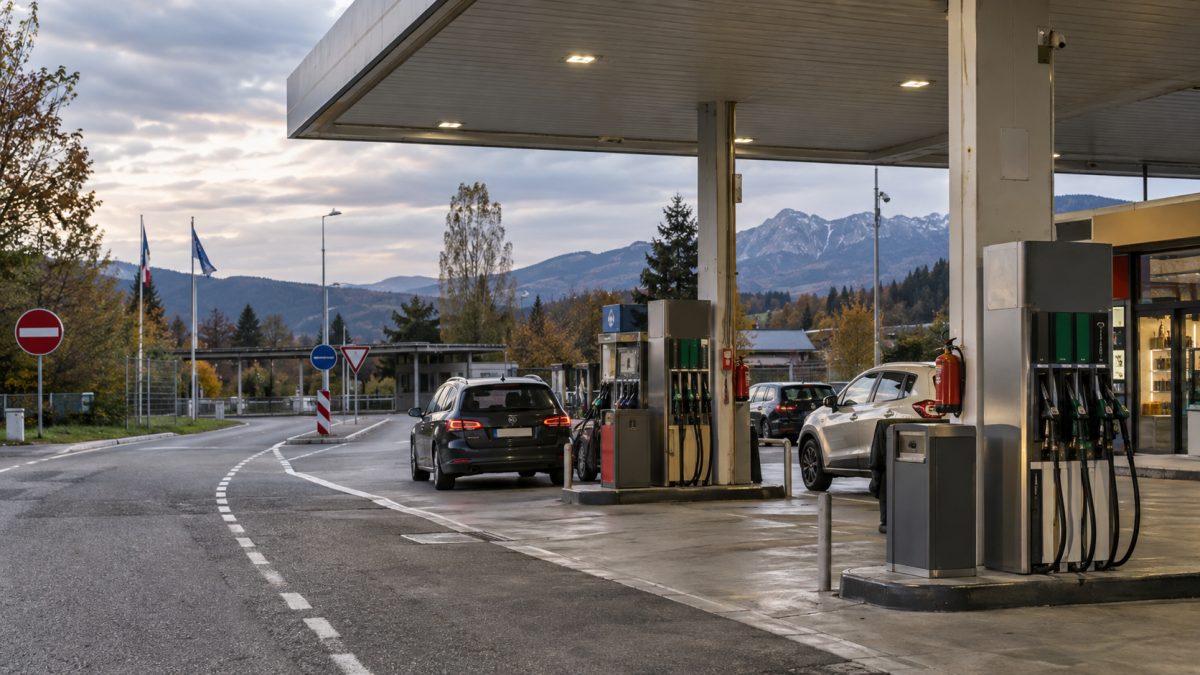
Fuel prices: France, Germany and neighboring countries compared
Fuel prices are not simply a reflection of crude oil prices. In France, Germany, Spain, Luxembourg or Italy, crude oil comes from the same global markets, but the amount paid at the pump varies sharply depending on national taxation. That is the mechanism to examine before concluding that one country is “always cheaper” than another.
And fuel prices can reverse the comparison within a few months. In January 2026, unleaded petrol was recorded at €1.71/L in France versus €1.74/L in Germany, while diesel was €1.64/L in France versus €1.58/L across the Rhine. By week 38, the situation was different: SP95 at €2.172/L in France versus €2.357/L in Germany, and diesel at €2.291/L versus €2.426/L. So the right question is not only “where is it cheaper?”, but “by how much, and on what date?”.
What you actually pay for in one litre in France
The pump price can be read in three layers: the product, distribution costs and margins, then public levies. In 2026, France’s excise duty is 68.29 cents per litre on SP95 and 59.40 cents on diesel. VAT is added on top, and it does not apply only to the fuel before tax: it also applies to the excise duty. In other words, part of the tax is itself taxed.
On 24 August 2026, taxes represented 50.1% of the SP95 price and 43.9% of the diesel price in France. On 6 March, another survey put the figures at 54% for SP95-E10 and 48% for diesel. The share changes with the pre-tax price: when that rises or falls, the relative weight of taxation changes too.
FIPECO provided another perspective on 3 July 2026: excise duty alone, excluding VAT, accounted for 36% of SP95 sold at €1.873/L and 33% of diesel sold at €1.863/L. Since 1 January 2026, the contribution linked to the CEE scheme has also risen from 11 to 16–17 cents per litre.
France, Germany, Spain, Luxembourg, Italy: where does the gap come from?
France
France starts from a high excise-duty level: about €0.69/L on petrol and €0.61/L on diesel in the 2026 European comparison, with detailed amounts of 68.29 c€/L and 59.40 c€/L. Regions can increase the excise duty by up to 0.73 c€/L on petrol and 1.35 c€/L on diesel. In 2025, every region except Corsica had chosen the maximum rate. Fuel excise duty brought in €16.5 billion that year.
Germany
Germany applies an excise duty in 2026 of €0.65/L on petrol and €0.47/L on diesel. Its tax advantage is therefore most pronounced on diesel: around 14 cents less excise duty per litre than the French level rounded to €0.61. Yet that does not guarantee a lower final price. In week 38, Germany was more expensive: +18.5 c€/L on SP95 and +13.5 c€/L on diesel. Over 50 litres, that works out to about €9.25 more for petrol and €6.75 more for diesel.
In January, German diesel was still 6 cents cheaper than French diesel, or a €3 difference over 50 litres. A few months later, that advantage had disappeared. Taxation matters a great deal, but it is not enough to predict the price in any given week.
Spain
Spain has a much lower excise duty: €0.47/L on petrol and €0.38/L on diesel. Compared with the rounded French levels, the excise-duty gap reaches about 22 cents on petrol and 23 cents on diesel. A European survey also shows Spanish diesel at €0.457/L less than in France, or about €22.84 difference on a 50-litre fill-up.
Luxembourg
Luxembourg regularly appears attractive for cross-border drivers, but the ranking varies depending on the date. One survey shows Luxembourg SP95 at €0.379/L less than in France, or around €18.97 difference over 50 litres. That is a gross saving: the detour can absorb part of it.
Italy
For Italy, the cited surveys do not provide an excise-duty amount per litre directly comparable with the previous three countries. They do, however, document a temporary excise-duty reduction in 2026 in response to the oil-price crisis, a measure also taken by Germany, Sweden and Croatia. A frozen ranking therefore quickly becomes misleading when a government changes its tax policy.
Why Germany can be more expensive despite lower excise duty
This is the most counter-intuitive point. Germany levies less excise duty on diesel than France, yet in September 2026 its final price was higher. It is important to distinguish between taxation level and the final price on the day. Excise duty is only one component: the pre-tax cost, distribution and margins also change, while VAT is added according to national rules.
Simply comparing €0.61 of French excise duty with €0.47 of German excise duty therefore cannot predict the price displayed at the station. That is also why the January, March, August and September 2026 comparisons do not always produce the same result.
The calculation to make before crossing the border
To know whether filling up abroad is genuinely worth the detour, you need to calculate the net saving:
Net saving = price difference per litre × litres purchased − cost of the detour.
The cost of the detour can be estimated as follows:
Detour cost = extra kilometres × vehicle fuel consumption / 100 × price of the fuel used.
For Spain, the documented gross saving on 50 litres of diesel is €22.84. For Luxembourg, the cited survey gives €18.97 on 50 litres of SP95. These amounts are your maximum before travelling. If the additional round trip costs €8, the gain falls to €14.84 in the first case and €10.97 in the second. There is no need to invent an average fuel consumption: use your own car’s figure.
For Germany, week 38 even gives the opposite case: a French driver had no financial reason to cross the border solely for fuel, since 50 litres already cost more before the journey.
The most useful way to pay less
- Check the day’s price, not an annual ranking: the gaps changed several times in 2026.
- Calculate using the volume actually purchased: a 20 c€/L gap means €10 over 50 litres, but only €4 over 20 litres.
- Add the detour using your actual fuel consumption, especially if you live far from the border.
- Take advantage of a trip you were already planning: for a cross-border commuter or road-tripper, buying fuel abroad is more attractive if the specific detour is close to zero.
- Never assume one country will remain cheaper: in 2026, the France–Germany comparison has already changed depending on the fuel and the period.
The lesson is simple: taxation creates a major baseline gap, then the market and the date shift the result. To save money, compare the local price, multiply the gap by the amount you plan to buy, then subtract the exact cost of the extra journey. That calculation, not the country name on the station sign, tells you whether crossing the border is really worthwhile.