

Google AI Overviews are coming to France: what will change
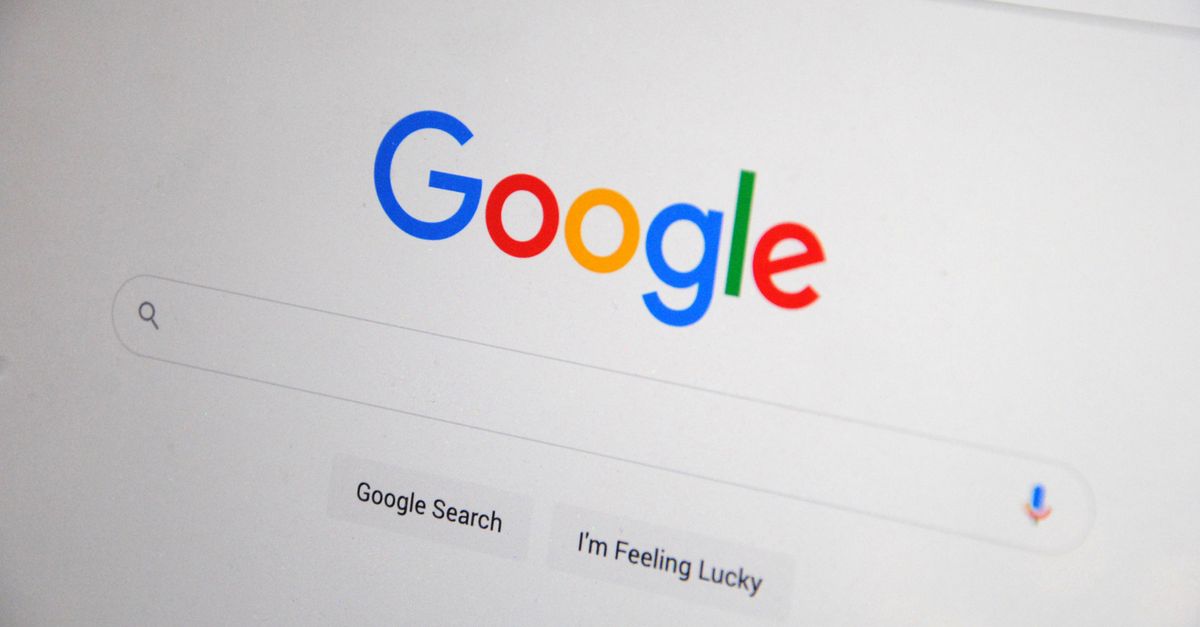
Since their launch in the United States in 2024, Google AI Overviews have been making waves in the world of SEO. The principle is simple but radical: instead of displaying a list of links to websites, Google now generates a direct answer at the top of the page, produced by its Gemini AI. And the good news (or bad news, depending on your point of view) is that this feature is about to arrive in France.
What exactly is an AI Overview?
Imagine typing “how to treat sunburn” into Google. Today, you get a list of links that you then click to read advice. Tomorrow, with AI Overviews, Google will display the answer directly — a few AI-generated paragraphs — before even showing you links to websites.
This answer summarizes information found on the web and may cite sources (as small, discreet links at the bottom of the block). It is a bit like someone reading all the articles for you and giving you an instant summary.
The official name is AI Overviews (formerly called “Search Generative Experience” during the testing phase). Outside the United States, the feature was first rolled out in English-speaking countries, then gradually in Europe — but France has been an exception.
Why has France been left out until now?
The French delay is not technological; it is legal and political. Two main reasons explain the situation.
Neighboring rights and French law
Since 2019, France has transposed the European directive on neighboring rights, which requires digital platforms to pay press publishers when they reuse their content. Google initially tried to get around this obligation, earning it a record €250 million fine from the French Competition Authority in March 2024.
With AI Overviews, the question becomes even more direct: if Google's AI summarizes newspaper content to answer internet users, without them needing to click through to articles, publishers lose traffic… and therefore advertising revenue. This is an extremely sensitive subject in France, where the press is already weakened.
Negotiations under way
Sébastien Missoffe, managing director of Google France, announced in June 2026 that “constructive discussions” were under way with the Competition Authority to find an agreement. He said he wanted to launch AI Overviews in France “as soon as possible,” with hopes of a rollout before the end of 2026.
What this concretely changes for internet users
For most users, the daily Google experience will change significantly.
- Faster answers: no need to open several tabs to find the information. The AI summarizes it for you.
- A risk of oversimplification: complex or nuanced topics may be summarized poorly. The AI can make mistakes or omit important information.
- Fewer clicks to websites: if the answer is directly on Google, many users will no longer look further.
- Greater dependence on Google: the algorithm chooses which sources to cite. If your site is not referenced in the AI block, you are invisible.
And for websites and content creators?
This is where the numbers become dizzying. In countries where AI Overviews are already active, studies show a drop in click-through rate (CTR) of up to 46 to 61% for affected queries. In other words, almost half of potential visitors no longer reach websites because Google has already given them the answer.
For bloggers, independent media and small sites that depend on organic traffic, this development could be catastrophic. For large press groups, it is a direct threat to their business model.
The new rule of the game: being cited rather than ranked
Paradoxically, ranking first on Google is no longer enough. What matters now is being cited in the AI Overview block, which does not follow the same rules as traditional SEO. A site in 8th position can be highlighted by the AI, while a number-one site can be completely ignored.
SEO experts now talk about GEO (Generative Engine Optimization) — optimizing content not only for Google's crawl, but so that AI considers it a reliable and citable source. This involves structured data, demonstrable expertise and content that answers specific questions precisely.
What should you do now?
Even though AI Overviews are not yet active in France, the rollout seems inevitable. Here are the first actions to consider.
- Build topical authority: Google primarily cites sources recognized as expert on a subject. Publishing regularly and in depth in your field is more important than ever.
- Use structured data (Schema.org): it helps AI understand and identify your content as reliable.
- Answer questions directly: queries such as “how to…,” “what is…,” and “why…” are the ones most likely to trigger an AI Overview. Structuring articles around these formats can increase the chance of being cited.
- Diversify traffic sources: newsletters, social networks, direct traffic — no longer depending solely on Google is becoming an increasingly necessary survival strategy.
A revolution that questions the web model
Beyond SEO, the arrival of AI Overviews in France raises fundamental questions about the balance of the web. If Google answers questions directly, why would people create content? And if nobody creates content, what will AI feed on to answer?
It is a vicious circle that many observers are already pointing out. The long-term viability of the model may depend on a fair agreement between platforms and content creators — exactly what France is trying to negotiate with Google before authorizing the rollout.
In the meantime, the next few months look decisive. And if you have a website or a blog, now is the time to anticipate the wave before it arrives.
Google AI Overviews are coming to France: what will change
Since their launch in the United States in 2024, Google AI Overviews have been making waves in the world of SEO. The principle is simple but radical: instead of displaying a list of links to websites, Google now generates a direct answer at the top of the page, produced by its Gemini AI. And the good news (or bad news, depending on your point of view) is that this feature is about to arrive in France.
What exactly is an AI Overview?
Imagine typing “how to treat sunburn” into Google. Today, you get a list of links that you then click to read advice. Tomorrow, with AI Overviews, Google will display the answer directly — a few AI-generated paragraphs — before even showing you links to websites.
This answer summarizes information found on the web and may cite sources (as small, discreet links at the bottom of the block). It is a bit like someone reading all the articles for you and giving you an instant summary.
The official name is AI Overviews (formerly called “Search Generative Experience” during the testing phase). Outside the United States, the feature was first rolled out in English-speaking countries, then gradually in Europe — but France has been an exception.
Why has France been left out until now?
The French delay is not technological; it is legal and political. Two main reasons explain the situation.
Neighboring rights and French law
Since 2019, France has transposed the European directive on neighboring rights, which requires digital platforms to pay press publishers when they reuse their content. Google initially tried to get around this obligation, earning it a record €250 million fine from the French Competition Authority in March 2024.
With AI Overviews, the question becomes even more direct: if Google's AI summarizes newspaper content to answer internet users, without them needing to click through to articles, publishers lose traffic… and therefore advertising revenue. This is an extremely sensitive subject in France, where the press is already weakened.
Negotiations under way
Sébastien Missoffe, managing director of Google France, announced in June 2026 that “constructive discussions” were under way with the Competition Authority to find an agreement. He said he wanted to launch AI Overviews in France “as soon as possible,” with hopes of a rollout before the end of 2026.
What this concretely changes for internet users
For most users, the daily Google experience will change significantly.
- Faster answers: no need to open several tabs to find the information. The AI summarizes it for you.
- A risk of oversimplification: complex or nuanced topics may be summarized poorly. The AI can make mistakes or omit important information.
- Fewer clicks to websites: if the answer is directly on Google, many users will no longer look further.
- Greater dependence on Google: the algorithm chooses which sources to cite. If your site is not referenced in the AI block, you are invisible.
And for websites and content creators?
This is where the numbers become dizzying. In countries where AI Overviews are already active, studies show a drop in click-through rate (CTR) of up to 46 to 61% for affected queries. In other words, almost half of potential visitors no longer reach websites because Google has already given them the answer.
For bloggers, independent media and small sites that depend on organic traffic, this development could be catastrophic. For large press groups, it is a direct threat to their business model.
The new rule of the game: being cited rather than ranked
Paradoxically, ranking first on Google is no longer enough. What matters now is being cited in the AI Overview block, which does not follow the same rules as traditional SEO. A site in 8th position can be highlighted by the AI, while a number-one site can be completely ignored.
SEO experts now talk about GEO (Generative Engine Optimization) — optimizing content not only for Google's crawl, but so that AI considers it a reliable and citable source. This involves structured data, demonstrable expertise and content that answers specific questions precisely.
What should you do now?
Even though AI Overviews are not yet active in France, the rollout seems inevitable. Here are the first actions to consider.
- Build topical authority: Google primarily cites sources recognized as expert on a subject. Publishing regularly and in depth in your field is more important than ever.
- Use structured data (Schema.org): it helps AI understand and identify your content as reliable.
- Answer questions directly: queries such as “how to…,” “what is…,” and “why…” are the ones most likely to trigger an AI Overview. Structuring articles around these formats can increase the chance of being cited.
- Diversify traffic sources: newsletters, social networks, direct traffic — no longer depending solely on Google is becoming an increasingly necessary survival strategy.
A revolution that questions the web model
Beyond SEO, the arrival of AI Overviews in France raises fundamental questions about the balance of the web. If Google answers questions directly, why would people create content? And if nobody creates content, what will AI feed on to answer?
It is a vicious circle that many observers are already pointing out. The long-term viability of the model may depend on a fair agreement between platforms and content creators — exactly what France is trying to negotiate with Google before authorizing the rollout.
In the meantime, the next few months look decisive. And if you have a website or a blog, now is the time to anticipate the wave before it arrives.
Google AI Overviews are coming to France: what will change
Since their launch in the United States in 2024, Google AI Overviews have been making waves in the world of SEO. The principle is simple but radical: instead of displaying a list of links to websites, Google now generates a direct answer at the top of the page, produced by its Gemini AI. And the good news (or bad news, depending on your point of view) is that this feature is about to arrive in France.
What exactly is an AI Overview?
Imagine typing “how to treat sunburn” into Google. Today, you get a list of links that you then click to read advice. Tomorrow, with AI Overviews, Google will display the answer directly — a few AI-generated paragraphs — before even showing you links to websites.
This answer summarizes information found on the web and may cite sources (as small, discreet links at the bottom of the block). It is a bit like someone reading all the articles for you and giving you an instant summary.
The official name is AI Overviews (formerly called “Search Generative Experience” during the testing phase). Outside the United States, the feature was first rolled out in English-speaking countries, then gradually in Europe — but France has been an exception.
Why has France been left out until now?
The French delay is not technological; it is legal and political. Two main reasons explain the situation.
Neighboring rights and French law
Since 2019, France has transposed the European directive on neighboring rights, which requires digital platforms to pay press publishers when they reuse their content. Google initially tried to get around this obligation, earning it a record €250 million fine from the French Competition Authority in March 2024.
With AI Overviews, the question becomes even more direct: if Google's AI summarizes newspaper content to answer internet users, without them needing to click through to articles, publishers lose traffic… and therefore advertising revenue. This is an extremely sensitive subject in France, where the press is already weakened.
Negotiations under way
Sébastien Missoffe, managing director of Google France, announced in June 2026 that “constructive discussions” were under way with the Competition Authority to find an agreement. He said he wanted to launch AI Overviews in France “as soon as possible,” with hopes of a rollout before the end of 2026.
What this concretely changes for internet users
For most users, the daily Google experience will change significantly.
- Faster answers: no need to open several tabs to find the information. The AI summarizes it for you.
- A risk of oversimplification: complex or nuanced topics may be summarized poorly. The AI can make mistakes or omit important information.
- Fewer clicks to websites: if the answer is directly on Google, many users will no longer look further.
- Greater dependence on Google: the algorithm chooses which sources to cite. If your site is not referenced in the AI block, you are invisible.
And for websites and content creators?
This is where the numbers become dizzying. In countries where AI Overviews are already active, studies show a drop in click-through rate (CTR) of up to 46 to 61% for affected queries. In other words, almost half of potential visitors no longer reach websites because Google has already given them the answer.
For bloggers, independent media and small sites that depend on organic traffic, this development could be catastrophic. For large press groups, it is a direct threat to their business model.
The new rule of the game: being cited rather than ranked
Paradoxically, ranking first on Google is no longer enough. What matters now is being cited in the AI Overview block, which does not follow the same rules as traditional SEO. A site in 8th position can be highlighted by the AI, while a number-one site can be completely ignored.
SEO experts now talk about GEO (Generative Engine Optimization) — optimizing content not only for Google's crawl, but so that AI considers it a reliable and citable source. This involves structured data, demonstrable expertise and content that answers specific questions precisely.
What should you do now?
Even though AI Overviews are not yet active in France, the rollout seems inevitable. Here are the first actions to consider.
- Build topical authority: Google primarily cites sources recognized as expert on a subject. Publishing regularly and in depth in your field is more important than ever.
- Use structured data (Schema.org): it helps AI understand and identify your content as reliable.
- Answer questions directly: queries such as “how to…,” “what is…,” and “why…” are the ones most likely to trigger an AI Overview. Structuring articles around these formats can increase the chance of being cited.
- Diversify traffic sources: newsletters, social networks, direct traffic — no longer depending solely on Google is becoming an increasingly necessary survival strategy.
A revolution that questions the web model
Beyond SEO, the arrival of AI Overviews in France raises fundamental questions about the balance of the web. If Google answers questions directly, why would people create content? And if nobody creates content, what will AI feed on to answer?
It is a vicious circle that many observers are already pointing out. The long-term viability of the model may depend on a fair agreement between platforms and content creators — exactly what France is trying to negotiate with Google before authorizing the rollout.
In the meantime, the next few months look decisive. And if you have a website or a blog, now is the time to anticipate the wave before it arrives.
English
French
Spanish
Chinese
Japanese
Korean
Hindi
German
Norwegian
Italian