Mid-June 2026 heatwave: what to expect and how to protect yourself
After a month of May already marked by unusually early and unprecedented heat, France is preparing to face a new heatwave from mid-June 2026. Weather models are converging on a potentially intense hot spell between June 11 and 18, with temperatures expected to reach 40°C in some regions. Here is everything you need to know to anticipate it and protect yourself.
Weather forecasts for mid-June 2026
According to the latest meteorological analyses, an anticyclonic atmospheric blocking pattern is expected to settle over Europe from June 11, 2026. This phenomenon, often called a “heat dome,” creates a kind of invisible lid that blocks air circulation and drives temperatures abnormally upward.
The most recent forecasts indicate:
- From June 11 to 14: a gradual rise in temperatures in the southeastern quarter and along the Atlantic coast
- From June 15 to 18: a heat peak with exceptional values expected
- Expected maximum temperatures: between 35°C and 38°C in southern France, potentially 40°C near the Spanish border
The American (GFS) and European (ECMWF) models are converging toward a hot scenario, even though some more recent forecasts tend to slightly moderate the episode’s intensity. Meteorologists stress that at a 7-to-10-day range, uncertainty remains significant, but the signal is strong enough to start preparing now.
Which regions will be most affected?
The geography of the expected heatwave draws a fairly classic map, though not without surprises:
- Southern France (Occitanie, PACA, Nouvelle-Aquitaine) will be on the front line, with values regularly exceeding 38°C
- The Rhône corridor (Lyon, Valence, Montélimar) should experience tropical nights with minimum temperatures above 22-25°C
- The Paris basin and northern France will not be spared, with temperatures expected between 30°C and 35°C
- Coastal areas (Brittany, Normandy) will benefit from relative marine coolness, limiting peaks to 28-30°C
- Alsace and Lorraine could record peaks around 35-37°C, away from the Vosges reliefs
Urban areas will suffer an amplifying “urban heat” effect: cities retain heat during the day and release it at night, making nights especially difficult for city-center residents.
What are the health risks?
Extreme heat is a real health hazard. In France, the 2003 heatwave caused more than 15,000 deaths in just a few weeks. Since then, health authorities have set up alert systems, but individual vigilance remains essential.
The most vulnerable people are:
- People over 65, whose sense of thirst is often reduced
- Infants and young children, whose thermoregulation system is still immature
- People with chronic illnesses (heart failure, diabetes, kidney disease)
- People taking certain medications (diuretics, antidepressants, antihistamines)
- Outdoor workers (construction, agriculture, waste services) and athletes exercising outside
The main risks are heatstroke (severe hyperthermia), dehydration, heat exhaustion and cardiovascular complications.
10 essential tips to protect yourself
Prevention remains the best weapon against a heatwave. Here are the recommendations from health authorities:
- Drink regularly without waiting until you are thirsty — at least 1.5 liters of water per day, more in extreme heat
- Close shutters and curtains in the morning to keep indoor spaces cool, and open them at night if the outside temperature drops
- Avoid going out between 11 a.m. and 5 p.m., the peak heat hours
- Wear light clothing, loose-fitting, light-colored and made from natural materials (cotton, linen)
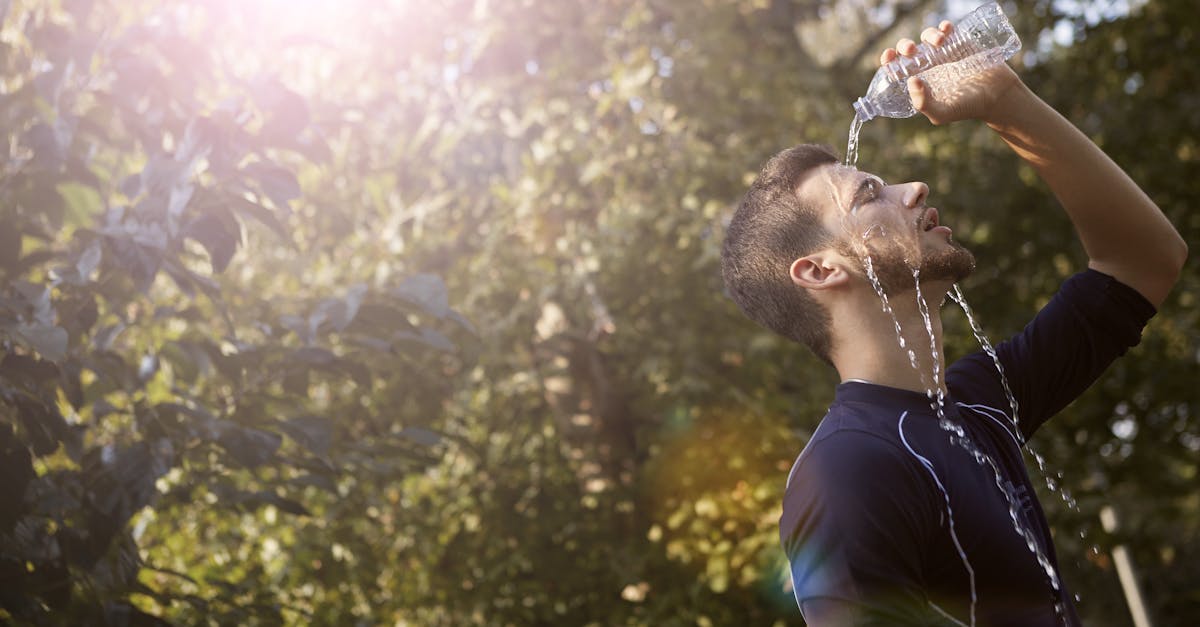
- Cool yourself regularly: mist spray, cool bath or shower (but not cold), damp cloth on the neck and wrists
- Eat light meals: choose fruit and vegetables rich in water (watermelon, cucumber, tomatoes)
- Never leave a child, an elderly person or an animal in a parked vehicle
- Identify air-conditioned places near your home (shopping centers, libraries, museums) where you can take shelter if needed
- Check in on elderly or isolated relatives, and register them with the municipal vulnerable-persons register
- Avoid alcohol and caffeine, which promote dehydration
What should you do in case of heat-related illness?
If you or someone close to you shows alarming symptoms — dry and burning skin, confusion, loss of consciousness, body temperature above 40°C — it is heatstroke, an absolute medical emergency.
Immediately call 15 (SAMU) or 18 (fire brigade). While waiting for help, lay the person in the shade, undress them, spray them with cold water and fan them.
For simple exhaustion (severe fatigue, nausea, dizziness): move into the shade, drink cool water, cool your wrists and neck, and rest. If symptoms persist, consult a doctor.
Heatwaves and climate change
The frequency and intensity of heatwaves in France are increasing in a documented way. According to Météo-France, heatwaves are 10 times more likely today than a century ago because of climate change. The exceptional late-May 2026 heat episode — described as “unprecedented in its earliness” — is part of this underlying trend.
Faced with this reality, experts call for lasting adaptation: urban reforestation, green roofs, thermal renovation of buildings, and prevention plans in businesses and local authorities. Heatwaves are no longer exceptional events: they are a recurring seasonal risk for which every French person must prepare.
While waiting for the mid-June episode, stay attentive to alerts from Météo-France and the Ministry of Health, and do not hesitate to share these tips around you.
Mid-June 2026 heatwave: what to expect and how to protect yourself
After a month of May already marked by unusually early and unprecedented heat, France is preparing to face a new heatwave from mid-June 2026. Weather models are converging on a potentially intense hot spell between June 11 and 18, with temperatures expected to reach 40°C in some regions. Here is everything you need to know to anticipate it and protect yourself.
Weather forecasts for mid-June 2026
According to the latest meteorological analyses, an anticyclonic atmospheric blocking pattern is expected to settle over Europe from June 11, 2026. This phenomenon, often called a “heat dome,” creates a kind of invisible lid that blocks air circulation and drives temperatures abnormally upward.
The most recent forecasts indicate:
- From June 11 to 14: a gradual rise in temperatures in the southeastern quarter and along the Atlantic coast
- From June 15 to 18: a heat peak with exceptional values expected
- Expected maximum temperatures: between 35°C and 38°C in southern France, potentially 40°C near the Spanish border
The American (GFS) and European (ECMWF) models are converging toward a hot scenario, even though some more recent forecasts tend to slightly moderate the episode’s intensity. Meteorologists stress that at a 7-to-10-day range, uncertainty remains significant, but the signal is strong enough to start preparing now.
Which regions will be most affected?
The geography of the expected heatwave draws a fairly classic map, though not without surprises:
- Southern France (Occitanie, PACA, Nouvelle-Aquitaine) will be on the front line, with values regularly exceeding 38°C
- The Rhône corridor (Lyon, Valence, Montélimar) should experience tropical nights with minimum temperatures above 22-25°C
- The Paris basin and northern France will not be spared, with temperatures expected between 30°C and 35°C
- Coastal areas (Brittany, Normandy) will benefit from relative marine coolness, limiting peaks to 28-30°C
- Alsace and Lorraine could record peaks around 35-37°C, away from the Vosges reliefs
Urban areas will suffer an amplifying “urban heat” effect: cities retain heat during the day and release it at night, making nights especially difficult for city-center residents.
What are the health risks?
Extreme heat is a real health hazard. In France, the 2003 heatwave caused more than 15,000 deaths in just a few weeks. Since then, health authorities have set up alert systems, but individual vigilance remains essential.
The most vulnerable people are:
- People over 65, whose sense of thirst is often reduced
- Infants and young children, whose thermoregulation system is still immature
- People with chronic illnesses (heart failure, diabetes, kidney disease)
- People taking certain medications (diuretics, antidepressants, antihistamines)
- Outdoor workers (construction, agriculture, waste services) and athletes exercising outside
The main risks are heatstroke (severe hyperthermia), dehydration, heat exhaustion and cardiovascular complications.
10 essential tips to protect yourself
Prevention remains the best weapon against a heatwave. Here are the recommendations from health authorities:
- Drink regularly without waiting until you are thirsty — at least 1.5 liters of water per day, more in extreme heat
- Close shutters and curtains in the morning to keep indoor spaces cool, and open them at night if the outside temperature drops
- Avoid going out between 11 a.m. and 5 p.m., the peak heat hours
- Wear light clothing, loose-fitting, light-colored and made from natural materials (cotton, linen)
- Cool yourself regularly: mist spray, cool bath or shower (but not cold), damp cloth on the neck and wrists
- Eat light meals: choose fruit and vegetables rich in water (watermelon, cucumber, tomatoes)
- Never leave a child, an elderly person or an animal in a parked vehicle
- Identify air-conditioned places near your home (shopping centers, libraries, museums) where you can take shelter if needed
- Check in on elderly or isolated relatives, and register them with the municipal vulnerable-persons register
- Avoid alcohol and caffeine, which promote dehydration
What should you do in case of heat-related illness?
If you or someone close to you shows alarming symptoms — dry and burning skin, confusion, loss of consciousness, body temperature above 40°C — it is heatstroke, an absolute medical emergency.
Immediately call 15 (SAMU) or 18 (fire brigade). While waiting for help, lay the person in the shade, undress them, spray them with cold water and fan them.
For simple exhaustion (severe fatigue, nausea, dizziness): move into the shade, drink cool water, cool your wrists and neck, and rest. If symptoms persist, consult a doctor.
Heatwaves and climate change
The frequency and intensity of heatwaves in France are increasing in a documented way. According to Météo-France, heatwaves are 10 times more likely today than a century ago because of climate change. The exceptional late-May 2026 heat episode — described as “unprecedented in its earliness” — is part of this underlying trend.
Faced with this reality, experts call for lasting adaptation: urban reforestation, green roofs, thermal renovation of buildings, and prevention plans in businesses and local authorities. Heatwaves are no longer exceptional events: they are a recurring seasonal risk for which every French person must prepare.
While waiting for the mid-June episode, stay attentive to alerts from Météo-France and the Ministry of Health, and do not hesitate to share these tips around you.
Mid-June 2026 heatwave: what to expect and how to protect yourself
After a month of May already marked by unusually early and unprecedented heat, France is preparing to face a new heatwave from mid-June 2026. Weather models are converging on a potentially intense hot spell between June 11 and 18, with temperatures expected to reach 40°C in some regions. Here is everything you need to know to anticipate it and protect yourself.
Weather forecasts for mid-June 2026
According to the latest meteorological analyses, an anticyclonic atmospheric blocking pattern is expected to settle over Europe from June 11, 2026. This phenomenon, often called a “heat dome,” creates a kind of invisible lid that blocks air circulation and drives temperatures abnormally upward.
The most recent forecasts indicate:
- From June 11 to 14: a gradual rise in temperatures in the southeastern quarter and along the Atlantic coast
- From June 15 to 18: a heat peak with exceptional values expected
- Expected maximum temperatures: between 35°C and 38°C in southern France, potentially 40°C near the Spanish border
The American (GFS) and European (ECMWF) models are converging toward a hot scenario, even though some more recent forecasts tend to slightly moderate the episode’s intensity. Meteorologists stress that at a 7-to-10-day range, uncertainty remains significant, but the signal is strong enough to start preparing now.
Which regions will be most affected?
The geography of the expected heatwave draws a fairly classic map, though not without surprises:
- Southern France (Occitanie, PACA, Nouvelle-Aquitaine) will be on the front line, with values regularly exceeding 38°C
- The Rhône corridor (Lyon, Valence, Montélimar) should experience tropical nights with minimum temperatures above 22-25°C
- The Paris basin and northern France will not be spared, with temperatures expected between 30°C and 35°C
- Coastal areas (Brittany, Normandy) will benefit from relative marine coolness, limiting peaks to 28-30°C
- Alsace and Lorraine could record peaks around 35-37°C, away from the Vosges reliefs
Urban areas will suffer an amplifying “urban heat” effect: cities retain heat during the day and release it at night, making nights especially difficult for city-center residents.
What are the health risks?
Extreme heat is a real health hazard. In France, the 2003 heatwave caused more than 15,000 deaths in just a few weeks. Since then, health authorities have set up alert systems, but individual vigilance remains essential.
The most vulnerable people are:
- People over 65, whose sense of thirst is often reduced
- Infants and young children, whose thermoregulation system is still immature
- People with chronic illnesses (heart failure, diabetes, kidney disease)
- People taking certain medications (diuretics, antidepressants, antihistamines)
- Outdoor workers (construction, agriculture, waste services) and athletes exercising outside
The main risks are heatstroke (severe hyperthermia), dehydration, heat exhaustion and cardiovascular complications.
10 essential tips to protect yourself
Prevention remains the best weapon against a heatwave. Here are the recommendations from health authorities:
- Drink regularly without waiting until you are thirsty — at least 1.5 liters of water per day, more in extreme heat
- Close shutters and curtains in the morning to keep indoor spaces cool, and open them at night if the outside temperature drops
- Avoid going out between 11 a.m. and 5 p.m., the peak heat hours
- Wear light clothing, loose-fitting, light-colored and made from natural materials (cotton, linen)
- Cool yourself regularly: mist spray, cool bath or shower (but not cold), damp cloth on the neck and wrists
- Eat light meals: choose fruit and vegetables rich in water (watermelon, cucumber, tomatoes)
- Never leave a child, an elderly person or an animal in a parked vehicle
- Identify air-conditioned places near your home (shopping centers, libraries, museums) where you can take shelter if needed
- Check in on elderly or isolated relatives, and register them with the municipal vulnerable-persons register
- Avoid alcohol and caffeine, which promote dehydration
What should you do in case of heat-related illness?
If you or someone close to you shows alarming symptoms — dry and burning skin, confusion, loss of consciousness, body temperature above 40°C — it is heatstroke, an absolute medical emergency.
Immediately call 15 (SAMU) or 18 (fire brigade). While waiting for help, lay the person in the shade, undress them, spray them with cold water and fan them.
For simple exhaustion (severe fatigue, nausea, dizziness): move into the shade, drink cool water, cool your wrists and neck, and rest. If symptoms persist, consult a doctor.
Heatwaves and climate change
The frequency and intensity of heatwaves in France are increasing in a documented way. According to Météo-France, heatwaves are 10 times more likely today than a century ago because of climate change. The exceptional late-May 2026 heat episode — described as “unprecedented in its earliness” — is part of this underlying trend.
Faced with this reality, experts call for lasting adaptation: urban reforestation, green roofs, thermal renovation of buildings, and prevention plans in businesses and local authorities. Heatwaves are no longer exceptional events: they are a recurring seasonal risk for which every French person must prepare.
While waiting for the mid-June episode, stay attentive to alerts from Météo-France and the Ministry of Health, and do not hesitate to share these tips around you.
English
French
Spanish
Chinese
Japanese
Korean
Hindi
German
Norwegian