
enEnglish
frFrench
esSpanish
zhChinese
jaJapanese
koKorean
hiHindi
deGerman
noNorwegian
Home Latest News Tutorials Consumer Culture Viral Videos Miscellaneous
DE EN ES FR HI JA KO NO ZH
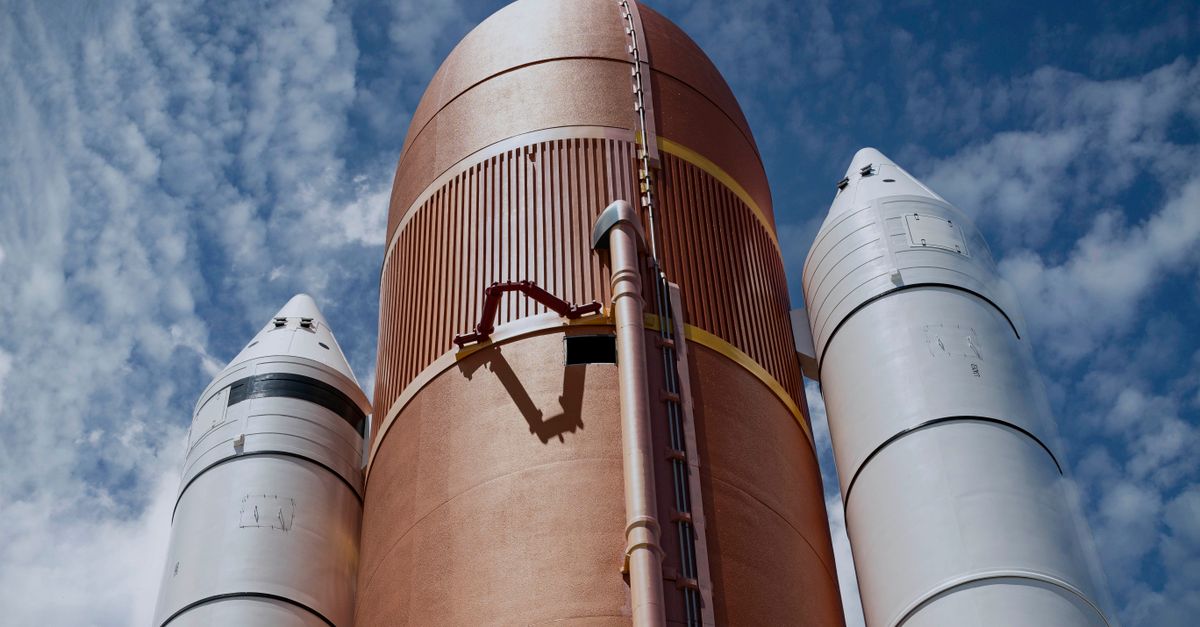
SpaceX Falcon Heavy rocket lifting off during a space mission

SpaceX IPO on June 12: 1.75 trillion, the stock market listing of the century

Publié le 11 Juin 2026

On June 12, 2026, the global technology and financial industries will witness a historic moment: SpaceX, the rocket and space exploration company founded by Elon Musk, will officially enter the stock market. With a target valuation of $1.75 trillion and an expected fundraising of $75 billion, this IPO (Initial Public Offering) is being presented as the most ambitious in the history of global financial markets.

An unprecedented stock market event

To understand the scale of the operation, it must be put into perspective. Alibaba's 2014 IPO, long considered the largest in history with $25 billion raised, looks modest by comparison. SpaceX is expected to raise $75 billion from institutional and retail investors. This listing comes before those of OpenAI, expected in the fourth quarter of 2026, and Anthropic, targeted for October. The simultaneity of these giant operations is creating unprecedented pressure on major stock indices, with the Nasdaq having already eased its criteria to allow accelerated inclusion of SpaceX in the Nasdaq-100 in just fifteen days.

A space empire that has become unavoidable

SpaceX is no longer simply a company that sends rockets into space. In two decades, the company created by Elon Musk has become a central player in the global space and telecommunications economy.

Starlink: the goose that lays the golden eggs

The Starlink satellite network, with thousands of satellites in low Earth orbit, now provides high-speed internet access to millions of subscribers around the world, including remote areas that had never enjoyed reliable connectivity. This service generates substantial recurring revenue and largely justifies the company's astronomical valuation. At the start of 2026, Starlink had more than 5 million active subscribers in over 100 countries, with annual growth above 40%.

Falcon 9 and the launcher market

With its reusable Falcon 9 rocket, SpaceX has revolutionized access to space. By drastically reducing launch costs — from tens of millions of dollars to just a few million — the company has captured most of the global commercial satellite market, outpacing historic players such as Ariane Espace and United Launch Alliance. Since its first successful launch in 2010, Falcon 9 has completed more than 350 flights with a success rate above 99%.

Starship: the next revolution

The Starship program, the most powerful spacecraft ever designed, represents the future of Musk's vision: colonizing Mars, but also offering ultra-fast intercontinental flights on Earth. After years of tests and foundational failures, Starship is now operational for cargo missions and preparing its first crewed missions. This program alone is enough to explain investor interest in an economy of space that could be radically transformed over the next ten years.

Strategic agreements that reassure investors

To justify its extraordinary valuation, SpaceX can rely on an impressive order book and major strategic partnerships. One major agreement has been revealed: SpaceX will provide computing capacity to Anthropic, creator of Claude, under a contract for the Colossus and Colossus II superclusters, valued at $1.25 billion per month until May 2029. This partnership illustrates the growing convergence between the space industry and artificial intelligence: next-generation AI model inference needs massive computing infrastructure, and SpaceX has the energy, satellites and data centers to respond.

NASA also remains a leading customer for Artemis lunar missions, while the U.S. Department of Defense provides a stable and growing source of contract revenue for launch services and secure communications.

Risks and grey areas

This IPO also raises legitimate questions among financial analysts and economists.

Valuations built on projections

At $1.75 trillion, SpaceX is valued far beyond what its current revenue, even if rapidly growing, could justify under a classic fundamental analysis. This valuation is based on long-term exponential growth projections, especially linked to Starlink's expansion, the emerging space economy and crewed missions to Mars.

“If market enthusiasm turns, current valuations, built on exponential growth projections, could be severely revised.”

Elon Musk's personality: asset or risk?

Elon Musk is inseparable from SpaceX. His ability to attract media attention and capital is undeniable. But his sometimes controversial positions, his parallel activities (Tesla, xAI, X/Twitter) and his unpredictable management style represent a governance risk that many institutional investors take very seriously.

A systemic risk for markets

The sequence of giant IPOs — SpaceX on June 12, OpenAI in Q4 2026, Anthropic in October — creates an unprecedented situation in financial markets. The AI and tech sector now represents a potential systemic risk: a correction in these stocks could trigger a chain reaction affecting all global stock indices.

The stakes for Europe

For Europeans, this IPO has concrete implications. SpaceX's listing strengthens American dominance over the global space industry at a time when Ariane 6 is struggling to find its cruising speed and Europe is seeking to assert its strategic autonomy in access to space. For French savers, financial advisers recommend caution in the face of such a high valuation, while acknowledging that SpaceX, unlike many overvalued startups, has real revenues, concrete contracts and operational technology.

A pivotal week for global tech

Beyond SpaceX, the week of June 12, 2026 sits in a context of technological and financial excitement. Apple's WWDC has just revealed a new Siri powered by Gemini, Anthropic and OpenAI are preparing their own IPOs, and the European AI Act is entering its final weeks before full application on August 2. June 12, 2026 will probably be remembered as the date when space exploration officially became a mainstream investment. Whether it proves to be a positive historical turning point or the warning sign of a speculative bubble, investors and space enthusiasts will be glued to their screens to follow SpaceX's first quotes.

Tags
SpaceX
IPO
stock market
valuation
Elon Musk
financial markets
Envoyer à un ami
Signaler cet article
A propos de l'auteur
SpaceX Falcon Heavy rocket lifting off during a space mission

SpaceX IPO on June 12: 1.75 trillion, the stock market listing of the century

Publié le 11 Juin 2026

On June 12, 2026, the global technology and financial industries will witness a historic moment: SpaceX, the rocket and space exploration company founded by Elon Musk, will officially enter the stock market. With a target valuation of $1.75 trillion and an expected fundraising of $75 billion, this IPO (Initial Public Offering) is being presented as the most ambitious in the history of global financial markets.

An unprecedented stock market event

To understand the scale of the operation, it must be put into perspective. Alibaba's 2014 IPO, long considered the largest in history with $25 billion raised, looks modest by comparison. SpaceX is expected to raise $75 billion from institutional and retail investors. This listing comes before those of OpenAI, expected in the fourth quarter of 2026, and Anthropic, targeted for October. The simultaneity of these giant operations is creating unprecedented pressure on major stock indices, with the Nasdaq having already eased its criteria to allow accelerated inclusion of SpaceX in the Nasdaq-100 in just fifteen days.

A space empire that has become unavoidable

SpaceX is no longer simply a company that sends rockets into space. In two decades, the company created by Elon Musk has become a central player in the global space and telecommunications economy.

Starlink: the goose that lays the golden eggs

The Starlink satellite network, with thousands of satellites in low Earth orbit, now provides high-speed internet access to millions of subscribers around the world, including remote areas that had never enjoyed reliable connectivity. This service generates substantial recurring revenue and largely justifies the company's astronomical valuation. At the start of 2026, Starlink had more than 5 million active subscribers in over 100 countries, with annual growth above 40%.

Falcon 9 and the launcher market

With its reusable Falcon 9 rocket, SpaceX has revolutionized access to space. By drastically reducing launch costs — from tens of millions of dollars to just a few million — the company has captured most of the global commercial satellite market, outpacing historic players such as Ariane Espace and United Launch Alliance. Since its first successful launch in 2010, Falcon 9 has completed more than 350 flights with a success rate above 99%.

Starship: the next revolution

The Starship program, the most powerful spacecraft ever designed, represents the future of Musk's vision: colonizing Mars, but also offering ultra-fast intercontinental flights on Earth. After years of tests and foundational failures, Starship is now operational for cargo missions and preparing its first crewed missions. This program alone is enough to explain investor interest in an economy of space that could be radically transformed over the next ten years.

Strategic agreements that reassure investors

To justify its extraordinary valuation, SpaceX can rely on an impressive order book and major strategic partnerships. One major agreement has been revealed: SpaceX will provide computing capacity to Anthropic, creator of Claude, under a contract for the Colossus and Colossus II superclusters, valued at $1.25 billion per month until May 2029. This partnership illustrates the growing convergence between the space industry and artificial intelligence: next-generation AI model inference needs massive computing infrastructure, and SpaceX has the energy, satellites and data centers to respond.

NASA also remains a leading customer for Artemis lunar missions, while the U.S. Department of Defense provides a stable and growing source of contract revenue for launch services and secure communications.

Risks and grey areas

This IPO also raises legitimate questions among financial analysts and economists.

Valuations built on projections

At $1.75 trillion, SpaceX is valued far beyond what its current revenue, even if rapidly growing, could justify under a classic fundamental analysis. This valuation is based on long-term exponential growth projections, especially linked to Starlink's expansion, the emerging space economy and crewed missions to Mars.

“If market enthusiasm turns, current valuations, built on exponential growth projections, could be severely revised.”

Elon Musk's personality: asset or risk?

Elon Musk is inseparable from SpaceX. His ability to attract media attention and capital is undeniable. But his sometimes controversial positions, his parallel activities (Tesla, xAI, X/Twitter) and his unpredictable management style represent a governance risk that many institutional investors take very seriously.

A systemic risk for markets

The sequence of giant IPOs — SpaceX on June 12, OpenAI in Q4 2026, Anthropic in October — creates an unprecedented situation in financial markets. The AI and tech sector now represents a potential systemic risk: a correction in these stocks could trigger a chain reaction affecting all global stock indices.

The stakes for Europe

For Europeans, this IPO has concrete implications. SpaceX's listing strengthens American dominance over the global space industry at a time when Ariane 6 is struggling to find its cruising speed and Europe is seeking to assert its strategic autonomy in access to space. For French savers, financial advisers recommend caution in the face of such a high valuation, while acknowledging that SpaceX, unlike many overvalued startups, has real revenues, concrete contracts and operational technology.

A pivotal week for global tech

Beyond SpaceX, the week of June 12, 2026 sits in a context of technological and financial excitement. Apple's WWDC has just revealed a new Siri powered by Gemini, Anthropic and OpenAI are preparing their own IPOs, and the European AI Act is entering its final weeks before full application on August 2. June 12, 2026 will probably be remembered as the date when space exploration officially became a mainstream investment. Whether it proves to be a positive historical turning point or the warning sign of a speculative bubble, investors and space enthusiasts will be glued to their screens to follow SpaceX's first quotes.

Tags
SpaceX
IPO
stock market
valuation
Elon Musk
financial markets
Envoyer à un ami
Signaler cet article
A propos de l'auteur
SpaceX Falcon Heavy rocket lifting off during a space mission

SpaceX IPO on June 12: 1.75 trillion, the stock market listing of the century

Publié le 11 Juin 2026

On June 12, 2026, the global technology and financial industries will witness a historic moment: SpaceX, the rocket and space exploration company founded by Elon Musk, will officially enter the stock market. With a target valuation of $1.75 trillion and an expected fundraising of $75 billion, this IPO (Initial Public Offering) is being presented as the most ambitious in the history of global financial markets.

An unprecedented stock market event

To understand the scale of the operation, it must be put into perspective. Alibaba's 2014 IPO, long considered the largest in history with $25 billion raised, looks modest by comparison. SpaceX is expected to raise $75 billion from institutional and retail investors. This listing comes before those of OpenAI, expected in the fourth quarter of 2026, and Anthropic, targeted for October. The simultaneity of these giant operations is creating unprecedented pressure on major stock indices, with the Nasdaq having already eased its criteria to allow accelerated inclusion of SpaceX in the Nasdaq-100 in just fifteen days.

A space empire that has become unavoidable

SpaceX is no longer simply a company that sends rockets into space. In two decades, the company created by Elon Musk has become a central player in the global space and telecommunications economy.

Starlink: the goose that lays the golden eggs

The Starlink satellite network, with thousands of satellites in low Earth orbit, now provides high-speed internet access to millions of subscribers around the world, including remote areas that had never enjoyed reliable connectivity. This service generates substantial recurring revenue and largely justifies the company's astronomical valuation. At the start of 2026, Starlink had more than 5 million active subscribers in over 100 countries, with annual growth above 40%.

Falcon 9 and the launcher market

With its reusable Falcon 9 rocket, SpaceX has revolutionized access to space. By drastically reducing launch costs — from tens of millions of dollars to just a few million — the company has captured most of the global commercial satellite market, outpacing historic players such as Ariane Espace and United Launch Alliance. Since its first successful launch in 2010, Falcon 9 has completed more than 350 flights with a success rate above 99%.

Starship: the next revolution

The Starship program, the most powerful spacecraft ever designed, represents the future of Musk's vision: colonizing Mars, but also offering ultra-fast intercontinental flights on Earth. After years of tests and foundational failures, Starship is now operational for cargo missions and preparing its first crewed missions. This program alone is enough to explain investor interest in an economy of space that could be radically transformed over the next ten years.

Strategic agreements that reassure investors

To justify its extraordinary valuation, SpaceX can rely on an impressive order book and major strategic partnerships. One major agreement has been revealed: SpaceX will provide computing capacity to Anthropic, creator of Claude, under a contract for the Colossus and Colossus II superclusters, valued at $1.25 billion per month until May 2029. This partnership illustrates the growing convergence between the space industry and artificial intelligence: next-generation AI model inference needs massive computing infrastructure, and SpaceX has the energy, satellites and data centers to respond.

NASA also remains a leading customer for Artemis lunar missions, while the U.S. Department of Defense provides a stable and growing source of contract revenue for launch services and secure communications.

Risks and grey areas

This IPO also raises legitimate questions among financial analysts and economists.

Valuations built on projections

At $1.75 trillion, SpaceX is valued far beyond what its current revenue, even if rapidly growing, could justify under a classic fundamental analysis. This valuation is based on long-term exponential growth projections, especially linked to Starlink's expansion, the emerging space economy and crewed missions to Mars.

“If market enthusiasm turns, current valuations, built on exponential growth projections, could be severely revised.”

Elon Musk's personality: asset or risk?

Elon Musk is inseparable from SpaceX. His ability to attract media attention and capital is undeniable. But his sometimes controversial positions, his parallel activities (Tesla, xAI, X/Twitter) and his unpredictable management style represent a governance risk that many institutional investors take very seriously.

A systemic risk for markets

The sequence of giant IPOs — SpaceX on June 12, OpenAI in Q4 2026, Anthropic in October — creates an unprecedented situation in financial markets. The AI and tech sector now represents a potential systemic risk: a correction in these stocks could trigger a chain reaction affecting all global stock indices.

The stakes for Europe

For Europeans, this IPO has concrete implications. SpaceX's listing strengthens American dominance over the global space industry at a time when Ariane 6 is struggling to find its cruising speed and Europe is seeking to assert its strategic autonomy in access to space. For French savers, financial advisers recommend caution in the face of such a high valuation, while acknowledging that SpaceX, unlike many overvalued startups, has real revenues, concrete contracts and operational technology.

A pivotal week for global tech

Beyond SpaceX, the week of June 12, 2026 sits in a context of technological and financial excitement. Apple's WWDC has just revealed a new Siri powered by Gemini, Anthropic and OpenAI are preparing their own IPOs, and the European AI Act is entering its final weeks before full application on August 2. June 12, 2026 will probably be remembered as the date when space exploration officially became a mainstream investment. Whether it proves to be a positive historical turning point or the warning sign of a speculative bubble, investors and space enthusiasts will be glued to their screens to follow SpaceX's first quotes.

Tags
SpaceX
IPO
stock market
valuation
Elon Musk
financial markets
Envoyer à un ami
Signaler cet article
A propos de l'auteur