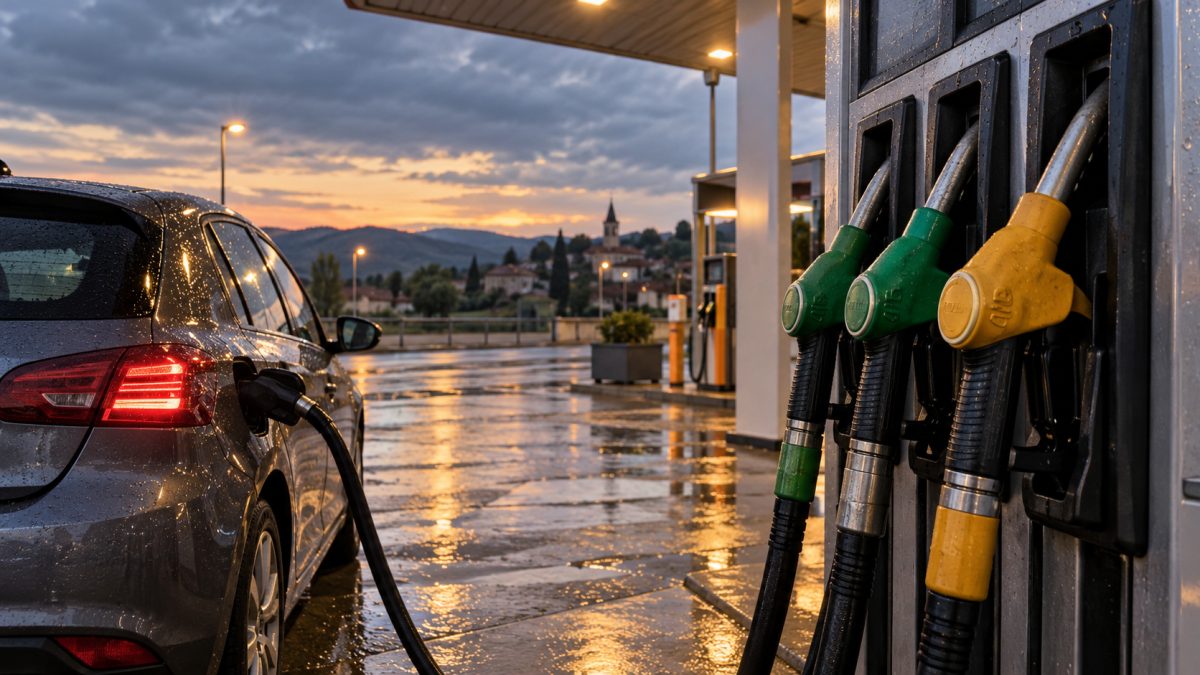


What changes on June 1, 2026: SMIC, gas, SNCF and fuel
Every start of the month brings its share of regulatory and economic updates. June 1, 2026 is no exception: the SMIC minimum wage is increased, gas prices are down, cardboard tickets come to an end at SNCF, fuel aid is introduced for high-mileage drivers... Here is the full recap of what is changing in your daily life.
The SMIC increases by 2.4%
This is the major social news of June 1: the French minimum wage, known as the salaire minimum interprofessionnel de croissance (SMIC), is automatically increased by 2.4% in response to inflation recorded in April. The gross hourly rate therefore rises from 12.02 euros to 12.31 euros.
In practical terms, based on full-time work (35 hours per week), the gross monthly SMIC now reaches around 1,866 euros gross, compared with 1,823 euros previously. For the lowest-paid employees, this increase represents a net monthly gain of about forty euros.
Who is affected?
Some two million employees benefit directly from this increase. Employers are required to apply this new rate from today, or face penalties. Apprenticeship contracts and seasonal jobs are also affected, with specific pay scales recalculated proportionally.
The price of gas falls by 4.8%
Good news for households that heat with gas: the reference supply price falls by 4.8% including tax on June 1. The benchmark tariff drops from 160.54 euros/MWh including tax to 152.86 euros/MWh including tax.
This decrease is linked to the easing of international gas prices observed in April, following the geopolitical tensions of the spring. For a household consuming an average of 11,500 kWh per year, the expected saving is around 85 euros over twelve months, or a little over 7 euros per month.
How can you benefit?
Alternative suppliers may or may not pass on this decrease immediately: remember to compare offers on official comparison tools (energie-info.fr). If you have an offer indexed to the regulated tariff, the decrease is automatic from your next bill.
As a reminder, the regulated gas sales tariff (TRV) has been abolished for private customers since July 2023. Households still on the TRV benefit from a transitional offer from their historical supplier.
End of cardboard tickets at SNCF
It is the end of an era: as of June 1, 2026, magnetic cardboard train tickets are no longer accepted across the entire SNCF network. The railway company is completing a transition begun several years ago toward the full dematerialization of transport tickets.
From now on, you must present your ticket in one of the following forms:
- SNCF Connect app on a smartphone (digital ticket with QR code)
- Downloadable PDF on a smartphone or tablet
- Rechargeable smart card (carte Voyageur, Navigo, etc.)
- Thermal ticket printed at the station using self-service machines
People who still have magnetic cardboard tickets in stock can exchange them free of charge at the station or by post until August 31, 2026.
What about people who are not online?
SNCF says that support remains in place for travelers who do not have access to digital tools. Dedicated machines in stations make it possible to print a paper ticket with a barcode when buying on site, and staffed ticket counters remain open for cash transactions.
A fuel allowance for high-mileage drivers
The government is introducing a new fuel aid payment of 50 euros from June 1, 2026, aimed at working people who travel at least 15 km between home and their workplace, or whose personal vehicle covers more than 8,000 professional kilometers per year.
This measure mainly concerns people who have no alternative to using a private car: rural areas, areas poorly served by public transport, night shifts, professional rounds, and so on.
How can you receive it?
The request is made directly to the employer, who pays the allowance with the monthly salary. For self-employed workers or people with multiple employers, a specific form will be available on the Urssaf website. Good news: the aid is not subject to social security contributions or income tax within the legal ceiling.
Stronger aid for professional electric vehicles
Craft workers, shopkeepers and self-employed professionals also benefit from an increase in aid for the purchase or leasing of light electric commercial vehicles from June 1. Subsidies for electric heavy goods vehicles — including road tractors — are also being increased.
These measures are part of the policy to green the professional vehicle fleet, with the aim of accelerating the energy transition in the craft and logistics sectors by 2030.
What to remember
June 1, 2026 looks broadly favorable for French purchasing power, with two pieces of good news on the SMIC and the price of gas. The disappearance of SNCF cardboard tickets marks a symbolic break with the travel habits of an entire generation.
In summary, the five changes to remember are:
- SMIC: increase to €12.31/h gross (+2.4%)
- Gas: 4.8% decrease in the reference price
- SNCF: end of magnetic cardboard tickets
- Fuel: €50 allowance for high-mileage drivers
- Professional electric vehicles: stronger aid for craft workers and transport operators
To avoid being caught off guard, check today that you no longer have any old cardboard tickets in your wallet — and if you do, go to a station before August 31 to have them exchanged free of charge.
What changes on June 1, 2026: SMIC, gas, SNCF and fuel
Every start of the month brings its share of regulatory and economic updates. June 1, 2026 is no exception: the SMIC minimum wage is increased, gas prices are down, cardboard tickets come to an end at SNCF, fuel aid is introduced for high-mileage drivers... Here is the full recap of what is changing in your daily life.
The SMIC increases by 2.4%
This is the major social news of June 1: the French minimum wage, known as the salaire minimum interprofessionnel de croissance (SMIC), is automatically increased by 2.4% in response to inflation recorded in April. The gross hourly rate therefore rises from 12.02 euros to 12.31 euros.
In practical terms, based on full-time work (35 hours per week), the gross monthly SMIC now reaches around 1,866 euros gross, compared with 1,823 euros previously. For the lowest-paid employees, this increase represents a net monthly gain of about forty euros.
Who is affected?
Some two million employees benefit directly from this increase. Employers are required to apply this new rate from today, or face penalties. Apprenticeship contracts and seasonal jobs are also affected, with specific pay scales recalculated proportionally.
The price of gas falls by 4.8%
Good news for households that heat with gas: the reference supply price falls by 4.8% including tax on June 1. The benchmark tariff drops from 160.54 euros/MWh including tax to 152.86 euros/MWh including tax.
This decrease is linked to the easing of international gas prices observed in April, following the geopolitical tensions of the spring. For a household consuming an average of 11,500 kWh per year, the expected saving is around 85 euros over twelve months, or a little over 7 euros per month.
How can you benefit?
Alternative suppliers may or may not pass on this decrease immediately: remember to compare offers on official comparison tools (energie-info.fr). If you have an offer indexed to the regulated tariff, the decrease is automatic from your next bill.
As a reminder, the regulated gas sales tariff (TRV) has been abolished for private customers since July 2023. Households still on the TRV benefit from a transitional offer from their historical supplier.
End of cardboard tickets at SNCF
It is the end of an era: as of June 1, 2026, magnetic cardboard train tickets are no longer accepted across the entire SNCF network. The railway company is completing a transition begun several years ago toward the full dematerialization of transport tickets.
From now on, you must present your ticket in one of the following forms:
- SNCF Connect app on a smartphone (digital ticket with QR code)
- Downloadable PDF on a smartphone or tablet
- Rechargeable smart card (carte Voyageur, Navigo, etc.)
- Thermal ticket printed at the station using self-service machines
People who still have magnetic cardboard tickets in stock can exchange them free of charge at the station or by post until August 31, 2026.
What about people who are not online?
SNCF says that support remains in place for travelers who do not have access to digital tools. Dedicated machines in stations make it possible to print a paper ticket with a barcode when buying on site, and staffed ticket counters remain open for cash transactions.
A fuel allowance for high-mileage drivers
The government is introducing a new fuel aid payment of 50 euros from June 1, 2026, aimed at working people who travel at least 15 km between home and their workplace, or whose personal vehicle covers more than 8,000 professional kilometers per year.
This measure mainly concerns people who have no alternative to using a private car: rural areas, areas poorly served by public transport, night shifts, professional rounds, and so on.
How can you receive it?
The request is made directly to the employer, who pays the allowance with the monthly salary. For self-employed workers or people with multiple employers, a specific form will be available on the Urssaf website. Good news: the aid is not subject to social security contributions or income tax within the legal ceiling.
Stronger aid for professional electric vehicles
Craft workers, shopkeepers and self-employed professionals also benefit from an increase in aid for the purchase or leasing of light electric commercial vehicles from June 1. Subsidies for electric heavy goods vehicles — including road tractors — are also being increased.
These measures are part of the policy to green the professional vehicle fleet, with the aim of accelerating the energy transition in the craft and logistics sectors by 2030.
What to remember
June 1, 2026 looks broadly favorable for French purchasing power, with two pieces of good news on the SMIC and the price of gas. The disappearance of SNCF cardboard tickets marks a symbolic break with the travel habits of an entire generation.
In summary, the five changes to remember are:
- SMIC: increase to €12.31/h gross (+2.4%)
- Gas: 4.8% decrease in the reference price
- SNCF: end of magnetic cardboard tickets
- Fuel: €50 allowance for high-mileage drivers
- Professional electric vehicles: stronger aid for craft workers and transport operators
To avoid being caught off guard, check today that you no longer have any old cardboard tickets in your wallet — and if you do, go to a station before August 31 to have them exchanged free of charge.
What changes on June 1, 2026: SMIC, gas, SNCF and fuel
Every start of the month brings its share of regulatory and economic updates. June 1, 2026 is no exception: the SMIC minimum wage is increased, gas prices are down, cardboard tickets come to an end at SNCF, fuel aid is introduced for high-mileage drivers... Here is the full recap of what is changing in your daily life.
The SMIC increases by 2.4%
This is the major social news of June 1: the French minimum wage, known as the salaire minimum interprofessionnel de croissance (SMIC), is automatically increased by 2.4% in response to inflation recorded in April. The gross hourly rate therefore rises from 12.02 euros to 12.31 euros.
In practical terms, based on full-time work (35 hours per week), the gross monthly SMIC now reaches around 1,866 euros gross, compared with 1,823 euros previously. For the lowest-paid employees, this increase represents a net monthly gain of about forty euros.
Who is affected?
Some two million employees benefit directly from this increase. Employers are required to apply this new rate from today, or face penalties. Apprenticeship contracts and seasonal jobs are also affected, with specific pay scales recalculated proportionally.
The price of gas falls by 4.8%
Good news for households that heat with gas: the reference supply price falls by 4.8% including tax on June 1. The benchmark tariff drops from 160.54 euros/MWh including tax to 152.86 euros/MWh including tax.
This decrease is linked to the easing of international gas prices observed in April, following the geopolitical tensions of the spring. For a household consuming an average of 11,500 kWh per year, the expected saving is around 85 euros over twelve months, or a little over 7 euros per month.
How can you benefit?
Alternative suppliers may or may not pass on this decrease immediately: remember to compare offers on official comparison tools (energie-info.fr). If you have an offer indexed to the regulated tariff, the decrease is automatic from your next bill.
As a reminder, the regulated gas sales tariff (TRV) has been abolished for private customers since July 2023. Households still on the TRV benefit from a transitional offer from their historical supplier.
End of cardboard tickets at SNCF
It is the end of an era: as of June 1, 2026, magnetic cardboard train tickets are no longer accepted across the entire SNCF network. The railway company is completing a transition begun several years ago toward the full dematerialization of transport tickets.
From now on, you must present your ticket in one of the following forms:
- SNCF Connect app on a smartphone (digital ticket with QR code)
- Downloadable PDF on a smartphone or tablet
- Rechargeable smart card (carte Voyageur, Navigo, etc.)
- Thermal ticket printed at the station using self-service machines
People who still have magnetic cardboard tickets in stock can exchange them free of charge at the station or by post until August 31, 2026.
What about people who are not online?
SNCF says that support remains in place for travelers who do not have access to digital tools. Dedicated machines in stations make it possible to print a paper ticket with a barcode when buying on site, and staffed ticket counters remain open for cash transactions.
A fuel allowance for high-mileage drivers
The government is introducing a new fuel aid payment of 50 euros from June 1, 2026, aimed at working people who travel at least 15 km between home and their workplace, or whose personal vehicle covers more than 8,000 professional kilometers per year.
This measure mainly concerns people who have no alternative to using a private car: rural areas, areas poorly served by public transport, night shifts, professional rounds, and so on.
How can you receive it?
The request is made directly to the employer, who pays the allowance with the monthly salary. For self-employed workers or people with multiple employers, a specific form will be available on the Urssaf website. Good news: the aid is not subject to social security contributions or income tax within the legal ceiling.
Stronger aid for professional electric vehicles
Craft workers, shopkeepers and self-employed professionals also benefit from an increase in aid for the purchase or leasing of light electric commercial vehicles from June 1. Subsidies for electric heavy goods vehicles — including road tractors — are also being increased.
These measures are part of the policy to green the professional vehicle fleet, with the aim of accelerating the energy transition in the craft and logistics sectors by 2030.
What to remember
June 1, 2026 looks broadly favorable for French purchasing power, with two pieces of good news on the SMIC and the price of gas. The disappearance of SNCF cardboard tickets marks a symbolic break with the travel habits of an entire generation.
In summary, the five changes to remember are:
- SMIC: increase to €12.31/h gross (+2.4%)
- Gas: 4.8% decrease in the reference price
- SNCF: end of magnetic cardboard tickets
- Fuel: €50 allowance for high-mileage drivers
- Professional electric vehicles: stronger aid for craft workers and transport operators
To avoid being caught off guard, check today that you no longer have any old cardboard tickets in your wallet — and if you do, go to a station before August 31 to have them exchanged free of charge.
English
French
Spanish
Chinese
Japanese
Korean
Hindi
German
Norwegian