
 French
 German
 English
 Spanish
 Hindi
 Italian
 Japanese
 Korean
 Norwegian
 Chinese
La Niña: The Hidden Economic Risk Behind El Niño
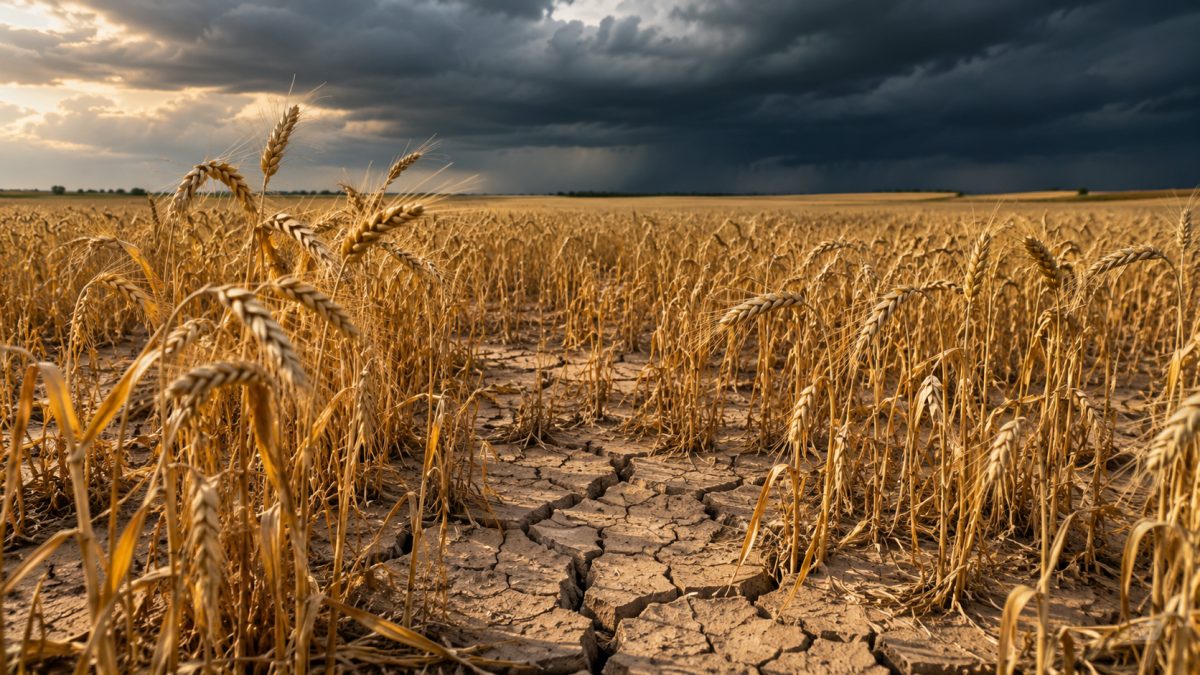
La Niña could cause greater damage to the global economy than El Niño, particularly by driving up food prices. That is what research by economists Gilles Dufrénot, William Ginn and Marc Pourroy, presented by the CNRS, suggests. Yet this cold phase of the equatorial Pacific receives less research attention than its famous warm counterpart, even though both regularly disrupt global agricultural production.
There is something paradoxical about the way we view climate disasters: we readily focus on those that make headlines, but far less on those that can weigh on our purchasing power for years. El Niño has a familiar name, a history and striking economic estimates. La Niña, by contrast, largely flies under the radar. Could this imbalance in attention be preventing us from understanding part of the global food supply risk?
Why could La Niña cost more than El Niño?
To understand the issue, we must first discard a misleading assumption: La Niña is not simply El Niño in reverse, with automatically opposite economic consequences.
Both are part of the same climate system, the El Niño–Southern Oscillation, generally known as ENSO. This system involves changes in sea surface temperatures in the equatorial Pacific, accompanied by shifts in atmospheric conditions. El Niño is the warm phase and La Niña the cold phase. These disruptions can alter rainfall and temperatures far beyond the Pacific Ocean.
According to the CNRS, El Niño typically recurs every two to seven years. Coface, meanwhile, describes a historical recurrence of ENSO events roughly every two to three years. These figures are not precise schedules: above all, they show that agricultural economies regularly face these climatic fluctuations.
The real change in perspective comes from the work of Gilles Dufrénot, William Ginn and Marc Pourroy. By studying the economic consequences of both phases, the researchers highlighted a long-underestimated risk: the cold phase could affect the global economy more severely than the warm phase, particularly through food prices.
However, the research finding must be distinguished from a complete explanation of it. The information published by the CNRS establishes this comparison, but does not, on its own, identify precisely which mechanisms account for the greater impact. Claiming that La Niña systematically destroys more crops or always causes higher inflation would therefore go beyond the established evidence.
My interpretation is this: the most dramatic phenomenon is not necessarily the one that produces the greatest economic shock. The severity of a disruption also depends on how economies are exposed to it. This is an essential distinction when trying to understand fluctuations in agricultural prices.
How can a temperature change in the Pacific affect our grocery bills?
At first glance, Pacific Ocean temperatures and the price of a packet of coffee bought in France seem worlds apart. Yet a chain of economic dependencies can connect them.
The first link is climatic. An ocean temperature anomaly influences atmospheric patterns and can change rainfall, drought or heat conditions in several parts of the world. The second link is agricultural: crops are sensitive to these weather conditions, and harvests may suffer. The third link concerns supplies and, potentially, prices.
Coface points out that El Niño and La Niña phases can affect global agricultural production. These effects are not necessarily uniform: a climate shift that harms some crops may also create more favorable conditions elsewhere.
It would therefore be wrong to portray La Niña as a mechanism that causes drought, shortages and inflation everywhere. The issue is more subtle: disruptions are unevenly distributed across regions, and their economic consequences depend on the crops involved.
Global food prices do not simply reflect how much the planet produces. They also reveal the fragility of the balance between producing regions and those that depend on their supplies.
This observation helps explain why measuring the intensity of a climate anomaly alone is not enough to predict its impact on consumers. Weather disruptions and economic disruptions cannot be measured with the same tools.
Wheat, coffee, cocoa: which foods should we really watch?
Wheat, coffee and cocoa illustrate three categories of food products whose prices directly matter to consumers. But we should not assume they react identically to La Niña episodes without data to demonstrate it.
Wheat: the harvest question
Wheat is a particularly clear example of the link between climate and food. If weather conditions become unfavorable in a producing region, crop availability may be affected. The consequences for prices will nevertheless depend on many economic and agricultural factors.
The available evidence does not identify a wheat-producing region particularly threatened by La Niña, nor does it quantify the phenomenon's effect on the price of this grain. Presenting such a relationship as automatic would be misleading.
Coffee and cocoa: markets to examine separately
Coffee and cocoa raise another question: how can climate disruptions affecting farming regions be passed on to processed products sold to consumers? Their place in our everyday diets makes this question tangible.
However, the data available here are not precise enough to quantify La Niña's specific effect on either market or confidently identify the most exposed regions. We must therefore distinguish their potential vulnerability to climate hazards from a price increase actually attributable to La Niña.
This distinction is not trivial. A rise in the price of coffee, cocoa or wheat is not, by itself, proof of a La Niña effect. Blaming every food price increase on the climate phenomenon of the moment would prevent us from understanding the respective roles of harvests, supply chains and other economic pressures.
Why does El Niño attract so much attention?
El Niño has an obvious media advantage: its story is easy to tell. Its name comes from Peruvian fishermen who noticed Pacific waters warming around December, accompanied by smaller catches. It is a recognizable phenomenon long associated with climatic upheaval.
It also benefits from striking economic estimates. The CNRS notably cites a Dartmouth University study published in Science estimating that the 2023 El Niño episode could cost the global economy up to $3 trillion by 2029.
That is a considerable figure. But it does not demonstrate in any way that La Niña would be less costly. It describes one El Niño episode and does not provide a direct comparison between the two climate phases.
Similarly, analysts cited by Goldman Sachs envisage an increase of up to 15.8% in global agricultural and food prices through 2028 under a super El Niño scenario. This projection is conditional and concerns the warm phase, not La Niña. Using it to calculate the consequences of the cold phase would be a mistake.
This is precisely the imbalance worth examining: widely reported figures exist for El Niño, while economic assessments of La Niña are less prominent in public debate. Yet the absence of equally dramatic statistics does not mean the absence of risk.
How can we prepare for La Niña without alarmist predictions?
The first thing to monitor is the evolution of the ENSO cycle. Pacific temperature observations and analyses by meteorological agencies are useful indicators for understanding phase changes. But they should not be mistaken for direct forecasts of food prices.
The second is to track actual agricultural consequences: weather conditions in producing regions, changes in harvests and possible supply difficulties. Only by connecting these different elements can an economic analysis become more relevant.
For markets, this approach means not limiting analysis to El Niño alone. For companies dependent on agricultural commodities, it encourages examining several scenarios rather than treating the return of cooler ocean conditions as a guarantee of stability.
For consumers, caution takes a different form. It would not be reasonable to recommend stockpiling wheat, coffee or cocoa solely because a La Niña episode has been announced. The available information establishes neither a certain price rise nor a precise timetable for these products.
Perhaps the real progress would be to change how we talk about climate risks. Instead of always looking for the most spectacular event, we should pay more attention to how recurring anomalies ripple through agricultural and economic systems. La Niña reminds us that a less conspicuous phenomenon can warrant considerable vigilance, even when its exact level of danger remains uncertain.
Frequently asked questions
Why could La Niña have a greater economic impact than El Niño?
Economists Gilles Dufrénot, William Ginn and Marc Pourroy studied the economic effects of both ENSO phases. Their work, presented by the CNRS, suggests that La Niña could have stronger consequences, particularly for food prices. However, the precise mechanisms behind this greater impact are not described in enough detail to establish a general rule.
Which food products and regions are most exposed?
ENSO-related climate disruptions can affect different agricultural products around the world. Wheat, coffee and cocoa deserve particular attention when studying food prices, but the available information does not allow them to be ranked by their specific exposure to La Niña. Nor does it provide a reliable list of the regions facing the greatest threat.
How can markets and consumers prepare for La Niña?
Monitoring ENSO phases, agricultural weather conditions and supplies is a sensible approach. However, none of these indicators alone can predict the price of wheat, coffee or cocoa. Consumers should therefore avoid treating a La Niña announcement as a guarantee that their expenses will soon rise.
Is La Niña always more dangerous than El Niño?
No. The cited economic research suggests that La Niña could have a greater impact, but does not show that every cold episode is more costly than every warm episode. The intensity of climate disruptions and their agricultural consequences can vary, so each situation must be assessed individually.