
 English
  French
  German
  Spanish
  Hindi
Hindi  Italian
  Japanese
  Korean
  Norwegian
  Chinese
2026 drought: French soils already worse than in 1976
In August 2026, France is experiencing an unprecedented drought. Despite a very wet winter, the country has swung from one extreme to the other in just a few months: from waterlogged soils in February to the driest ground ever recorded at this time of year. Four successive heatwaves, entire weeks without a drop of rain, rivers reduced to a trickle or completely dry... The picture is severe, and the comparison with 1976, the benchmark year for France's great drought, brings plenty of surprises.
Four heatwaves: an unprecedented summer in France
Since the end of May, France has endured a succession of heatwaves with no precedent in the meteorological record. Four official heatwaves have been recorded in less than three months, something never seen before. To put the intensity of the phenomenon into perspective: between May 15 and August 5, 2026, the national average temperature reached 23.04°C, compared with just 19.61°C over the same period in 1976. That is a difference of more than 3°C between the famous benchmark year and the current summer.
The direct consequence of this prolonged heat is record evapotranspiration: plants, soils and bodies of water have released far more water into the atmosphere than rainfall has been able to replace. The result is that soils have dried out at a rate never observed before.
Soils: the 1976 record has been broken
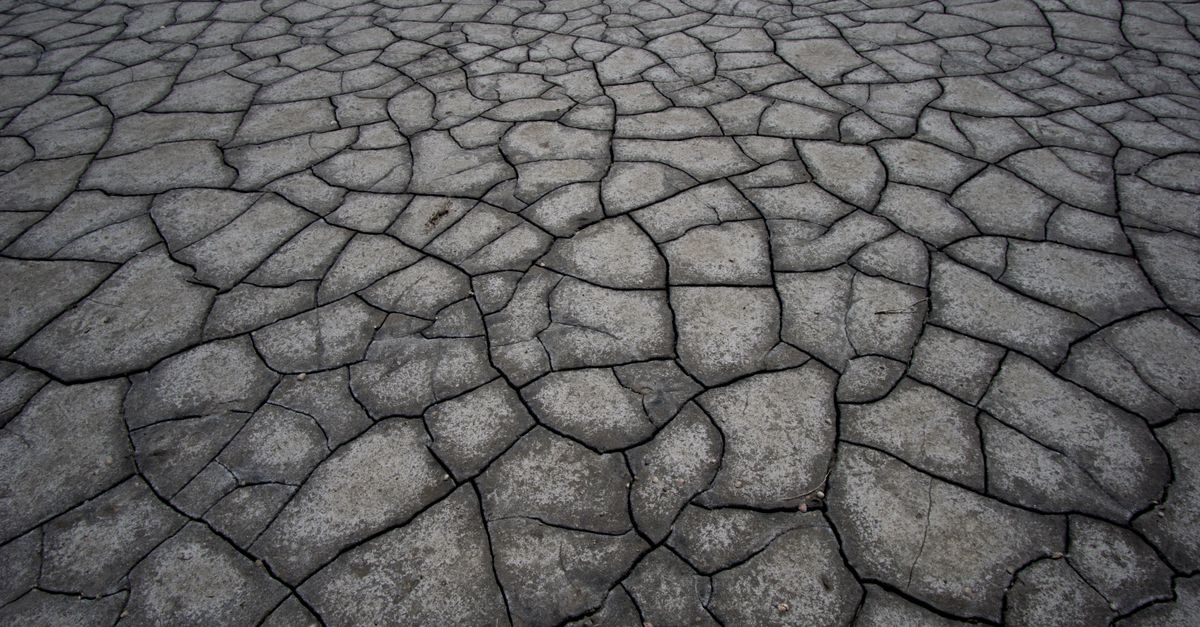
This is the figure causing the greatest concern among meteorologists and agronomists. France's soil moisture index has never been this low at this time of year. On a national average, readings from early August 2026 are lower than the levels reached during the great drought of 1976, which had until now been the absolute benchmark.
However, one major distinction is needed. In 1976, the rainfall deficit had begun as early as December 1975, and the spring had been remarkably dry. This year, by contrast, the winter of 2025-2026 was exceptionally wet, and soils were still saturated with water in February. It is therefore the surface soils — those directly reached by the shallow roots of crops — that are now drier than in 1976, while groundwater reserves remain, for the time being, in a less critical situation thanks to the reserves built up over the winter.
This distinction matters: surface drought is immediately visible and destructive for farming and waterways, but deep drought — affecting aquifers and underground reservoirs — has not yet reached the catastrophic levels seen in 1976.
Rivers and streams at record lows
The effects on waterways are striking. As of August 1, 2026, 1,373 waterways in France were experiencing interruptions in flow or were completely dry, a situation never previously recorded at this time of year. These dried-up streams and rivers create serious problems: surrounding crops cannot be irrigated, aquatic species suffer mass mortality, and the risk of fire rises in nearby forest areas.
Major rivers are not being spared. The Loire is at particularly low levels, and the same situation is being repeated across Europe. The Rhine in Germany is so low that freight vessels have to reduce their loads to 20% of capacity. In Italy, the Po has reached its lowest level ever measured at Cremona. Along the Danube in Hungary and Romania, nuclear reactors have had to be shut down because there was not enough water available for cooling.
Water restrictions across almost all of France
Faced with this situation, prefectures have issued increasing numbers of orders restricting water use. At the peak in July, 99 departments out of 101 were subject to restrictions, with some at the “crisis” level. These measures affect private individuals — limits on watering and bans on filling private swimming pools — as well as businesses and farmers, whose irrigation options have been drastically reduced.
For households, this means possible drinking-water outages in some rural municipalities, bans on watering gardens during the hottest hours, and restrictions on washing vehicles. In the worst-affected areas, tanker trucks have had to be deployed to supply villages whose local springs had dried up.
French agriculture under pressure
Farmers are on the front line. Grain yields are clearly down, with significant declines for maize, sunflowers and grassland. Livestock farmers face an alarming shortage of fodder: heat-scorched pastures can no longer feed herds, forcing farmers to use hay reserves intended for the winter. Wine-growing is holding up better in some regions because vines are relatively well adapted to heat, but even vineyards are suffering severe water stress in the hardest-hit areas.
What to expect in late August 2026
Some relief is appearing on the horizon. Weather models broadly agree on a gradual return of rain and thunderstorms from the week of August 18, with a potentially significant spell of wet and stormy weather expected between August 17 and 23. Some scenarios suggest up to 30 mm of rainfall in certain regions.
But specialists are tempering expectations. A few dozen millimetres of rain will not be enough to reverse months of accumulated deficit. Dried-out soils take time to regain their ability to retain water, and groundwater is only truly replenished in autumn and winter. The real turning point for the 2026 drought will not come before the major autumn rains.
In the meantime, France is living through a summer that will go down in the climate record. And the comparison with 1976 shows just how much climate change is redefining what “historic drought” means.
Key takeaway: The 2026 surface drought is already more severe than in 1976, but groundwater is holding up better thanks to the wet winter. The real risk of drinking-water shortages remains limited for now — but the situation will continue to deteriorate until sustained rain returns in autumn.