
 Korean
  French
  English
  Spanish
  Chinese
  Japanese
  Hindi
Hindi  German
  Norwegian
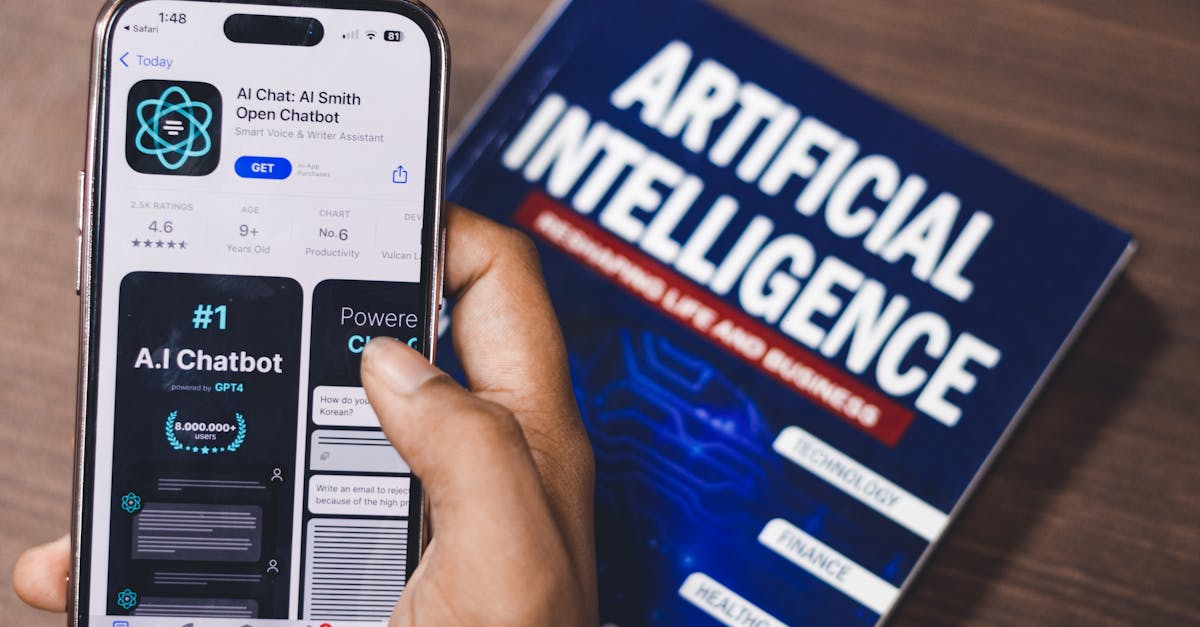
AI 2026: How Artificial Intelligence Is Changing Our Lives
Artificial intelligence is no longer reserved for research laboratories or large technology companies. In 2026, it has quietly slipped into our daily lives, transforming the way we work, learn, care for ourselves and live. Here is a concrete overview of this silent revolution reshaping our habits.
AI at work: an indispensable digital collaborator
In offices and remote working alike, artificial intelligence has become a full-fledged colleague. AI assistants generate meeting minutes in real time, draft first versions of reports, respond to routine emails and analyse data tables in seconds. According to a study published in early 2026, more than 65% of French employees use at least one AI tool in their working day.
Sectors such as law, accounting, marketing and logistics have particularly benefited from these tools. A lawyer can now analyse hundreds of pages of case law in a few minutes. An accountant automates invoice reconciliation that used to take hours. Far from eliminating jobs, AI seems above all to free professionals from repetitive tasks so they can focus on added value.
Healthcare: AI's favourite playground
It is in the medical field that advances are most spectacular. In 2026, AI algorithms outperform human radiologists in the early detection of certain cancers in medical images. Prediction models make it possible to anticipate relapses or complications before symptoms even appear.
At the individual level, smartwatches and health apps continuously analyse our heart rate, sleep and stress levels. Some platforms now offer an AI health assessment based on physiological data collected over several weeks, with personalised recommendations on diet, physical activity or stress management.
"AI does not replace the doctor, it enhances them. It gives them access to a volume of information and analyses impossible to process manually." — Dr. Sophie Arnaud, general practitioner and e-health specialist.
Personalised education thanks to AI
Gone are the identical lectures for everyone. In 2026, AI-powered educational platforms adapt the pace, level and pedagogical content to each student in real time. If a child struggles with fractions, the algorithm automatically suggests additional exercises tailored to their learning profile. If they progress quickly, they access enriched content without waiting.
This mass personalisation also benefits adults in continuing education. Thousands of workers use AI learning platforms to retrain or acquire new skills, at their own pace and according to their availability. AI tutoring is available 24/7, patient, non-judgmental and infinitely adaptable.
The smart home: AI at the heart of the household
The smart home of 2026 bears no resemblance to the first generations of connected homes. AI systems learn your habits and anticipate your needs. Heating adjusts automatically according to the forecast weather and your weekly schedule. Shutters close before an announced shower. The refrigerator orders missing items from your usual shopping list.
Voice assistants have become true conductors of the home, capable of simultaneously managing dozens of devices, answering complex questions and coordinating domestic tasks. They now understand context, nuance and even implicit requests.
Ethical and social issues not to be ignored
This massive integration of AI raises fundamental questions that French society is beginning to take seriously. The protection of personal data is at the forefront of concerns: who owns the information collected by these algorithms? How is it used? The European AI regulation, progressively entering into force since 2024, provides a regulatory framework, but challenges remain numerous.
- Algorithmic bias: a poorly trained recruitment algorithm can discriminate against candidates on invisible yet very real criteria.
- The digital divide: not all citizens have the same access or skills to benefit from AI tools.
- Disinformation: the large-scale generation of fake content, images or text, remains a major challenge for platforms and media.
- Technological dependence: as AI takes over more cognitive tasks, the question of human autonomy arises acutely.
How to make the most of AI in daily life?
Faced with this revolution, the most useful attitude is neither rejection nor blind enthusiasm. Here are some concrete steps to adopt AI in an informed way:
- Train yourself on available tools: many free or low-cost courses allow you to master the most common AI assistants.
- Keep a critical eye: results produced by AI should always be verified, especially on sensitive subjects (health, law, finance).
- Protect your data: read the terms of use, do not share sensitive information with uncertified tools.
- Value what AI cannot replace: creativity, empathy, moral judgement and human connection remain irreplaceable skills.
The artificial intelligence of 2026 is neither the dystopian threat of science fiction nor the miracle solution to all our problems. It is a powerful tool, with many faces, that amplifies both our capabilities and our responsibilities. It is up to us to choose how we want to integrate it into our lives.



AI 2026: How Artificial Intelligence Is Changing Our Lives
Artificial intelligence is no longer reserved for research laboratories or large technology companies. In 2026, it has quietly slipped into our daily lives, transforming the way we work, learn, care for ourselves and live. Here is a concrete overview of this silent revolution reshaping our habits.
AI at work: an indispensable digital collaborator
In offices and remote working alike, artificial intelligence has become a full-fledged colleague. AI assistants generate meeting minutes in real time, draft first versions of reports, respond to routine emails and analyse data tables in seconds. According to a study published in early 2026, more than 65% of French employees use at least one AI tool in their working day.
Sectors such as law, accounting, marketing and logistics have particularly benefited from these tools. A lawyer can now analyse hundreds of pages of case law in a few minutes. An accountant automates invoice reconciliation that used to take hours. Far from eliminating jobs, AI seems above all to free professionals from repetitive tasks so they can focus on added value.
Healthcare: AI's favourite playground
It is in the medical field that advances are most spectacular. In 2026, AI algorithms outperform human radiologists in the early detection of certain cancers in medical images. Prediction models make it possible to anticipate relapses or complications before symptoms even appear.
At the individual level, smartwatches and health apps continuously analyse our heart rate, sleep and stress levels. Some platforms now offer an AI health assessment based on physiological data collected over several weeks, with personalised recommendations on diet, physical activity or stress management.
"AI does not replace the doctor, it enhances them. It gives them access to a volume of information and analyses impossible to process manually." — Dr. Sophie Arnaud, general practitioner and e-health specialist.
Personalised education thanks to AI
Gone are the identical lectures for everyone. In 2026, AI-powered educational platforms adapt the pace, level and pedagogical content to each student in real time. If a child struggles with fractions, the algorithm automatically suggests additional exercises tailored to their learning profile. If they progress quickly, they access enriched content without waiting.
This mass personalisation also benefits adults in continuing education. Thousands of workers use AI learning platforms to retrain or acquire new skills, at their own pace and according to their availability. AI tutoring is available 24/7, patient, non-judgmental and infinitely adaptable.
The smart home: AI at the heart of the household
The smart home of 2026 bears no resemblance to the first generations of connected homes. AI systems learn your habits and anticipate your needs. Heating adjusts automatically according to the forecast weather and your weekly schedule. Shutters close before an announced shower. The refrigerator orders missing items from your usual shopping list.
Voice assistants have become true conductors of the home, capable of simultaneously managing dozens of devices, answering complex questions and coordinating domestic tasks. They now understand context, nuance and even implicit requests.
Ethical and social issues not to be ignored
This massive integration of AI raises fundamental questions that French society is beginning to take seriously. The protection of personal data is at the forefront of concerns: who owns the information collected by these algorithms? How is it used? The European AI regulation, progressively entering into force since 2024, provides a regulatory framework, but challenges remain numerous.
- Algorithmic bias: a poorly trained recruitment algorithm can discriminate against candidates on invisible yet very real criteria.
- The digital divide: not all citizens have the same access or skills to benefit from AI tools.
- Disinformation: the large-scale generation of fake content, images or text, remains a major challenge for platforms and media.
- Technological dependence: as AI takes over more cognitive tasks, the question of human autonomy arises acutely.
How to make the most of AI in daily life?
Faced with this revolution, the most useful attitude is neither rejection nor blind enthusiasm. Here are some concrete steps to adopt AI in an informed way:
- Train yourself on available tools: many free or low-cost courses allow you to master the most common AI assistants.
- Keep a critical eye: results produced by AI should always be verified, especially on sensitive subjects (health, law, finance).
- Protect your data: read the terms of use, do not share sensitive information with uncertified tools.
- Value what AI cannot replace: creativity, empathy, moral judgement and human connection remain irreplaceable skills.
The artificial intelligence of 2026 is neither the dystopian threat of science fiction nor the miracle solution to all our problems. It is a powerful tool, with many faces, that amplifies both our capabilities and our responsibilities. It is up to us to choose how we want to integrate it into our lives.
AI 2026: How Artificial Intelligence Is Changing Our Lives
Artificial intelligence is no longer reserved for research laboratories or large technology companies. In 2026, it has quietly slipped into our daily lives, transforming the way we work, learn, care for ourselves and live. Here is a concrete overview of this silent revolution reshaping our habits.
AI at work: an indispensable digital collaborator
In offices and remote working alike, artificial intelligence has become a full-fledged colleague. AI assistants generate meeting minutes in real time, draft first versions of reports, respond to routine emails and analyse data tables in seconds. According to a study published in early 2026, more than 65% of French employees use at least one AI tool in their working day.
Sectors such as law, accounting, marketing and logistics have particularly benefited from these tools. A lawyer can now analyse hundreds of pages of case law in a few minutes. An accountant automates invoice reconciliation that used to take hours. Far from eliminating jobs, AI seems above all to free professionals from repetitive tasks so they can focus on added value.
Healthcare: AI's favourite playground
It is in the medical field that advances are most spectacular. In 2026, AI algorithms outperform human radiologists in the early detection of certain cancers in medical images. Prediction models make it possible to anticipate relapses or complications before symptoms even appear.
At the individual level, smartwatches and health apps continuously analyse our heart rate, sleep and stress levels. Some platforms now offer an AI health assessment based on physiological data collected over several weeks, with personalised recommendations on diet, physical activity or stress management.
"AI does not replace the doctor, it enhances them. It gives them access to a volume of information and analyses impossible to process manually." — Dr. Sophie Arnaud, general practitioner and e-health specialist.
Personalised education thanks to AI
Gone are the identical lectures for everyone. In 2026, AI-powered educational platforms adapt the pace, level and pedagogical content to each student in real time. If a child struggles with fractions, the algorithm automatically suggests additional exercises tailored to their learning profile. If they progress quickly, they access enriched content without waiting.
This mass personalisation also benefits adults in continuing education. Thousands of workers use AI learning platforms to retrain or acquire new skills, at their own pace and according to their availability. AI tutoring is available 24/7, patient, non-judgmental and infinitely adaptable.
The smart home: AI at the heart of the household
The smart home of 2026 bears no resemblance to the first generations of connected homes. AI systems learn your habits and anticipate your needs. Heating adjusts automatically according to the forecast weather and your weekly schedule. Shutters close before an announced shower. The refrigerator orders missing items from your usual shopping list.
Voice assistants have become true conductors of the home, capable of simultaneously managing dozens of devices, answering complex questions and coordinating domestic tasks. They now understand context, nuance and even implicit requests.
Ethical and social issues not to be ignored
This massive integration of AI raises fundamental questions that French society is beginning to take seriously. The protection of personal data is at the forefront of concerns: who owns the information collected by these algorithms? How is it used? The European AI regulation, progressively entering into force since 2024, provides a regulatory framework, but challenges remain numerous.
- Algorithmic bias: a poorly trained recruitment algorithm can discriminate against candidates on invisible yet very real criteria.
- The digital divide: not all citizens have the same access or skills to benefit from AI tools.
- Disinformation: the large-scale generation of fake content, images or text, remains a major challenge for platforms and media.
- Technological dependence: as AI takes over more cognitive tasks, the question of human autonomy arises acutely.
How to make the most of AI in daily life?
Faced with this revolution, the most useful attitude is neither rejection nor blind enthusiasm. Here are some concrete steps to adopt AI in an informed way:
- Train yourself on available tools: many free or low-cost courses allow you to master the most common AI assistants.
- Keep a critical eye: results produced by AI should always be verified, especially on sensitive subjects (health, law, finance).
- Protect your data: read the terms of use, do not share sensitive information with uncertified tools.
- Value what AI cannot replace: creativity, empathy, moral judgement and human connection remain irreplaceable skills.
The artificial intelligence of 2026 is neither the dystopian threat of science fiction nor the miracle solution to all our problems. It is a powerful tool, with many faces, that amplifies both our capabilities and our responsibilities. It is up to us to choose how we want to integrate it into our lives.