
 German
  French
  English
  Spanish
  Chinese
  Japanese
  Korean
  Hindi
Hindi  Norwegian
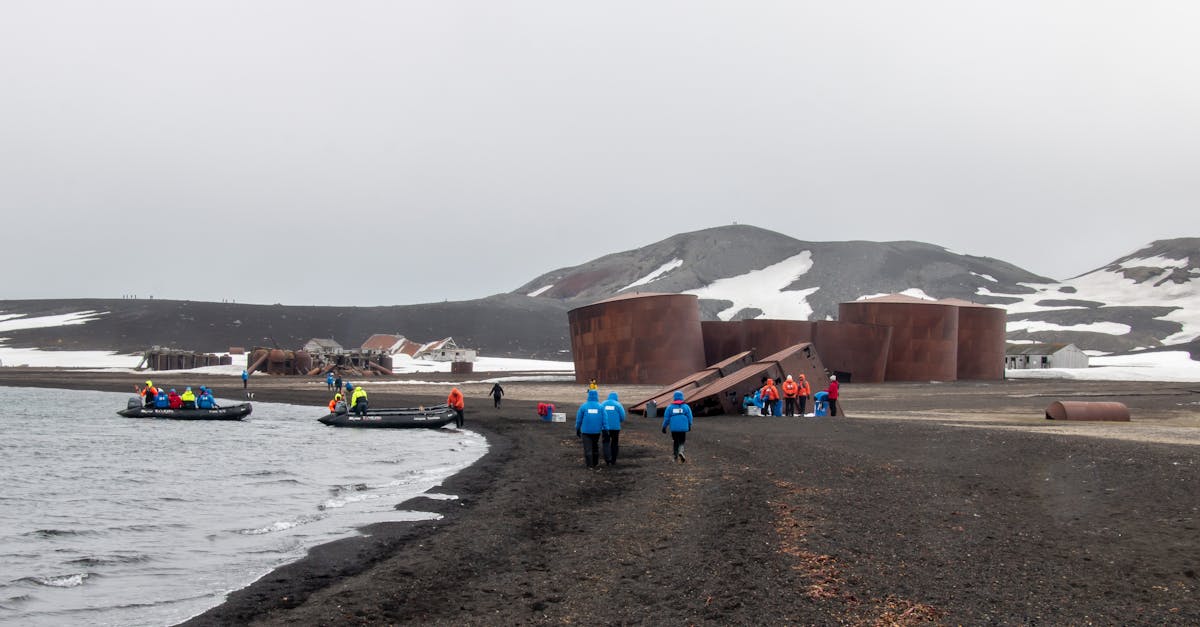
Antarctica: an unknown island discovered by researchers
At the start of 2026, researchers aboard the German icebreaker Polarstern made an unexpected discovery in the Weddell Sea: a rocky island, never listed on any nautical chart. Absent from all official inventories, this 130-meter-long landmass was spotted by chance during a storm. An event that speaks volumes about our limited knowledge of Antarctica and the acceleration of climate changes in this region of the globe.
A storm at the origin of an extraordinary discovery
In March 2026, the Polarstern, the icebreaker of the Alfred Wegener Institute (AWI), was navigating the Weddell Sea as part of a scientific mission on ocean currents and the evolution of the Antarctic ice sheet. The 93 scientists on board were collecting data on the ice-ocean system when a storm forced the ship to seek shelter near Joinville Island.
It was in this context that the crew noticed an unusual shape on the surface. On official nautical charts, the area was simply marked as dangerous, without further details. What at first resembled just another iceberg turned out to be quite different as the Polarstern drew closer.
An iceberg hiding a rocky island
"We could see a mass that looked dirty, not really like a typical block of ice," recounted one of the specialists on board. As they drew closer, there was no longer any doubt: it was not ice, but solid rock. The team immediately altered its course to investigate more closely.
The Polarstern made several passes around the island, mapping it precisely using a multibeam sonar. A drone was also deployed to obtain detailed aerial imagery. The verdict came quickly: approximately 130 meters long, 50 meters wide, and about fifteen meters high. A small island, but significant enough to surprise everyone.
Known… but poorly mapped
What makes the discovery even more intriguing is that this island was not entirely unknown. Some nautical charts did mention a "hazard" in the area, without specifying its nature or exact location. On satellite imagery, the island blended into the surrounding landscape, confused with drifting ice floes.
Its ice-covered surface made it nearly indistinguishable from typical icebergs. This phenomenon of natural camouflage shows how Antarctic exploration remains a considerable challenge, even in the age of high-resolution satellites and reconnaissance drones.
A discovery set in the context of climate change
Beyond the anecdote, this discovery fits into a much broader scientific context. The Weddell Sea is considered one of the key nodes of global ocean circulation. It plays a crucial role in the exchange of heat and carbon between Antarctica and the rest of the world's oceans — processes that directly regulate the global climate.
And the observations made during this expedition are alarming. Since 2017, summer sea ice in this area has been receding significantly and at an accelerating pace. The main cause: the warming of surface waters, which is destabilizing a natural system long considered relatively stable by climatologists.
Sea ice in full transformation
On site, scientists measured large variations in ice thickness: up to 4 meters in some sectors, compared to only 1.5 meters elsewhere. The ice is often less snow-covered, darker in places, sometimes slightly bluish — all signs of a deep alteration of its internal structure.
Beneath this transformed ice layer, accumulations of fresh water from melting are altering heat exchanges with seawater. A phenomenon likely to influence the local marine food chain and disrupt the carbon cycle in the region — with repercussions that extend well beyond Antarctica's borders.
An island without a name... for now
Since the official announcement of the discovery on April 15, 2026, the island has attracted considerable interest in the international scientific community. It has been precisely mapped for navigational safety, but has not yet received an official name. The process of naming Antarctic lands is governed by the Scientific Committee on Antarctic Research (SCAR), and can take several months.
In the meantime, scientists from the Alfred Wegener Institute are preparing their data for publication in an international journal. Additional analyses of the island's geological composition will shed further light on its history and the evolution of the Antarctic subsoil in this area.
A lesson in humility in the face of the planet's mysteries
This discovery is a reminder of an often-forgotten reality: despite satellites, drones, and cutting-edge technologies, the Earth still holds well-kept secrets. Antarctica remains one of the last unexplored spaces on our planet. Its geography is evolving, lands emerge as the ice retreats — and some of these revelations are literally unprecedented.
For the scientists of the Polarstern, what was supposed to be a simple refuge from the storm turned into a historic discovery. An unnamed island, lost in the frozen waters of the Weddell Sea, now raises as many questions as it answers. And perhaps that is the whole point of science: to find the unexpected where one was barely looking.
The discovery of this island, absent from all maps, illustrates just how much Antarctica remains an open scientific frontier — and how climate change is reshaping this continent of ice faster than we can map it.



Antarctica: an unknown island discovered by researchers
At the start of 2026, researchers aboard the German icebreaker Polarstern made an unexpected discovery in the Weddell Sea: a rocky island, never listed on any nautical chart. Absent from all official inventories, this 130-meter-long landmass was spotted by chance during a storm. An event that speaks volumes about our limited knowledge of Antarctica and the acceleration of climate changes in this region of the globe.
A storm at the origin of an extraordinary discovery
In March 2026, the Polarstern, the icebreaker of the Alfred Wegener Institute (AWI), was navigating the Weddell Sea as part of a scientific mission on ocean currents and the evolution of the Antarctic ice sheet. The 93 scientists on board were collecting data on the ice-ocean system when a storm forced the ship to seek shelter near Joinville Island.
It was in this context that the crew noticed an unusual shape on the surface. On official nautical charts, the area was simply marked as dangerous, without further details. What at first resembled just another iceberg turned out to be quite different as the Polarstern drew closer.
An iceberg hiding a rocky island
"We could see a mass that looked dirty, not really like a typical block of ice," recounted one of the specialists on board. As they drew closer, there was no longer any doubt: it was not ice, but solid rock. The team immediately altered its course to investigate more closely.
The Polarstern made several passes around the island, mapping it precisely using a multibeam sonar. A drone was also deployed to obtain detailed aerial imagery. The verdict came quickly: approximately 130 meters long, 50 meters wide, and about fifteen meters high. A small island, but significant enough to surprise everyone.
Known… but poorly mapped
What makes the discovery even more intriguing is that this island was not entirely unknown. Some nautical charts did mention a "hazard" in the area, without specifying its nature or exact location. On satellite imagery, the island blended into the surrounding landscape, confused with drifting ice floes.
Its ice-covered surface made it nearly indistinguishable from typical icebergs. This phenomenon of natural camouflage shows how Antarctic exploration remains a considerable challenge, even in the age of high-resolution satellites and reconnaissance drones.
A discovery set in the context of climate change
Beyond the anecdote, this discovery fits into a much broader scientific context. The Weddell Sea is considered one of the key nodes of global ocean circulation. It plays a crucial role in the exchange of heat and carbon between Antarctica and the rest of the world's oceans — processes that directly regulate the global climate.
And the observations made during this expedition are alarming. Since 2017, summer sea ice in this area has been receding significantly and at an accelerating pace. The main cause: the warming of surface waters, which is destabilizing a natural system long considered relatively stable by climatologists.
Sea ice in full transformation
On site, scientists measured large variations in ice thickness: up to 4 meters in some sectors, compared to only 1.5 meters elsewhere. The ice is often less snow-covered, darker in places, sometimes slightly bluish — all signs of a deep alteration of its internal structure.
Beneath this transformed ice layer, accumulations of fresh water from melting are altering heat exchanges with seawater. A phenomenon likely to influence the local marine food chain and disrupt the carbon cycle in the region — with repercussions that extend well beyond Antarctica's borders.
An island without a name... for now
Since the official announcement of the discovery on April 15, 2026, the island has attracted considerable interest in the international scientific community. It has been precisely mapped for navigational safety, but has not yet received an official name. The process of naming Antarctic lands is governed by the Scientific Committee on Antarctic Research (SCAR), and can take several months.
In the meantime, scientists from the Alfred Wegener Institute are preparing their data for publication in an international journal. Additional analyses of the island's geological composition will shed further light on its history and the evolution of the Antarctic subsoil in this area.
A lesson in humility in the face of the planet's mysteries
This discovery is a reminder of an often-forgotten reality: despite satellites, drones, and cutting-edge technologies, the Earth still holds well-kept secrets. Antarctica remains one of the last unexplored spaces on our planet. Its geography is evolving, lands emerge as the ice retreats — and some of these revelations are literally unprecedented.
For the scientists of the Polarstern, what was supposed to be a simple refuge from the storm turned into a historic discovery. An unnamed island, lost in the frozen waters of the Weddell Sea, now raises as many questions as it answers. And perhaps that is the whole point of science: to find the unexpected where one was barely looking.
The discovery of this island, absent from all maps, illustrates just how much Antarctica remains an open scientific frontier — and how climate change is reshaping this continent of ice faster than we can map it.
Antarctica: an unknown island discovered by researchers
At the start of 2026, researchers aboard the German icebreaker Polarstern made an unexpected discovery in the Weddell Sea: a rocky island, never listed on any nautical chart. Absent from all official inventories, this 130-meter-long landmass was spotted by chance during a storm. An event that speaks volumes about our limited knowledge of Antarctica and the acceleration of climate changes in this region of the globe.
A storm at the origin of an extraordinary discovery
In March 2026, the Polarstern, the icebreaker of the Alfred Wegener Institute (AWI), was navigating the Weddell Sea as part of a scientific mission on ocean currents and the evolution of the Antarctic ice sheet. The 93 scientists on board were collecting data on the ice-ocean system when a storm forced the ship to seek shelter near Joinville Island.
It was in this context that the crew noticed an unusual shape on the surface. On official nautical charts, the area was simply marked as dangerous, without further details. What at first resembled just another iceberg turned out to be quite different as the Polarstern drew closer.
An iceberg hiding a rocky island
"We could see a mass that looked dirty, not really like a typical block of ice," recounted one of the specialists on board. As they drew closer, there was no longer any doubt: it was not ice, but solid rock. The team immediately altered its course to investigate more closely.
The Polarstern made several passes around the island, mapping it precisely using a multibeam sonar. A drone was also deployed to obtain detailed aerial imagery. The verdict came quickly: approximately 130 meters long, 50 meters wide, and about fifteen meters high. A small island, but significant enough to surprise everyone.
Known… but poorly mapped
What makes the discovery even more intriguing is that this island was not entirely unknown. Some nautical charts did mention a "hazard" in the area, without specifying its nature or exact location. On satellite imagery, the island blended into the surrounding landscape, confused with drifting ice floes.
Its ice-covered surface made it nearly indistinguishable from typical icebergs. This phenomenon of natural camouflage shows how Antarctic exploration remains a considerable challenge, even in the age of high-resolution satellites and reconnaissance drones.
A discovery set in the context of climate change
Beyond the anecdote, this discovery fits into a much broader scientific context. The Weddell Sea is considered one of the key nodes of global ocean circulation. It plays a crucial role in the exchange of heat and carbon between Antarctica and the rest of the world's oceans — processes that directly regulate the global climate.
And the observations made during this expedition are alarming. Since 2017, summer sea ice in this area has been receding significantly and at an accelerating pace. The main cause: the warming of surface waters, which is destabilizing a natural system long considered relatively stable by climatologists.
Sea ice in full transformation
On site, scientists measured large variations in ice thickness: up to 4 meters in some sectors, compared to only 1.5 meters elsewhere. The ice is often less snow-covered, darker in places, sometimes slightly bluish — all signs of a deep alteration of its internal structure.
Beneath this transformed ice layer, accumulations of fresh water from melting are altering heat exchanges with seawater. A phenomenon likely to influence the local marine food chain and disrupt the carbon cycle in the region — with repercussions that extend well beyond Antarctica's borders.
An island without a name... for now
Since the official announcement of the discovery on April 15, 2026, the island has attracted considerable interest in the international scientific community. It has been precisely mapped for navigational safety, but has not yet received an official name. The process of naming Antarctic lands is governed by the Scientific Committee on Antarctic Research (SCAR), and can take several months.
In the meantime, scientists from the Alfred Wegener Institute are preparing their data for publication in an international journal. Additional analyses of the island's geological composition will shed further light on its history and the evolution of the Antarctic subsoil in this area.
A lesson in humility in the face of the planet's mysteries
This discovery is a reminder of an often-forgotten reality: despite satellites, drones, and cutting-edge technologies, the Earth still holds well-kept secrets. Antarctica remains one of the last unexplored spaces on our planet. Its geography is evolving, lands emerge as the ice retreats — and some of these revelations are literally unprecedented.
For the scientists of the Polarstern, what was supposed to be a simple refuge from the storm turned into a historic discovery. An unnamed island, lost in the frozen waters of the Weddell Sea, now raises as many questions as it answers. And perhaps that is the whole point of science: to find the unexpected where one was barely looking.
The discovery of this island, absent from all maps, illustrates just how much Antarctica remains an open scientific frontier — and how climate change is reshaping this continent of ice faster than we can map it.