
 Hindi
Hindi  French
  English
  Spanish
  Chinese
  Japanese
  Korean
  German
  Norwegian
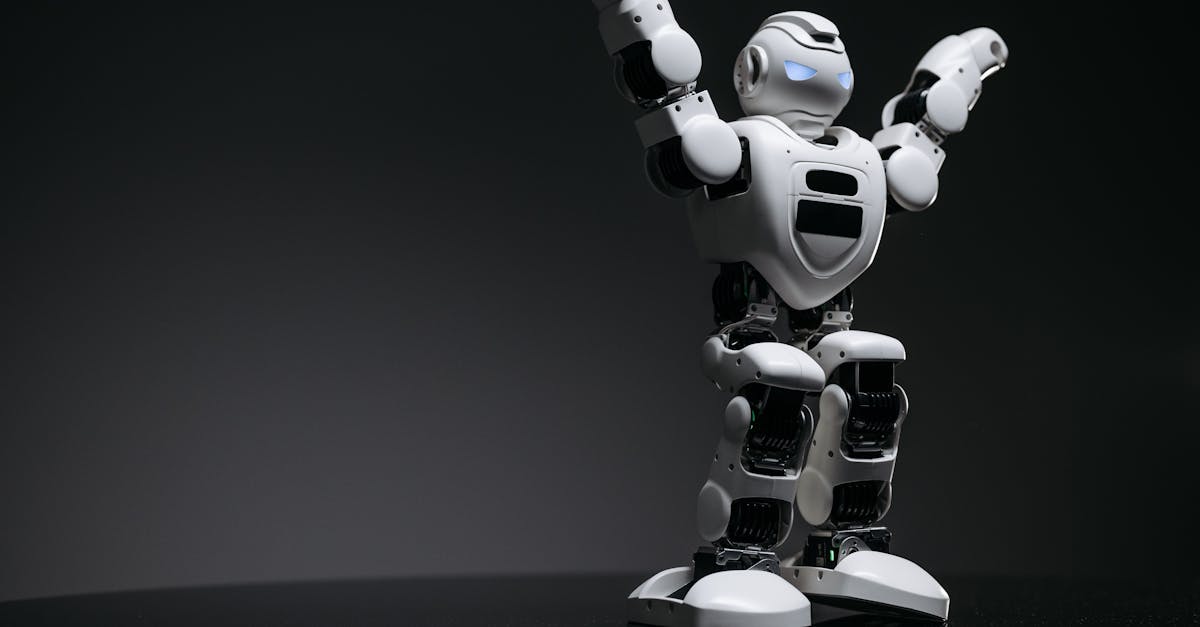
Humanoid Robots: The Factory Invasion Begins in 2026
For years, humanoid robots were confined to research laboratories and spectacular demonstrations on YouTube. In 2026, that has changed radically: Tesla, Boston Dynamics, and Figure AI are now deploying their two-legged machines in real industrial environments, with thousands of units in production. The era of large-scale humanoid robotics has truly begun.
Tesla Optimus: Over 1,000 Units Deployed in Factories
It is one of Elon Musk's boldest bets, and it is starting to pay off. The third generation of Optimus, unveiled in early 2026, marks a decisive turning point. The robot features completely redesigned actuators, noticeably smoother movements, and increased autonomy thanks to machine learning software developed in-house by Tesla.
In late 2025 and early 2026, Tesla deployed more than 1,000 Optimus Gen 2 and Gen 3 units in its own manufacturing facilities, notably in Fremont and at the Texas Gigafactory. These robots perform repetitive tasks on assembly lines: component handling, quality control, moving heavy parts.
"Optimus will be the most valuable asset Tesla has ever created. It will be more valuable than Tesla itself."
— Elon Musk, at an investor presentation
On pricing, Musk confirmed that the robot should be commercialized between $20,000 and $30,000 once mass production is achieved, potentially as early as 2027-2028. An ambitious price, but one that many industrialists consider competitive against certain labor costs.
Boston Dynamics Atlas: The Industrial Robot Proves Itself at Hyundai
Boston Dynamics, a subsidiary of the Hyundai Group, created a surprise at CES 2026 by presenting the commercial production version of Electric Atlas. This next-generation humanoid robot stands out for its exceptional mechanical performance — high movement speed, a capacity to lift up to 25 kg, and impressive agility in cluttered environments.
But what is most striking is the concrete deployment. Hyundai plans to integrate tens of thousands of Atlas units into its automotive factories around the world. Google DeepMind's artificial intelligence is embedded in the robot, allowing it to learn new tasks in just a few hours, thanks to demonstration and imitation techniques.
Atlas can now be:
- Teleoperated via virtual reality for complex tasks
- Tablet-controlled for simple repetitive operations
- Autonomous on tasks it has learned to perform
This flexibility is precisely what industrialists are looking for, as they can deploy the same robot on several types of missions depending on current needs.
Figure 03: $39 Billion Valuation and Concrete Proof at BMW
California startup Figure AI made a strong statement with the launch of Figure 03 in late 2025. Valued at $39 billion after its latest funding round, the company achieved something few competitors had managed: a real large-scale industrial deployment.
The pilot at BMW's Spartanburg plant is telling. Within a few months, Figure robots supported the production of more than 30,000 vehicles. They perform sorting, assembly, and handling operations alongside human operators, without major incidents and with productivity deemed satisfactory by the German manufacturer.
Figure 03 primarily targets three sectors:
- Logistics (sorting, packaging, warehouse management)
- Industrial manufacturing (assembly, welding, inspection)
- Commercial environments (cleaning, food service, assistance)
Other Players to Watch
Beyond the three giants, other companies are carving out their place in the race:
- Unitree (China) with its H1 and G1 models, less expensive but already sold in several thousand units worldwide, including in Europe.
- 1X Technologies (Norway) and its NEO robot, designed specifically for homes and small spaces.
- Apptronik (USA) with Apollo, developed in partnership with NASA and currently being tested in several American factories.
- Agility Robotics and its Digit, already working in Amazon warehouses.
The Impact on Employment: Should We Be Worried?
The question that is stirring labor market experts is inevitable: will these robots destroy jobs? The reality is nuanced. On one hand, the most physically demanding, repetitive, and arduous positions are clearly in the crosshairs. On the other hand, implementing and supervising these machines creates new needs for technical skills.
In France, a recent study estimated that advanced automation — including humanoid robotics — could deeply transform up to 40% of tasks in the manufacturing industry by 2030. But "transform" does not necessarily mean "eliminate": many of these positions could evolve toward more supervision, maintenance, or programming.
Unions, particularly in Germany and France, are beginning to negotiate retraining clauses in collective agreements related to the introduction of robots in production lines. A cautious approach that testifies to the inevitable nature of this revolution.
And What About France?
France is not left behind. The government announced a support plan for advanced robotics as part of its industrial strategy. Several French SMEs are working on specialized components for humanoid robots, particularly in actuators and sensors. Companies like Wandercraft, known for its walking exoskeleton, are closely interested in the emerging market for industrial assistance robots.
France will also host several major robotics conferences in 2026, confirming the growing interest of the national business community in this technology.
Conclusion: An Unprecedented Industrial Transformation
Humanoid robots are no longer science fiction. They assemble cars, move packages, and inspect production lines. In 2026, the question is no longer whether they will transform industry, but how quickly. For businesses, decision-makers, and workers, it is urgent to understand this phenomenon to anticipate its effects — and make the most of it.



Humanoid Robots: The Factory Invasion Begins in 2026
For years, humanoid robots were confined to research laboratories and spectacular demonstrations on YouTube. In 2026, that has changed radically: Tesla, Boston Dynamics, and Figure AI are now deploying their two-legged machines in real industrial environments, with thousands of units in production. The era of large-scale humanoid robotics has truly begun.
Tesla Optimus: Over 1,000 Units Deployed in Factories
It is one of Elon Musk's boldest bets, and it is starting to pay off. The third generation of Optimus, unveiled in early 2026, marks a decisive turning point. The robot features completely redesigned actuators, noticeably smoother movements, and increased autonomy thanks to machine learning software developed in-house by Tesla.
In late 2025 and early 2026, Tesla deployed more than 1,000 Optimus Gen 2 and Gen 3 units in its own manufacturing facilities, notably in Fremont and at the Texas Gigafactory. These robots perform repetitive tasks on assembly lines: component handling, quality control, moving heavy parts.
"Optimus will be the most valuable asset Tesla has ever created. It will be more valuable than Tesla itself."
— Elon Musk, at an investor presentation
On pricing, Musk confirmed that the robot should be commercialized between $20,000 and $30,000 once mass production is achieved, potentially as early as 2027-2028. An ambitious price, but one that many industrialists consider competitive against certain labor costs.
Boston Dynamics Atlas: The Industrial Robot Proves Itself at Hyundai
Boston Dynamics, a subsidiary of the Hyundai Group, created a surprise at CES 2026 by presenting the commercial production version of Electric Atlas. This next-generation humanoid robot stands out for its exceptional mechanical performance — high movement speed, a capacity to lift up to 25 kg, and impressive agility in cluttered environments.
But what is most striking is the concrete deployment. Hyundai plans to integrate tens of thousands of Atlas units into its automotive factories around the world. Google DeepMind's artificial intelligence is embedded in the robot, allowing it to learn new tasks in just a few hours, thanks to demonstration and imitation techniques.
Atlas can now be:
- Teleoperated via virtual reality for complex tasks
- Tablet-controlled for simple repetitive operations
- Autonomous on tasks it has learned to perform
This flexibility is precisely what industrialists are looking for, as they can deploy the same robot on several types of missions depending on current needs.
Figure 03: $39 Billion Valuation and Concrete Proof at BMW
California startup Figure AI made a strong statement with the launch of Figure 03 in late 2025. Valued at $39 billion after its latest funding round, the company achieved something few competitors had managed: a real large-scale industrial deployment.
The pilot at BMW's Spartanburg plant is telling. Within a few months, Figure robots supported the production of more than 30,000 vehicles. They perform sorting, assembly, and handling operations alongside human operators, without major incidents and with productivity deemed satisfactory by the German manufacturer.
Figure 03 primarily targets three sectors:
- Logistics (sorting, packaging, warehouse management)
- Industrial manufacturing (assembly, welding, inspection)
- Commercial environments (cleaning, food service, assistance)
Other Players to Watch
Beyond the three giants, other companies are carving out their place in the race:
- Unitree (China) with its H1 and G1 models, less expensive but already sold in several thousand units worldwide, including in Europe.
- 1X Technologies (Norway) and its NEO robot, designed specifically for homes and small spaces.
- Apptronik (USA) with Apollo, developed in partnership with NASA and currently being tested in several American factories.
- Agility Robotics and its Digit, already working in Amazon warehouses.
The Impact on Employment: Should We Be Worried?
The question that is stirring labor market experts is inevitable: will these robots destroy jobs? The reality is nuanced. On one hand, the most physically demanding, repetitive, and arduous positions are clearly in the crosshairs. On the other hand, implementing and supervising these machines creates new needs for technical skills.
In France, a recent study estimated that advanced automation — including humanoid robotics — could deeply transform up to 40% of tasks in the manufacturing industry by 2030. But "transform" does not necessarily mean "eliminate": many of these positions could evolve toward more supervision, maintenance, or programming.
Unions, particularly in Germany and France, are beginning to negotiate retraining clauses in collective agreements related to the introduction of robots in production lines. A cautious approach that testifies to the inevitable nature of this revolution.
And What About France?
France is not left behind. The government announced a support plan for advanced robotics as part of its industrial strategy. Several French SMEs are working on specialized components for humanoid robots, particularly in actuators and sensors. Companies like Wandercraft, known for its walking exoskeleton, are closely interested in the emerging market for industrial assistance robots.
France will also host several major robotics conferences in 2026, confirming the growing interest of the national business community in this technology.
Conclusion: An Unprecedented Industrial Transformation
Humanoid robots are no longer science fiction. They assemble cars, move packages, and inspect production lines. In 2026, the question is no longer whether they will transform industry, but how quickly. For businesses, decision-makers, and workers, it is urgent to understand this phenomenon to anticipate its effects — and make the most of it.
Humanoid Robots: The Factory Invasion Begins in 2026
For years, humanoid robots were confined to research laboratories and spectacular demonstrations on YouTube. In 2026, that has changed radically: Tesla, Boston Dynamics, and Figure AI are now deploying their two-legged machines in real industrial environments, with thousands of units in production. The era of large-scale humanoid robotics has truly begun.
Tesla Optimus: Over 1,000 Units Deployed in Factories
It is one of Elon Musk's boldest bets, and it is starting to pay off. The third generation of Optimus, unveiled in early 2026, marks a decisive turning point. The robot features completely redesigned actuators, noticeably smoother movements, and increased autonomy thanks to machine learning software developed in-house by Tesla.
In late 2025 and early 2026, Tesla deployed more than 1,000 Optimus Gen 2 and Gen 3 units in its own manufacturing facilities, notably in Fremont and at the Texas Gigafactory. These robots perform repetitive tasks on assembly lines: component handling, quality control, moving heavy parts.
"Optimus will be the most valuable asset Tesla has ever created. It will be more valuable than Tesla itself."
— Elon Musk, at an investor presentation
On pricing, Musk confirmed that the robot should be commercialized between $20,000 and $30,000 once mass production is achieved, potentially as early as 2027-2028. An ambitious price, but one that many industrialists consider competitive against certain labor costs.
Boston Dynamics Atlas: The Industrial Robot Proves Itself at Hyundai
Boston Dynamics, a subsidiary of the Hyundai Group, created a surprise at CES 2026 by presenting the commercial production version of Electric Atlas. This next-generation humanoid robot stands out for its exceptional mechanical performance — high movement speed, a capacity to lift up to 25 kg, and impressive agility in cluttered environments.
But what is most striking is the concrete deployment. Hyundai plans to integrate tens of thousands of Atlas units into its automotive factories around the world. Google DeepMind's artificial intelligence is embedded in the robot, allowing it to learn new tasks in just a few hours, thanks to demonstration and imitation techniques.
Atlas can now be:
- Teleoperated via virtual reality for complex tasks
- Tablet-controlled for simple repetitive operations
- Autonomous on tasks it has learned to perform
This flexibility is precisely what industrialists are looking for, as they can deploy the same robot on several types of missions depending on current needs.
Figure 03: $39 Billion Valuation and Concrete Proof at BMW
California startup Figure AI made a strong statement with the launch of Figure 03 in late 2025. Valued at $39 billion after its latest funding round, the company achieved something few competitors had managed: a real large-scale industrial deployment.
The pilot at BMW's Spartanburg plant is telling. Within a few months, Figure robots supported the production of more than 30,000 vehicles. They perform sorting, assembly, and handling operations alongside human operators, without major incidents and with productivity deemed satisfactory by the German manufacturer.
Figure 03 primarily targets three sectors:
- Logistics (sorting, packaging, warehouse management)
- Industrial manufacturing (assembly, welding, inspection)
- Commercial environments (cleaning, food service, assistance)
Other Players to Watch
Beyond the three giants, other companies are carving out their place in the race:
- Unitree (China) with its H1 and G1 models, less expensive but already sold in several thousand units worldwide, including in Europe.
- 1X Technologies (Norway) and its NEO robot, designed specifically for homes and small spaces.
- Apptronik (USA) with Apollo, developed in partnership with NASA and currently being tested in several American factories.
- Agility Robotics and its Digit, already working in Amazon warehouses.
The Impact on Employment: Should We Be Worried?
The question that is stirring labor market experts is inevitable: will these robots destroy jobs? The reality is nuanced. On one hand, the most physically demanding, repetitive, and arduous positions are clearly in the crosshairs. On the other hand, implementing and supervising these machines creates new needs for technical skills.
In France, a recent study estimated that advanced automation — including humanoid robotics — could deeply transform up to 40% of tasks in the manufacturing industry by 2030. But "transform" does not necessarily mean "eliminate": many of these positions could evolve toward more supervision, maintenance, or programming.
Unions, particularly in Germany and France, are beginning to negotiate retraining clauses in collective agreements related to the introduction of robots in production lines. A cautious approach that testifies to the inevitable nature of this revolution.
And What About France?
France is not left behind. The government announced a support plan for advanced robotics as part of its industrial strategy. Several French SMEs are working on specialized components for humanoid robots, particularly in actuators and sensors. Companies like Wandercraft, known for its walking exoskeleton, are closely interested in the emerging market for industrial assistance robots.
France will also host several major robotics conferences in 2026, confirming the growing interest of the national business community in this technology.
Conclusion: An Unprecedented Industrial Transformation
Humanoid robots are no longer science fiction. They assemble cars, move packages, and inspect production lines. In 2026, the question is no longer whether they will transform industry, but how quickly. For businesses, decision-makers, and workers, it is urgent to understand this phenomenon to anticipate its effects — and make the most of it.