
 Chinese
  French
  English
  Spanish
  Japanese
  Korean
  Hindi
Hindi  German
  Norwegian
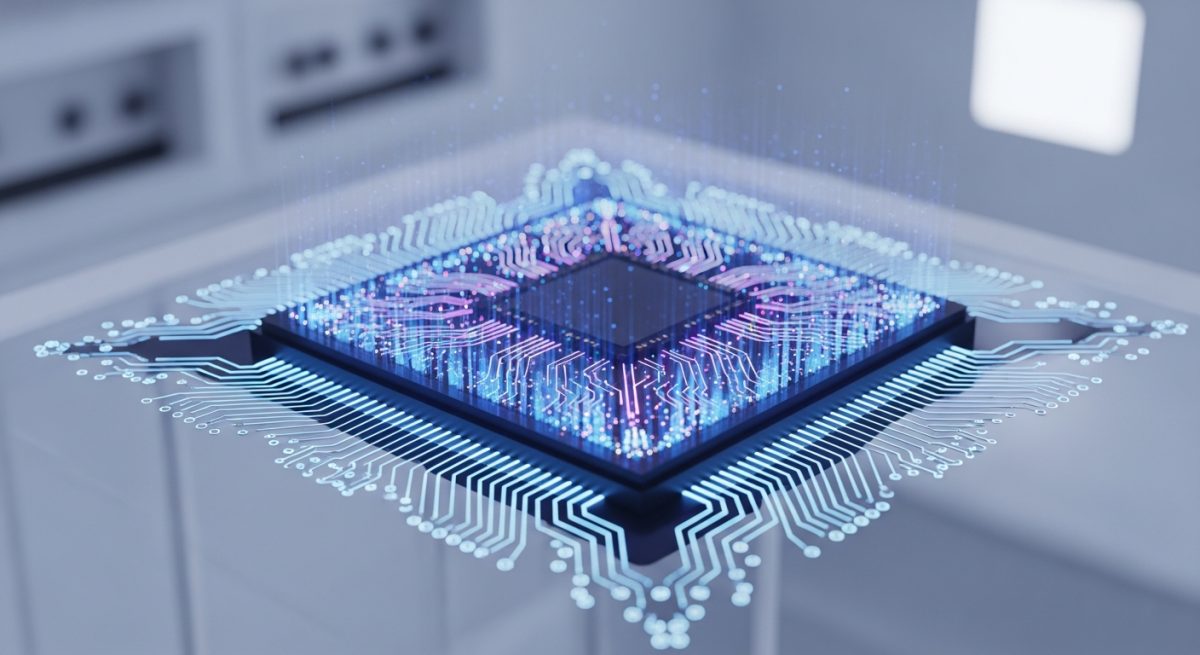
Quantum Computing: 2026, the Year Everything Changes
For years, quantum computing was presented as the technology of the future — always promising, never quite there. In 2026, something has changed. Quantum processors are leaving the showcases of research laboratories to integrate, quietly but surely, into concrete industrial applications. It is not yet the total revolution that some announce, but it is well beyond a mere announcement effect.
What is quantum computing, in two minutes?
A classical computer works with bits — 0s or 1s. A quantum computer uses qubits, which can be 0, 1, or both simultaneously through a principle called superposition. Add to this quantum entanglement, which allows distant qubits to be instantly linked, and you get a potentially colossal computing power for certain types of problems.
Concretely, where a classical supercomputer might take millions of years to solve certain complex equations, a sufficiently powerful quantum computer could do it in a matter of seconds. It is this promise that mobilizes billions in research around the world.
The concrete advances of 2026
This year marks a real qualitative leap. Several major players have crossed symbolic milestones:
IBM and its 1,386 qubits
IBM has deployed its 1,386-qubit Heron superconducting processor, capable of executing circuits of depth 5,000 with partial error correction. This number may seem abstract, but it represents a major advance: the more stable qubits a quantum processor has, the more complex problems it can solve.
Google Willow: calculations impossible for classical machines
Google made waves with its Willow processor, which claims calculations that a classical supercomputer would take 10 septillion years to reproduce. A staggering figure that illustrates the potential gap between the two types of architectures — even if experts temper this: the problems in question are still very specific and not directly useful in everyday life.
Pasqal, the French pride
On the French side, Pasqal has established itself as one of the most serious players in the global ecosystem. The Parisian startup is aiming for a 10,000-qubit machine by the end of 2026, with an original approach based on neutral atoms. A technology that some experts consider more stable and scalable than the superconducting approaches of IBM or Google.
What this concretely changes today
Quantum computing is not yet in your smartphone — and won't be for many years. But it is beginning to produce tangible results in very specific sectors:
- Pharmacy and medicine: laboratories like Roche use quantum processors to model interactions between proteins and drug candidates. Result: a 40% reduction in compound pre-selection time in certain neurodegenerative disease research programs.
- Finance: optimization of complex portfolios, risk simulation, fraud detection — calculations that classical machines struggle to perform in real time.
- Logistics: optimization of delivery routes for thousands of vehicles simultaneously, an NP-hard problem for which quantum computers show promising results.
- Cryptography: paradoxically, the rise of quantum computing also threatens current encryption systems. The race for post-quantum cryptography is already underway to prepare digital infrastructures to resist future quantum computers.
"The classical computer handles 90% of the work and sends the most difficult 10% to a quantum chip. This hybrid model is what actually works in 2026." — Tom's Guide, March 2026
The limitations not to ignore
It would be dishonest not to mention the remaining obstacles. Universal quantum advantage — the ability of a quantum computer to systematically outperform classical supercomputers on useful tasks — has not yet been achieved in 2026. Qubits remain extremely fragile, sensitive to vibrations, heat, and electromagnetic interference. Machines must operate at temperatures close to absolute zero (-273°C), making large-scale deployment still very costly.
Moreover, programming a quantum computer bears no resemblance to classical programming. Developers capable of working with these machines are still very rare, which hinders industrial adoption.
Why 2026 is still a pivotal year
Despite these limitations, 2026 represents a psychological as much as a technical turning point. For the first time, non-specialized companies — pharma labs, banks, industrialists — are integrating quantum components into their production workflows, not just in their R&D laboratories. The classical/quantum hybrid model is establishing itself as the realistic path in the short term.
Investments follow: the European Union, the United States, and China have all massively engaged public funds in the development of national quantum capabilities. In France, the Quantum Plan endowed with 1.8 billion euros over five years is starting to bear fruit, with players like Pasqal, Alice & Bob, or Quandela establishing themselves on the international stage.
Should you care about this now?
If you are a curious individual, it may be a bit early for quantum computing to directly affect your daily life. But if you operate in health, finance, cybersecurity, or scientific research, ignoring this technology is becoming risky. Companies that prepare for it now — training their teams, experimenting with the quantum cloud platforms already available (IBM Quantum, Amazon Braket, Azure Quantum) — will have a significant head start in the years to come.
Quantum computing will not change everything overnight. But it will profoundly change some things — and 2026 is the year when this movement becomes difficult to ignore.



Quantum Computing: 2026, the Year Everything Changes
For years, quantum computing was presented as the technology of the future — always promising, never quite there. In 2026, something has changed. Quantum processors are leaving the showcases of research laboratories to integrate, quietly but surely, into concrete industrial applications. It is not yet the total revolution that some announce, but it is well beyond a mere announcement effect.
What is quantum computing, in two minutes?
A classical computer works with bits — 0s or 1s. A quantum computer uses qubits, which can be 0, 1, or both simultaneously through a principle called superposition. Add to this quantum entanglement, which allows distant qubits to be instantly linked, and you get a potentially colossal computing power for certain types of problems.
Concretely, where a classical supercomputer might take millions of years to solve certain complex equations, a sufficiently powerful quantum computer could do it in a matter of seconds. It is this promise that mobilizes billions in research around the world.
The concrete advances of 2026
This year marks a real qualitative leap. Several major players have crossed symbolic milestones:
IBM and its 1,386 qubits
IBM has deployed its 1,386-qubit Heron superconducting processor, capable of executing circuits of depth 5,000 with partial error correction. This number may seem abstract, but it represents a major advance: the more stable qubits a quantum processor has, the more complex problems it can solve.
Google Willow: calculations impossible for classical machines
Google made waves with its Willow processor, which claims calculations that a classical supercomputer would take 10 septillion years to reproduce. A staggering figure that illustrates the potential gap between the two types of architectures — even if experts temper this: the problems in question are still very specific and not directly useful in everyday life.
Pasqal, the French pride
On the French side, Pasqal has established itself as one of the most serious players in the global ecosystem. The Parisian startup is aiming for a 10,000-qubit machine by the end of 2026, with an original approach based on neutral atoms. A technology that some experts consider more stable and scalable than the superconducting approaches of IBM or Google.
What this concretely changes today
Quantum computing is not yet in your smartphone — and won't be for many years. But it is beginning to produce tangible results in very specific sectors:
- Pharmacy and medicine: laboratories like Roche use quantum processors to model interactions between proteins and drug candidates. Result: a 40% reduction in compound pre-selection time in certain neurodegenerative disease research programs.
- Finance: optimization of complex portfolios, risk simulation, fraud detection — calculations that classical machines struggle to perform in real time.
- Logistics: optimization of delivery routes for thousands of vehicles simultaneously, an NP-hard problem for which quantum computers show promising results.
- Cryptography: paradoxically, the rise of quantum computing also threatens current encryption systems. The race for post-quantum cryptography is already underway to prepare digital infrastructures to resist future quantum computers.
"The classical computer handles 90% of the work and sends the most difficult 10% to a quantum chip. This hybrid model is what actually works in 2026." — Tom's Guide, March 2026
The limitations not to ignore
It would be dishonest not to mention the remaining obstacles. Universal quantum advantage — the ability of a quantum computer to systematically outperform classical supercomputers on useful tasks — has not yet been achieved in 2026. Qubits remain extremely fragile, sensitive to vibrations, heat, and electromagnetic interference. Machines must operate at temperatures close to absolute zero (-273°C), making large-scale deployment still very costly.
Moreover, programming a quantum computer bears no resemblance to classical programming. Developers capable of working with these machines are still very rare, which hinders industrial adoption.
Why 2026 is still a pivotal year
Despite these limitations, 2026 represents a psychological as much as a technical turning point. For the first time, non-specialized companies — pharma labs, banks, industrialists — are integrating quantum components into their production workflows, not just in their R&D laboratories. The classical/quantum hybrid model is establishing itself as the realistic path in the short term.
Investments follow: the European Union, the United States, and China have all massively engaged public funds in the development of national quantum capabilities. In France, the Quantum Plan endowed with 1.8 billion euros over five years is starting to bear fruit, with players like Pasqal, Alice & Bob, or Quandela establishing themselves on the international stage.
Should you care about this now?
If you are a curious individual, it may be a bit early for quantum computing to directly affect your daily life. But if you operate in health, finance, cybersecurity, or scientific research, ignoring this technology is becoming risky. Companies that prepare for it now — training their teams, experimenting with the quantum cloud platforms already available (IBM Quantum, Amazon Braket, Azure Quantum) — will have a significant head start in the years to come.
Quantum computing will not change everything overnight. But it will profoundly change some things — and 2026 is the year when this movement becomes difficult to ignore.
Quantum Computing: 2026, the Year Everything Changes
For years, quantum computing was presented as the technology of the future — always promising, never quite there. In 2026, something has changed. Quantum processors are leaving the showcases of research laboratories to integrate, quietly but surely, into concrete industrial applications. It is not yet the total revolution that some announce, but it is well beyond a mere announcement effect.
What is quantum computing, in two minutes?
A classical computer works with bits — 0s or 1s. A quantum computer uses qubits, which can be 0, 1, or both simultaneously through a principle called superposition. Add to this quantum entanglement, which allows distant qubits to be instantly linked, and you get a potentially colossal computing power for certain types of problems.
Concretely, where a classical supercomputer might take millions of years to solve certain complex equations, a sufficiently powerful quantum computer could do it in a matter of seconds. It is this promise that mobilizes billions in research around the world.
The concrete advances of 2026
This year marks a real qualitative leap. Several major players have crossed symbolic milestones:
IBM and its 1,386 qubits
IBM has deployed its 1,386-qubit Heron superconducting processor, capable of executing circuits of depth 5,000 with partial error correction. This number may seem abstract, but it represents a major advance: the more stable qubits a quantum processor has, the more complex problems it can solve.
Google Willow: calculations impossible for classical machines
Google made waves with its Willow processor, which claims calculations that a classical supercomputer would take 10 septillion years to reproduce. A staggering figure that illustrates the potential gap between the two types of architectures — even if experts temper this: the problems in question are still very specific and not directly useful in everyday life.
Pasqal, the French pride
On the French side, Pasqal has established itself as one of the most serious players in the global ecosystem. The Parisian startup is aiming for a 10,000-qubit machine by the end of 2026, with an original approach based on neutral atoms. A technology that some experts consider more stable and scalable than the superconducting approaches of IBM or Google.
What this concretely changes today
Quantum computing is not yet in your smartphone — and won't be for many years. But it is beginning to produce tangible results in very specific sectors:
- Pharmacy and medicine: laboratories like Roche use quantum processors to model interactions between proteins and drug candidates. Result: a 40% reduction in compound pre-selection time in certain neurodegenerative disease research programs.
- Finance: optimization of complex portfolios, risk simulation, fraud detection — calculations that classical machines struggle to perform in real time.
- Logistics: optimization of delivery routes for thousands of vehicles simultaneously, an NP-hard problem for which quantum computers show promising results.
- Cryptography: paradoxically, the rise of quantum computing also threatens current encryption systems. The race for post-quantum cryptography is already underway to prepare digital infrastructures to resist future quantum computers.
"The classical computer handles 90% of the work and sends the most difficult 10% to a quantum chip. This hybrid model is what actually works in 2026." — Tom's Guide, March 2026
The limitations not to ignore
It would be dishonest not to mention the remaining obstacles. Universal quantum advantage — the ability of a quantum computer to systematically outperform classical supercomputers on useful tasks — has not yet been achieved in 2026. Qubits remain extremely fragile, sensitive to vibrations, heat, and electromagnetic interference. Machines must operate at temperatures close to absolute zero (-273°C), making large-scale deployment still very costly.
Moreover, programming a quantum computer bears no resemblance to classical programming. Developers capable of working with these machines are still very rare, which hinders industrial adoption.
Why 2026 is still a pivotal year
Despite these limitations, 2026 represents a psychological as much as a technical turning point. For the first time, non-specialized companies — pharma labs, banks, industrialists — are integrating quantum components into their production workflows, not just in their R&D laboratories. The classical/quantum hybrid model is establishing itself as the realistic path in the short term.
Investments follow: the European Union, the United States, and China have all massively engaged public funds in the development of national quantum capabilities. In France, the Quantum Plan endowed with 1.8 billion euros over five years is starting to bear fruit, with players like Pasqal, Alice & Bob, or Quandela establishing themselves on the international stage.
Should you care about this now?
If you are a curious individual, it may be a bit early for quantum computing to directly affect your daily life. But if you operate in health, finance, cybersecurity, or scientific research, ignoring this technology is becoming risky. Companies that prepare for it now — training their teams, experimenting with the quantum cloud platforms already available (IBM Quantum, Amazon Braket, Azure Quantum) — will have a significant head start in the years to come.
Quantum computing will not change everything overnight. But it will profoundly change some things — and 2026 is the year when this movement becomes difficult to ignore.