
 English
  French
  German
  Spanish
  Hindi
Hindi  Italian
  Japanese
  Korean
  Norwegian
  Chinese
The efficiency trap: when saving leads to greater consumption
Here is the paradox no one really wants to hear: the more efficient we become at using energy, the more of it we consume. This is not a joke or an environmentalist provocation. It is an observation made in 1865 by a British economist whom history has half forgotten — William Stanley Jevons — and one that 160 years of technological progress have confirmed again and again.
Today, as the energy transition places efficiency at the heart of every strategy, this lesson deserves to be read again with care.
A nineteenth-century economist confronts an unsettling intuition
In 1865, William Stanley Jevons published The Coal Question, a book in which he examined the future of Britain's coal reserves. Victorian England was at the height of its industrial power, and the steam engine improved by James Watt was its central tool. Watt's engine was far more efficient than that of his predecessor, Thomas Newcomen: it used less coal to produce the same amount of work. Good news, apparently.
Yet Jevons noticed something troubling: since improved steam engines had been introduced, English coal consumption had not fallen — it had soared. The more economical the machines became, the more entrepreneurs opened new factories, powered new pumps and ran new workshops. Coal that was cheaper to use became coal that was used more.
His conclusion, expressed with a clarity we might wish to find in today's debates: “Every improvement that makes it possible to save fuel actually increases the value of the steam engine and broadens the range of its uses.” In other words, efficiency does not reduce demand — it stimulates it.
The rebound effect, or how progress turns back on itself
Energy economists now call this phenomenon therebound effect. Its mechanism is simple, even if it remains counterintuitive: when a technology uses less energy to provide a given service, that service becomes cheaper in real terms. And when a service is cheaper, people generally consume more of it.
The rebound effect can take several forms. The most direct is this: you buy a hybrid car that uses half as much fuel, and you drive twice as far because filling the tank costs less. This is the “direct” effect. There is also an indirect effect, sometimes more insidious: savings on energy free up purchasing power that is redirected toward other expenditures, which themselves consume resources. A better-insulated home lowers the heating bill — and the money saved may fund a flight to a distant destination.
Finally, there are macroeconomic effects: an industry that can produce more cheaply thanks to better energy efficiency may increase its output and ultimately consume more energy across the sector as a whole.
Numbers that make your head spin
Historical data strongly support Jevons's intuition. Between 1830 and 1863, as advances in metallurgy cut by two-thirds the amount of fuel needed to produce a ton of iron, total iron consumption — and therefore the energy used to produce it — increased tenfold. Efficiency made iron cheaper to produce; the world simply wanted ten times more of it.
Lighting offers an even more striking example. Energy historians estimate that the average UK resident in 2000 consumed 75 times more artificial light than an ancestor in 1900, and more than 6,000 times more than in 1800. Yet every generation of lighting technology — from candles to oil lamps and then incandescent bulbs — became progressively more efficient. Efficiency did not curb demand for light: it multiplied it.
A 2023 report quantifies the phenomenon today: on average, every 1% gain in energy efficiency in a sector is associated with a 0.7% rebound in overall energy consumption. The rebound effect does not completely cancel the gains — but it erases a significant share of them.
LEDs: the promise and its shadow
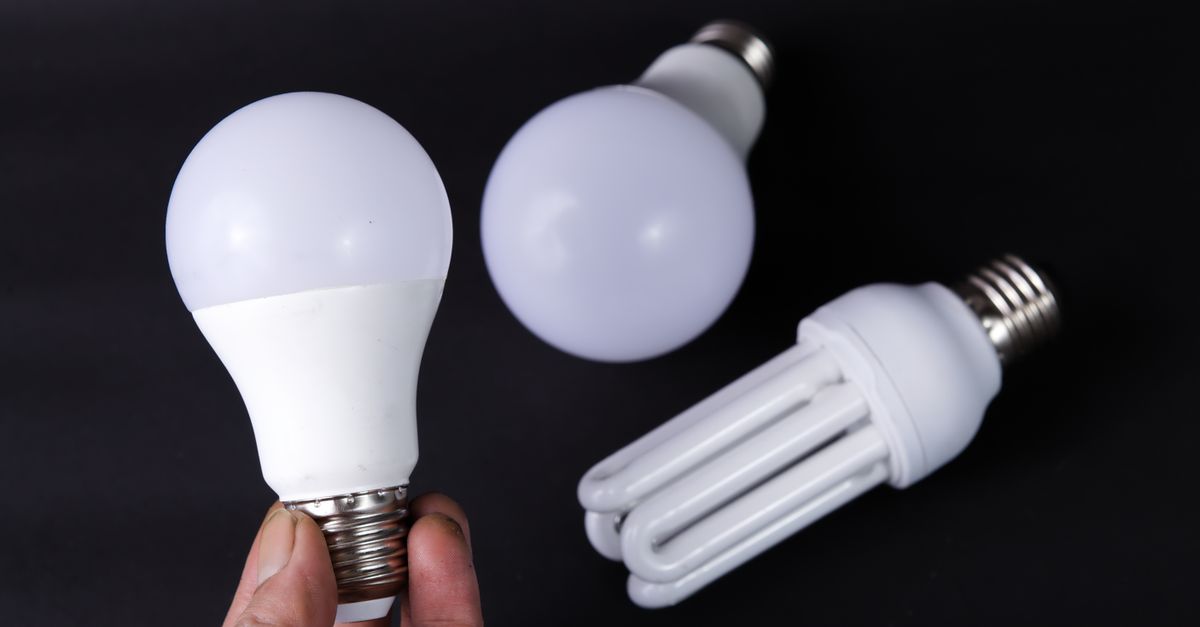
The LED bulb is often presented as one of the triumphs of the energy transition. And indeed, it uses five to ten times less electricity than an incandescent bulb for the same amount of light. Millions of households have achieved real savings on their bills.
But look at the other side of the picture. The collapse in the cost of lighting has led to a proliferation of light installations: façades illuminated all night, permanent advertising signs, decorative lighting that did not exist before, and cities growing brighter as lighting becomes cheaper. Light pollution has increased significantly in recent decades, to the point of becoming a recognized environmental problem that affects nocturnal wildlife, bird migration and even the human circadian rhythm.
Has the LED reduced total electricity consumption for lighting? Probably in part — but far less than initial projections suggested. Efficiency has also fueled entirely new uses.
So what should we do now?
Recognizing the existence of the Jevons paradox does not mean energy efficiency is useless or counterproductive. It means efficiency is not sufficient on its own. History shows that technical improvement without regulation of demand almost always generates new uses that absorb a large share of the gains achieved.
The real question Jevons raised — and one our energy policies still often evade — is this: what do we do with the savings we make? Do we reinvest them in other forms of consumption? Or do we build mechanisms that stabilize, or even reduce, absolute energy demand?
This debate goes far beyond technology. It touches on our ways of life, the very conception of economic growth, and the profound difficulty of trying to consume less in a system structurally designed to encourage consumption.
William Stanley Jevons had no definitive answer to these questions. But he at least had the honesty to state the problem at the very moment everyone believed technology would be enough. One hundred and sixty years later, that honesty remains valuable — and just as unsettling.