 Chinese
  French
  English
  Spanish
  Japanese
  Korean
  Hindi
Hindi  German
  Norwegian
Speaking by whistling: the languages that rebalance the brain
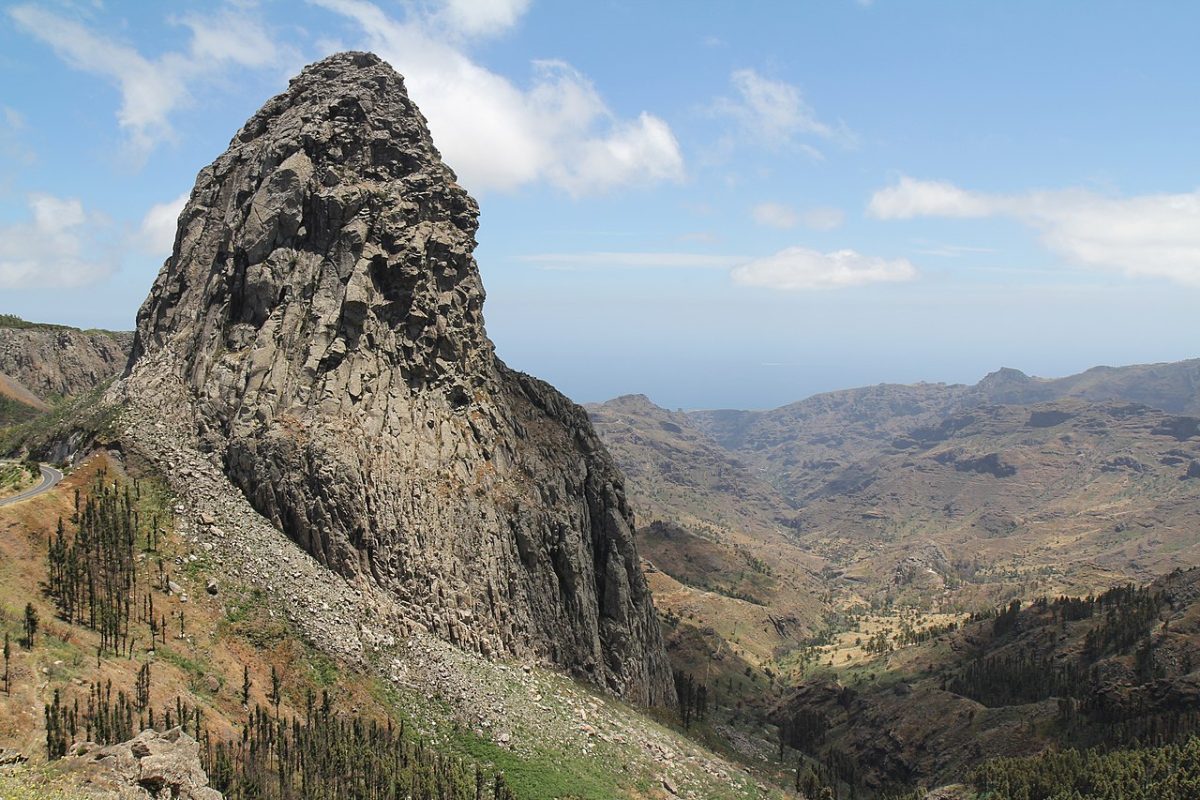
Stand on the edge of a deep ravine, with the person you are speaking to on the opposite slope, two or three kilometers away. Shouting would be useless: the voice tires and disappears. So you put two fingers to your mouth and whistle an entire sentence. It crosses the valley intact. It is not an agreed signal or a shepherd's code: it is language, with its words, grammar and nuances, transposed into melodies.
An invention born from terrain
Whistled languages are not an isolated curiosity. Dozens have been recorded on every continent, almost always under the same conditions: steep mountains, enclosed valleys and dense forests. Wherever distance and terrain make ordinary speech useless, communities have had the same idea independently. Whistling has a decisive advantage over the voice: it is concentrated in frequencies that cross obstacles and travel much farther. Where a shout dies out after a few hundred meters, a modulated whistle can carry up to five kilometers.
The principle is always the same: people do not whistle a secret alphabet; they whistle their own language. The whistler keeps the vowels and consonants of the spoken language and translates them into pitches and sound breaks. In other words, anyone who understands the spoken language can, with training, understand its whistled version.
Silbo, a language in its own right
The most accomplished example is found in the Canary Islands, on the small island of La Gomera. Silbo Gomero reproduces Castilian Spanish through whistling, and it is the only fully developed whistled language in the world practiced by a large community. UNESCO inscribed it in 2009 on the Representative List of the Intangible Cultural Heritage of Humanity.
But the most remarkable thing is not its age: it is its rescue. Threatened with disappearance, Silbo was made compulsory in the island's primary and secondary schools in 1999 by decision of the regional authorities. In 2018, teaching was expanded to other levels and extended beyond La Gomera. The result: a language once thought doomed is now understood by almost all of the island's roughly 22,000 inhabitants. It is one of the rare cases where school deliberately revived a body of knowledge that was fading away.
Kuşköy, the village that speaks to birds
At the other end of the Mediterranean, in the Black Sea mountains of northeastern Turkey, people also whistle. Residents call it kuş dili, the language of birds, and the village of Kuşköy has become its symbol. About 10,000 people still practice it, in a landscape where farms cling to slopes separated by deep valleys.
Here, the story takes an ironic turn. In 2017, UNESCO placed this whistled language on its list of heritage in need of urgent safeguarding. The main threat is neither war nor exodus: it is the mobile phone. The tool that abolishes distance makes useless the technique born to defeat it. The whistled language was a brilliant answer to a problem that mobile telephony has made disappear.
What the brain reveals
This is where the most unsettling discovery comes in. We have long been taught that language is the business of the brain's left hemisphere: whether speech, writing or sign language is involved, it is the left side that dominates. In 2015, neuroscientist Onur Güntürkün and his colleagues published a study in Current Biology conducted in Kuşköy with 31 whistlers. Their question: what happens when language itself becomes melody?
The result upends the textbook. Faced with whistled syllables, the two hemispheres shared the work almost equally, whereas spoken language leans clearly to the left. The conclusion is dizzying: the physical form of a language, not only its grammatical content, can redistribute the way the brain processes it. Because whistling relies on melody and pitch, it mobilizes the right hemisphere, the specialist in music and tonalities, as much as the left.
A language is not just a dictionary stored in the head: its sound material also sculpts the brain that listens to it.
The fragility of knowledge
Whistled languages carry a double lesson. First, they remind us that humanity, faced with the same constraints, often rediscovers the same solutions: terrain, distance, and everywhere the same melodic response invented in all corners of the world. Then they show how fragile such knowledge can be. A road, a mobile network, a generation that stops passing it on, and a heritage several centuries old can fade in a few decades.
The contrast between La Gomera and Kuşköy is instructive. On the Spanish island, political will turned a dying language into a living school subject. In the Turkish mountains, the mobile phone is gaining ground faster than preservation efforts. Between the two lies a question that goes beyond whistling: what do we decide to keep when technology suddenly makes an ancient skill optional? Whistled languages may no longer be needed to cross ravines. They still force us to cross that one.



Speaking by whistling: the languages that rebalance the brain
Stand on the edge of a deep ravine, with the person you are speaking to on the opposite slope, two or three kilometers away. Shouting would be useless: the voice tires and disappears. So you put two fingers to your mouth and whistle an entire sentence. It crosses the valley intact. It is not an agreed signal or a shepherd's code: it is language, with its words, grammar and nuances, transposed into melodies.
An invention born from terrain
Whistled languages are not an isolated curiosity. Dozens have been recorded on every continent, almost always under the same conditions: steep mountains, enclosed valleys and dense forests. Wherever distance and terrain make ordinary speech useless, communities have had the same idea independently. Whistling has a decisive advantage over the voice: it is concentrated in frequencies that cross obstacles and travel much farther. Where a shout dies out after a few hundred meters, a modulated whistle can carry up to five kilometers.
The principle is always the same: people do not whistle a secret alphabet; they whistle their own language. The whistler keeps the vowels and consonants of the spoken language and translates them into pitches and sound breaks. In other words, anyone who understands the spoken language can, with training, understand its whistled version.
Silbo, a language in its own right
The most accomplished example is found in the Canary Islands, on the small island of La Gomera. Silbo Gomero reproduces Castilian Spanish through whistling, and it is the only fully developed whistled language in the world practiced by a large community. UNESCO inscribed it in 2009 on the Representative List of the Intangible Cultural Heritage of Humanity.
But the most remarkable thing is not its age: it is its rescue. Threatened with disappearance, Silbo was made compulsory in the island's primary and secondary schools in 1999 by decision of the regional authorities. In 2018, teaching was expanded to other levels and extended beyond La Gomera. The result: a language once thought doomed is now understood by almost all of the island's roughly 22,000 inhabitants. It is one of the rare cases where school deliberately revived a body of knowledge that was fading away.
Kuşköy, the village that speaks to birds
At the other end of the Mediterranean, in the Black Sea mountains of northeastern Turkey, people also whistle. Residents call it kuş dili, the language of birds, and the village of Kuşköy has become its symbol. About 10,000 people still practice it, in a landscape where farms cling to slopes separated by deep valleys.
Here, the story takes an ironic turn. In 2017, UNESCO placed this whistled language on its list of heritage in need of urgent safeguarding. The main threat is neither war nor exodus: it is the mobile phone. The tool that abolishes distance makes useless the technique born to defeat it. The whistled language was a brilliant answer to a problem that mobile telephony has made disappear.
What the brain reveals
This is where the most unsettling discovery comes in. We have long been taught that language is the business of the brain's left hemisphere: whether speech, writing or sign language is involved, it is the left side that dominates. In 2015, neuroscientist Onur Güntürkün and his colleagues published a study in Current Biology conducted in Kuşköy with 31 whistlers. Their question: what happens when language itself becomes melody?
The result upends the textbook. Faced with whistled syllables, the two hemispheres shared the work almost equally, whereas spoken language leans clearly to the left. The conclusion is dizzying: the physical form of a language, not only its grammatical content, can redistribute the way the brain processes it. Because whistling relies on melody and pitch, it mobilizes the right hemisphere, the specialist in music and tonalities, as much as the left.
A language is not just a dictionary stored in the head: its sound material also sculpts the brain that listens to it.
The fragility of knowledge
Whistled languages carry a double lesson. First, they remind us that humanity, faced with the same constraints, often rediscovers the same solutions: terrain, distance, and everywhere the same melodic response invented in all corners of the world. Then they show how fragile such knowledge can be. A road, a mobile network, a generation that stops passing it on, and a heritage several centuries old can fade in a few decades.
The contrast between La Gomera and Kuşköy is instructive. On the Spanish island, political will turned a dying language into a living school subject. In the Turkish mountains, the mobile phone is gaining ground faster than preservation efforts. Between the two lies a question that goes beyond whistling: what do we decide to keep when technology suddenly makes an ancient skill optional? Whistled languages may no longer be needed to cross ravines. They still force us to cross that one.
Speaking by whistling: the languages that rebalance the brain
Stand on the edge of a deep ravine, with the person you are speaking to on the opposite slope, two or three kilometers away. Shouting would be useless: the voice tires and disappears. So you put two fingers to your mouth and whistle an entire sentence. It crosses the valley intact. It is not an agreed signal or a shepherd's code: it is language, with its words, grammar and nuances, transposed into melodies.
An invention born from terrain
Whistled languages are not an isolated curiosity. Dozens have been recorded on every continent, almost always under the same conditions: steep mountains, enclosed valleys and dense forests. Wherever distance and terrain make ordinary speech useless, communities have had the same idea independently. Whistling has a decisive advantage over the voice: it is concentrated in frequencies that cross obstacles and travel much farther. Where a shout dies out after a few hundred meters, a modulated whistle can carry up to five kilometers.
The principle is always the same: people do not whistle a secret alphabet; they whistle their own language. The whistler keeps the vowels and consonants of the spoken language and translates them into pitches and sound breaks. In other words, anyone who understands the spoken language can, with training, understand its whistled version.
Silbo, a language in its own right
The most accomplished example is found in the Canary Islands, on the small island of La Gomera. Silbo Gomero reproduces Castilian Spanish through whistling, and it is the only fully developed whistled language in the world practiced by a large community. UNESCO inscribed it in 2009 on the Representative List of the Intangible Cultural Heritage of Humanity.
But the most remarkable thing is not its age: it is its rescue. Threatened with disappearance, Silbo was made compulsory in the island's primary and secondary schools in 1999 by decision of the regional authorities. In 2018, teaching was expanded to other levels and extended beyond La Gomera. The result: a language once thought doomed is now understood by almost all of the island's roughly 22,000 inhabitants. It is one of the rare cases where school deliberately revived a body of knowledge that was fading away.
Kuşköy, the village that speaks to birds
At the other end of the Mediterranean, in the Black Sea mountains of northeastern Turkey, people also whistle. Residents call it kuş dili, the language of birds, and the village of Kuşköy has become its symbol. About 10,000 people still practice it, in a landscape where farms cling to slopes separated by deep valleys.
Here, the story takes an ironic turn. In 2017, UNESCO placed this whistled language on its list of heritage in need of urgent safeguarding. The main threat is neither war nor exodus: it is the mobile phone. The tool that abolishes distance makes useless the technique born to defeat it. The whistled language was a brilliant answer to a problem that mobile telephony has made disappear.
What the brain reveals
This is where the most unsettling discovery comes in. We have long been taught that language is the business of the brain's left hemisphere: whether speech, writing or sign language is involved, it is the left side that dominates. In 2015, neuroscientist Onur Güntürkün and his colleagues published a study in Current Biology conducted in Kuşköy with 31 whistlers. Their question: what happens when language itself becomes melody?
The result upends the textbook. Faced with whistled syllables, the two hemispheres shared the work almost equally, whereas spoken language leans clearly to the left. The conclusion is dizzying: the physical form of a language, not only its grammatical content, can redistribute the way the brain processes it. Because whistling relies on melody and pitch, it mobilizes the right hemisphere, the specialist in music and tonalities, as much as the left.
A language is not just a dictionary stored in the head: its sound material also sculpts the brain that listens to it.
The fragility of knowledge
Whistled languages carry a double lesson. First, they remind us that humanity, faced with the same constraints, often rediscovers the same solutions: terrain, distance, and everywhere the same melodic response invented in all corners of the world. Then they show how fragile such knowledge can be. A road, a mobile network, a generation that stops passing it on, and a heritage several centuries old can fade in a few decades.
The contrast between La Gomera and Kuşköy is instructive. On the Spanish island, political will turned a dying language into a living school subject. In the Turkish mountains, the mobile phone is gaining ground faster than preservation efforts. Between the two lies a question that goes beyond whistling: what do we decide to keep when technology suddenly makes an ancient skill optional? Whistled languages may no longer be needed to cross ravines. They still force us to cross that one.