 English
  French
  Spanish
  Chinese
  Japanese
  Korean
  Hindi
Hindi  German
  Norwegian
800 bladed weapons seized in schools: what the checks reveal
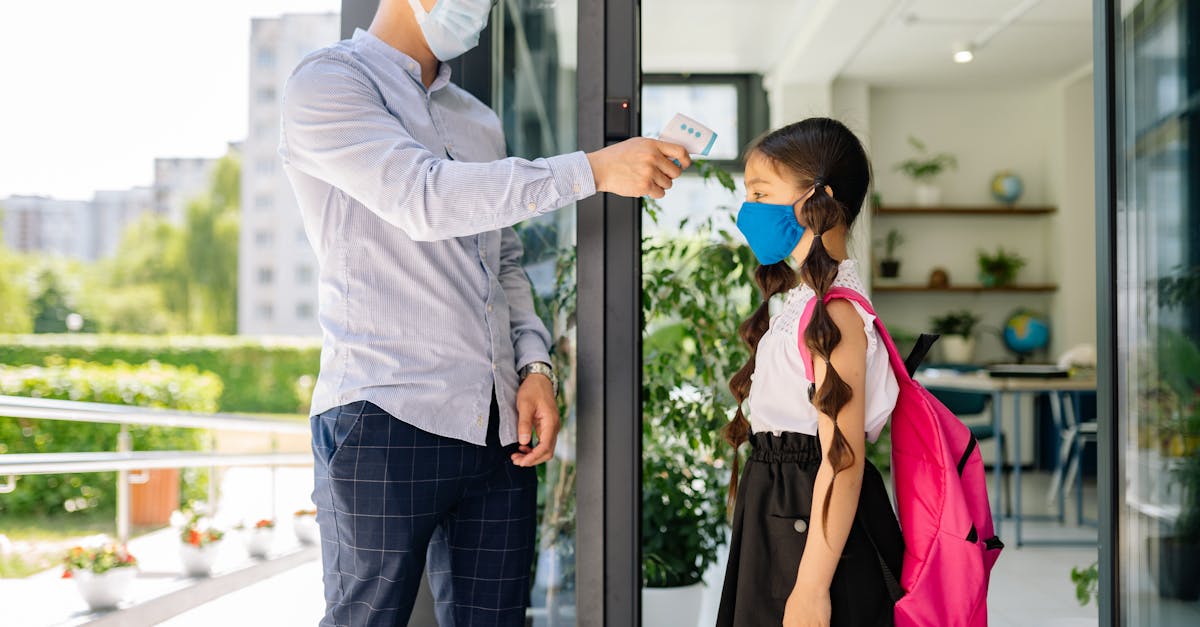
In the space of one year, 20,500 checks were carried out at the entrances of French schools. The result is unambiguous: 800 bladed weapons were seized from students' bags. These figures, revealed on 21 April 2026 by Education Minister Édouard Geffray, have forcefully reignited the debate on safety in French schools.
A context marked by the Agnès Lassalle tragedy
These figures were made public in the context of the trial of the murderer of Agnès Lassalle. On 22 February 2023, this 53-year-old Spanish teacher was tragically killed in class by a 16-year-old student at the private Saint-Thomas-d'Aquin high school in Saint-Jean-de-Luz. This tragedy sparked a national awakening about the need to make educational spaces safer.
Since then, the Ministry of National Education has implemented security checks at school entrances, involving mixed teams composed of police officers, gendarmes and school staff. These searches, conducted in middle and high schools across France, have made it possible to intercept knives, box cutters and other sharp objects hidden in schoolbags.
Figures to be read with nuance
While 800 bladed weapons seized in a year may seem alarming, some specialists urge contextualisation. Of the 20,500 checks carried out, this represents approximately 3.9% of inspections resulting in a seizure. These operations do not cover all students: they are targeted, occasional and concentrated in priority areas.
Nevertheless, Minister Geffray was categorical in his statements:
« We carried out 20,500 checks in one year and found 800 bladed weapons. These checks are absolutely necessary. »
— Édouard Geffray, Minister of National Education, April 2026
What types of weapons were found?
Among the items seized, the main ones include:
- Pocket knives, sometimes of large size
- Box cutters and detached blades
- Flick knives
- Improvised metal objects used as weapons
Most of these objects are brought to school without any declared intent of violence, but their mere presence constitutes a real risk and a breach of the law.
Which schools are affected?
The checks have mainly targeted middle and high schools located in so-called sensitive areas or that have experienced past incidents. However, the phenomenon is not limited to disadvantaged neighbourhoods: seizures have taken place in rural, peri-urban and even traditionally quiet areas.
This finding is a reminder that the presence of weapons in schools is a diffuse phenomenon, not reducible to a particular geography or social profile.
The government's response: prevention and sanction
Faced with these findings, the government's response is organised around two complementary axes:
Prevention first, with awareness programmes on the consequences of violence deployed in thousands of schools. External speakers — associations, former security professionals, social workers — come to share with students the damage caused by violent behaviour.
Sanction next. Students found in possession of a bladed weapon face immediate and severe disciplinary measures, up to and including permanent exclusion. In cases of aggravating circumstances, criminal proceedings may be initiated.
What the law says
In France, the Penal Code strictly prohibits carrying weapons in educational establishments. Article R. 645-15 penalises the transportation of sharp instruments without legitimate purpose. In a school context, no legitimate purpose is recognised, making the seizure of a knife tantamount to a characterised offence liable to prosecution.
Beyond the legal framework, a fundamental question remains: why do adolescents feel the need to carry a weapon to school? Sociologists cite several factors: a sense of insecurity in school transport, peer pressure, or the normalisation of violence in certain media and digital content.
A European issue
France is not alone in facing this challenge. In the United Kingdom, security gates have been installed in hundreds of London schools following a surge in knife attacks. In Belgium, similar operations are carried out sporadically. In Germany, several serious incidents have led authorities to tighten controls in certain Länder.
While the French situation remains less critical than that of the United States — where school shootings constitute a genuine national crisis — the rise of armed violence in schools is a reality that Europe can no longer ignore.
What comes next for these checks?
The Minister of National Education announced the continuation and intensification of checks in the coming months. Additional human and material resources are expected to be allocated as part of the 2026 budget. While some teachers' unions welcome these measures, others are calling for school safety not to be reduced to mere police surveillance, which risks degrading the climate of trust within schools.
For behind the figures lies a societal question of urgent importance: how can we guarantee every student a serene and safe learning environment? Entrance checks are a visible and concrete response. But they alone cannot solve a problem whose roots are deeply social, familial and cultural.
The mobilisation of the entire educational community — parents, teachers, associations, institutions — appears to be the only lasting path to ensuring that school remains what it must be: a space for knowledge, exchange and mutual trust.



800 bladed weapons seized in schools: what the checks reveal
In the space of one year, 20,500 checks were carried out at the entrances of French schools. The result is unambiguous: 800 bladed weapons were seized from students' bags. These figures, revealed on 21 April 2026 by Education Minister Édouard Geffray, have forcefully reignited the debate on safety in French schools.
A context marked by the Agnès Lassalle tragedy
These figures were made public in the context of the trial of the murderer of Agnès Lassalle. On 22 February 2023, this 53-year-old Spanish teacher was tragically killed in class by a 16-year-old student at the private Saint-Thomas-d'Aquin high school in Saint-Jean-de-Luz. This tragedy sparked a national awakening about the need to make educational spaces safer.
Since then, the Ministry of National Education has implemented security checks at school entrances, involving mixed teams composed of police officers, gendarmes and school staff. These searches, conducted in middle and high schools across France, have made it possible to intercept knives, box cutters and other sharp objects hidden in schoolbags.
Figures to be read with nuance
While 800 bladed weapons seized in a year may seem alarming, some specialists urge contextualisation. Of the 20,500 checks carried out, this represents approximately 3.9% of inspections resulting in a seizure. These operations do not cover all students: they are targeted, occasional and concentrated in priority areas.
Nevertheless, Minister Geffray was categorical in his statements:
« We carried out 20,500 checks in one year and found 800 bladed weapons. These checks are absolutely necessary. »
— Édouard Geffray, Minister of National Education, April 2026
What types of weapons were found?
Among the items seized, the main ones include:
- Pocket knives, sometimes of large size
- Box cutters and detached blades
- Flick knives
- Improvised metal objects used as weapons
Most of these objects are brought to school without any declared intent of violence, but their mere presence constitutes a real risk and a breach of the law.
Which schools are affected?
The checks have mainly targeted middle and high schools located in so-called sensitive areas or that have experienced past incidents. However, the phenomenon is not limited to disadvantaged neighbourhoods: seizures have taken place in rural, peri-urban and even traditionally quiet areas.
This finding is a reminder that the presence of weapons in schools is a diffuse phenomenon, not reducible to a particular geography or social profile.
The government's response: prevention and sanction
Faced with these findings, the government's response is organised around two complementary axes:
Prevention first, with awareness programmes on the consequences of violence deployed in thousands of schools. External speakers — associations, former security professionals, social workers — come to share with students the damage caused by violent behaviour.
Sanction next. Students found in possession of a bladed weapon face immediate and severe disciplinary measures, up to and including permanent exclusion. In cases of aggravating circumstances, criminal proceedings may be initiated.
What the law says
In France, the Penal Code strictly prohibits carrying weapons in educational establishments. Article R. 645-15 penalises the transportation of sharp instruments without legitimate purpose. In a school context, no legitimate purpose is recognised, making the seizure of a knife tantamount to a characterised offence liable to prosecution.
Beyond the legal framework, a fundamental question remains: why do adolescents feel the need to carry a weapon to school? Sociologists cite several factors: a sense of insecurity in school transport, peer pressure, or the normalisation of violence in certain media and digital content.
A European issue
France is not alone in facing this challenge. In the United Kingdom, security gates have been installed in hundreds of London schools following a surge in knife attacks. In Belgium, similar operations are carried out sporadically. In Germany, several serious incidents have led authorities to tighten controls in certain Länder.
While the French situation remains less critical than that of the United States — where school shootings constitute a genuine national crisis — the rise of armed violence in schools is a reality that Europe can no longer ignore.
What comes next for these checks?
The Minister of National Education announced the continuation and intensification of checks in the coming months. Additional human and material resources are expected to be allocated as part of the 2026 budget. While some teachers' unions welcome these measures, others are calling for school safety not to be reduced to mere police surveillance, which risks degrading the climate of trust within schools.
For behind the figures lies a societal question of urgent importance: how can we guarantee every student a serene and safe learning environment? Entrance checks are a visible and concrete response. But they alone cannot solve a problem whose roots are deeply social, familial and cultural.
The mobilisation of the entire educational community — parents, teachers, associations, institutions — appears to be the only lasting path to ensuring that school remains what it must be: a space for knowledge, exchange and mutual trust.
800 bladed weapons seized in schools: what the checks reveal
In the space of one year, 20,500 checks were carried out at the entrances of French schools. The result is unambiguous: 800 bladed weapons were seized from students' bags. These figures, revealed on 21 April 2026 by Education Minister Édouard Geffray, have forcefully reignited the debate on safety in French schools.
A context marked by the Agnès Lassalle tragedy
These figures were made public in the context of the trial of the murderer of Agnès Lassalle. On 22 February 2023, this 53-year-old Spanish teacher was tragically killed in class by a 16-year-old student at the private Saint-Thomas-d'Aquin high school in Saint-Jean-de-Luz. This tragedy sparked a national awakening about the need to make educational spaces safer.
Since then, the Ministry of National Education has implemented security checks at school entrances, involving mixed teams composed of police officers, gendarmes and school staff. These searches, conducted in middle and high schools across France, have made it possible to intercept knives, box cutters and other sharp objects hidden in schoolbags.
Figures to be read with nuance
While 800 bladed weapons seized in a year may seem alarming, some specialists urge contextualisation. Of the 20,500 checks carried out, this represents approximately 3.9% of inspections resulting in a seizure. These operations do not cover all students: they are targeted, occasional and concentrated in priority areas.
Nevertheless, Minister Geffray was categorical in his statements:
« We carried out 20,500 checks in one year and found 800 bladed weapons. These checks are absolutely necessary. »
— Édouard Geffray, Minister of National Education, April 2026
What types of weapons were found?
Among the items seized, the main ones include:
- Pocket knives, sometimes of large size
- Box cutters and detached blades
- Flick knives
- Improvised metal objects used as weapons
Most of these objects are brought to school without any declared intent of violence, but their mere presence constitutes a real risk and a breach of the law.
Which schools are affected?
The checks have mainly targeted middle and high schools located in so-called sensitive areas or that have experienced past incidents. However, the phenomenon is not limited to disadvantaged neighbourhoods: seizures have taken place in rural, peri-urban and even traditionally quiet areas.
This finding is a reminder that the presence of weapons in schools is a diffuse phenomenon, not reducible to a particular geography or social profile.
The government's response: prevention and sanction
Faced with these findings, the government's response is organised around two complementary axes:
Prevention first, with awareness programmes on the consequences of violence deployed in thousands of schools. External speakers — associations, former security professionals, social workers — come to share with students the damage caused by violent behaviour.
Sanction next. Students found in possession of a bladed weapon face immediate and severe disciplinary measures, up to and including permanent exclusion. In cases of aggravating circumstances, criminal proceedings may be initiated.
What the law says
In France, the Penal Code strictly prohibits carrying weapons in educational establishments. Article R. 645-15 penalises the transportation of sharp instruments without legitimate purpose. In a school context, no legitimate purpose is recognised, making the seizure of a knife tantamount to a characterised offence liable to prosecution.
Beyond the legal framework, a fundamental question remains: why do adolescents feel the need to carry a weapon to school? Sociologists cite several factors: a sense of insecurity in school transport, peer pressure, or the normalisation of violence in certain media and digital content.
A European issue
France is not alone in facing this challenge. In the United Kingdom, security gates have been installed in hundreds of London schools following a surge in knife attacks. In Belgium, similar operations are carried out sporadically. In Germany, several serious incidents have led authorities to tighten controls in certain Länder.
While the French situation remains less critical than that of the United States — where school shootings constitute a genuine national crisis — the rise of armed violence in schools is a reality that Europe can no longer ignore.
What comes next for these checks?
The Minister of National Education announced the continuation and intensification of checks in the coming months. Additional human and material resources are expected to be allocated as part of the 2026 budget. While some teachers' unions welcome these measures, others are calling for school safety not to be reduced to mere police surveillance, which risks degrading the climate of trust within schools.
For behind the figures lies a societal question of urgent importance: how can we guarantee every student a serene and safe learning environment? Entrance checks are a visible and concrete response. But they alone cannot solve a problem whose roots are deeply social, familial and cultural.
The mobilisation of the entire educational community — parents, teachers, associations, institutions — appears to be the only lasting path to ensuring that school remains what it must be: a space for knowledge, exchange and mutual trust.