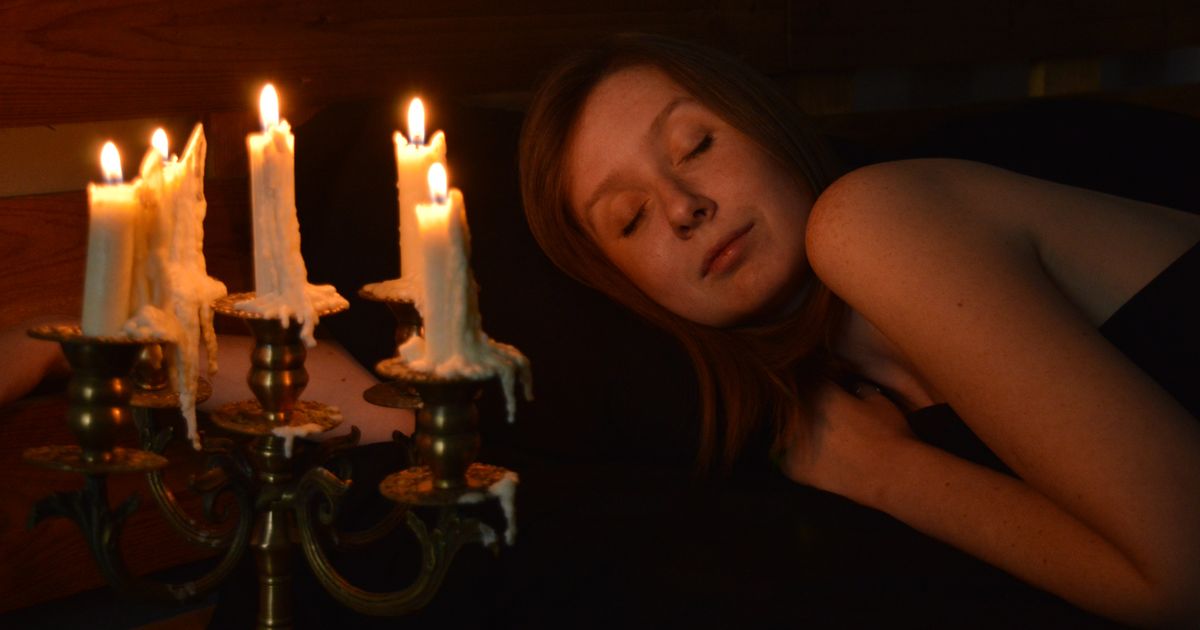


Biphasic sleep: when the night was split in two
Do you ever wake up in the middle of the night, around two or three in the morning, perfectly lucid, for no apparent reason? You stare at the ceiling, your thoughts race, and you eventually fall asleep again an hour later? Before you worry, know that you may not be suffering from a sleep disorder. You may simply be reconnecting with an instinct that is centuries old.
Two sleeps, one night
Until the 19th century, the vast majority of humans slept in two distinct phases. A first sleep began shortly after nightfall — around 9 or 10 p.m. depending on the season — and lasted three to four hours. Then came a natural waking period of one to two hours, during which people got up, prayed, talked with their spouse, read by candlelight or simply let their thoughts wander. Only after that came the second sleep, just as deep, until dawn.
This organization of nightly rest was not a sign of sleep deprivation or any pathology. It was simply the norm. First sleep and second sleep — or premier sommeil and second sommeil in French — were common expressions, mentioned without any surprise in writings from the period.
Roger Ekirch's discovery
It was the American historian Roger Ekirch, a professor at Virginia Tech, who brought this forgotten reality to light after several years of research. His book At Day's Close: Night in Times Past, published in 2005, draws on more than 500 historical references taken from diaries, court records, medical archives and literary works. He cites texts as varied as Homer's Odyssey, medieval medical treatises and reports by missionaries in Africa and South America.
What stands out in these sources is their geographical and chronological diversity. Segmented sleep is not limited to one culture, one climate or one era: it appears in Europe, Asia and Africa, in farming societies as well as in medieval urban communities. It is therefore a fundamental human behavior, not a local eccentricity.
What did people do between the two sleeps?
The nightly waking period had its own well-documented rituals. Peasants tended livestock or finished small tasks. Believers prayed — Benedictine monks had in fact organized their night offices (matins) precisely around this interval. Couples used this calm intimate moment to talk or make love; some doctors of the time even recommended conceiving children during this nighttime waking, as the body was then supposedly in an ideally relaxed state.
Others read, meditated or briefly visited their neighbors. In towns, bakeries and taverns stayed open at night to welcome these midnight wakers. Darkness did not mean isolation: it was simply another partition of social time.
The Industrial Revolution changes everything
The disappearance of biphasic sleep is directly linked to two major transformations of the 19th century. The first is the rise of artificial lighting: first gas lamps, widespread in cities from the 1820s and 1830s, then electricity toward the end of the century. Artificial light pushes back psychological night, allowing people to stay awake much later than before. Bedtime shifts toward 11 p.m., midnight or even later — and from then on, the interval of nighttime wakefulness disappears, absorbed by a later but more condensed monophasic sleep.
The second transformation is that of work rhythms. The Industrial Revolution imposed fixed schedules, waking at the same time every day, and a temporal discipline unknown to agrarian societies. The human body adapted: it learned to sleep in one deep, uninterrupted block.
Ekirch emphasizes that this transition was not painless. Medical archives from the 19th century show an explosion in complaints linked to insomnia — precisely the kind of middle-of-the-night insomnia that had previously not been perceived as a problem but as a normal pause.
What if your middle-of-the-night insomnia were an ancestral inheritance?
This question, raised by several chronobiology researchers after Ekirch's work, deserves attention. The psychiatrist Thomas Wehr, from the U.S. National Institute of Mental Health, conducted an experiment in the 1990s in which volunteers were placed in darkness for fourteen hours a day. After a few weeks of adaptation, these participants spontaneously developed a two-phase sleep pattern, with a calm, meditative waking period between the two. Their prolactin levels — a hormone associated with a state of deep tranquility — reached levels during this wakefulness that are usually observed only in advanced meditation.
In other words: deprived of the artificial light that distorts our perception of time, the human body naturally returns to a two-stage rhythm. It is not a malfunction; it is a program.
A different look at our nights
This is not about recommending a return to candlelight or idealizing a past without electricity. Monophasic sleep — sleeping seven to nine hours in a row — is perfectly healthy for the vast majority of people, and the consolidation of sleep brought by modernity is not in itself a regression.
But this history invites us to look differently at certain forms of nighttime wakefulness. Waking at 2 a.m. and staying alert for an hour, without excessive anxiety, before calmly falling back asleep: this may not be a medical problem. It may simply be the persistence of a very old rhythm, buried under centuries of artificial light, still looking for its place in our modern nights.
Our ancestors knew what to do with that suspended hour between two sleeps. They made it a space of its own — to pray, to love, to dream with open eyes. One could almost envy them.
Biphasic sleep: when the night was split in two
Do you ever wake up in the middle of the night, around two or three in the morning, perfectly lucid, for no apparent reason? You stare at the ceiling, your thoughts race, and you eventually fall asleep again an hour later? Before you worry, know that you may not be suffering from a sleep disorder. You may simply be reconnecting with an instinct that is centuries old.
Two sleeps, one night
Until the 19th century, the vast majority of humans slept in two distinct phases. A first sleep began shortly after nightfall — around 9 or 10 p.m. depending on the season — and lasted three to four hours. Then came a natural waking period of one to two hours, during which people got up, prayed, talked with their spouse, read by candlelight or simply let their thoughts wander. Only after that came the second sleep, just as deep, until dawn.
This organization of nightly rest was not a sign of sleep deprivation or any pathology. It was simply the norm. First sleep and second sleep — or premier sommeil and second sommeil in French — were common expressions, mentioned without any surprise in writings from the period.
Roger Ekirch's discovery
It was the American historian Roger Ekirch, a professor at Virginia Tech, who brought this forgotten reality to light after several years of research. His book At Day's Close: Night in Times Past, published in 2005, draws on more than 500 historical references taken from diaries, court records, medical archives and literary works. He cites texts as varied as Homer's Odyssey, medieval medical treatises and reports by missionaries in Africa and South America.
What stands out in these sources is their geographical and chronological diversity. Segmented sleep is not limited to one culture, one climate or one era: it appears in Europe, Asia and Africa, in farming societies as well as in medieval urban communities. It is therefore a fundamental human behavior, not a local eccentricity.
What did people do between the two sleeps?
The nightly waking period had its own well-documented rituals. Peasants tended livestock or finished small tasks. Believers prayed — Benedictine monks had in fact organized their night offices (matins) precisely around this interval. Couples used this calm intimate moment to talk or make love; some doctors of the time even recommended conceiving children during this nighttime waking, as the body was then supposedly in an ideally relaxed state.
Others read, meditated or briefly visited their neighbors. In towns, bakeries and taverns stayed open at night to welcome these midnight wakers. Darkness did not mean isolation: it was simply another partition of social time.
The Industrial Revolution changes everything
The disappearance of biphasic sleep is directly linked to two major transformations of the 19th century. The first is the rise of artificial lighting: first gas lamps, widespread in cities from the 1820s and 1830s, then electricity toward the end of the century. Artificial light pushes back psychological night, allowing people to stay awake much later than before. Bedtime shifts toward 11 p.m., midnight or even later — and from then on, the interval of nighttime wakefulness disappears, absorbed by a later but more condensed monophasic sleep.
The second transformation is that of work rhythms. The Industrial Revolution imposed fixed schedules, waking at the same time every day, and a temporal discipline unknown to agrarian societies. The human body adapted: it learned to sleep in one deep, uninterrupted block.
Ekirch emphasizes that this transition was not painless. Medical archives from the 19th century show an explosion in complaints linked to insomnia — precisely the kind of middle-of-the-night insomnia that had previously not been perceived as a problem but as a normal pause.
What if your middle-of-the-night insomnia were an ancestral inheritance?
This question, raised by several chronobiology researchers after Ekirch's work, deserves attention. The psychiatrist Thomas Wehr, from the U.S. National Institute of Mental Health, conducted an experiment in the 1990s in which volunteers were placed in darkness for fourteen hours a day. After a few weeks of adaptation, these participants spontaneously developed a two-phase sleep pattern, with a calm, meditative waking period between the two. Their prolactin levels — a hormone associated with a state of deep tranquility — reached levels during this wakefulness that are usually observed only in advanced meditation.
In other words: deprived of the artificial light that distorts our perception of time, the human body naturally returns to a two-stage rhythm. It is not a malfunction; it is a program.
A different look at our nights
This is not about recommending a return to candlelight or idealizing a past without electricity. Monophasic sleep — sleeping seven to nine hours in a row — is perfectly healthy for the vast majority of people, and the consolidation of sleep brought by modernity is not in itself a regression.
But this history invites us to look differently at certain forms of nighttime wakefulness. Waking at 2 a.m. and staying alert for an hour, without excessive anxiety, before calmly falling back asleep: this may not be a medical problem. It may simply be the persistence of a very old rhythm, buried under centuries of artificial light, still looking for its place in our modern nights.
Our ancestors knew what to do with that suspended hour between two sleeps. They made it a space of its own — to pray, to love, to dream with open eyes. One could almost envy them.
Biphasic sleep: when the night was split in two
Do you ever wake up in the middle of the night, around two or three in the morning, perfectly lucid, for no apparent reason? You stare at the ceiling, your thoughts race, and you eventually fall asleep again an hour later? Before you worry, know that you may not be suffering from a sleep disorder. You may simply be reconnecting with an instinct that is centuries old.
Two sleeps, one night
Until the 19th century, the vast majority of humans slept in two distinct phases. A first sleep began shortly after nightfall — around 9 or 10 p.m. depending on the season — and lasted three to four hours. Then came a natural waking period of one to two hours, during which people got up, prayed, talked with their spouse, read by candlelight or simply let their thoughts wander. Only after that came the second sleep, just as deep, until dawn.
This organization of nightly rest was not a sign of sleep deprivation or any pathology. It was simply the norm. First sleep and second sleep — or premier sommeil and second sommeil in French — were common expressions, mentioned without any surprise in writings from the period.
Roger Ekirch's discovery
It was the American historian Roger Ekirch, a professor at Virginia Tech, who brought this forgotten reality to light after several years of research. His book At Day's Close: Night in Times Past, published in 2005, draws on more than 500 historical references taken from diaries, court records, medical archives and literary works. He cites texts as varied as Homer's Odyssey, medieval medical treatises and reports by missionaries in Africa and South America.
What stands out in these sources is their geographical and chronological diversity. Segmented sleep is not limited to one culture, one climate or one era: it appears in Europe, Asia and Africa, in farming societies as well as in medieval urban communities. It is therefore a fundamental human behavior, not a local eccentricity.
What did people do between the two sleeps?
The nightly waking period had its own well-documented rituals. Peasants tended livestock or finished small tasks. Believers prayed — Benedictine monks had in fact organized their night offices (matins) precisely around this interval. Couples used this calm intimate moment to talk or make love; some doctors of the time even recommended conceiving children during this nighttime waking, as the body was then supposedly in an ideally relaxed state.
Others read, meditated or briefly visited their neighbors. In towns, bakeries and taverns stayed open at night to welcome these midnight wakers. Darkness did not mean isolation: it was simply another partition of social time.
The Industrial Revolution changes everything
The disappearance of biphasic sleep is directly linked to two major transformations of the 19th century. The first is the rise of artificial lighting: first gas lamps, widespread in cities from the 1820s and 1830s, then electricity toward the end of the century. Artificial light pushes back psychological night, allowing people to stay awake much later than before. Bedtime shifts toward 11 p.m., midnight or even later — and from then on, the interval of nighttime wakefulness disappears, absorbed by a later but more condensed monophasic sleep.
The second transformation is that of work rhythms. The Industrial Revolution imposed fixed schedules, waking at the same time every day, and a temporal discipline unknown to agrarian societies. The human body adapted: it learned to sleep in one deep, uninterrupted block.
Ekirch emphasizes that this transition was not painless. Medical archives from the 19th century show an explosion in complaints linked to insomnia — precisely the kind of middle-of-the-night insomnia that had previously not been perceived as a problem but as a normal pause.
What if your middle-of-the-night insomnia were an ancestral inheritance?
This question, raised by several chronobiology researchers after Ekirch's work, deserves attention. The psychiatrist Thomas Wehr, from the U.S. National Institute of Mental Health, conducted an experiment in the 1990s in which volunteers were placed in darkness for fourteen hours a day. After a few weeks of adaptation, these participants spontaneously developed a two-phase sleep pattern, with a calm, meditative waking period between the two. Their prolactin levels — a hormone associated with a state of deep tranquility — reached levels during this wakefulness that are usually observed only in advanced meditation.
In other words: deprived of the artificial light that distorts our perception of time, the human body naturally returns to a two-stage rhythm. It is not a malfunction; it is a program.
A different look at our nights
This is not about recommending a return to candlelight or idealizing a past without electricity. Monophasic sleep — sleeping seven to nine hours in a row — is perfectly healthy for the vast majority of people, and the consolidation of sleep brought by modernity is not in itself a regression.
But this history invites us to look differently at certain forms of nighttime wakefulness. Waking at 2 a.m. and staying alert for an hour, without excessive anxiety, before calmly falling back asleep: this may not be a medical problem. It may simply be the persistence of a very old rhythm, buried under centuries of artificial light, still looking for its place in our modern nights.
Our ancestors knew what to do with that suspended hour between two sleeps. They made it a space of its own — to pray, to love, to dream with open eyes. One could almost envy them.
English
French
German
Spanish
Hindi
Italian
Japanese
Korean
Norwegian
Chinese