 English
 French
 German
 Spanish
 Hindi
 Italian
 Japanese
 Korean
 Norwegian
 Chinese
Data centers: how can you verify promised jobs?
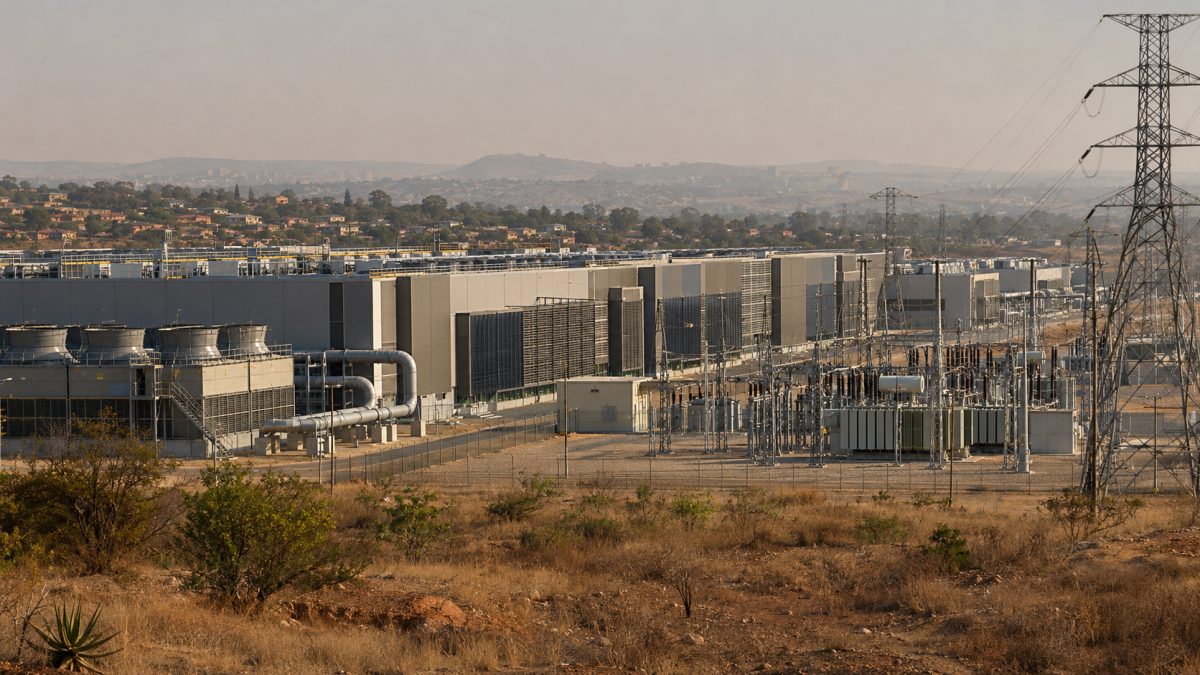
Data centers create local jobs, but not always where residents expect. A US study of 1,584 facilities opened between 2000 and 2023 found an average increase of 1,000 to 1,300 jobs across the county after an opening, while each operating facility typically employs only a few dozen people. These figures describe different things and must be kept separate when assessing hiring promises.
In France, data centers bring economic hopes as well as concerns about electricity, water and land use. When a project is announced nearby, ask not only “how many jobs?” but also “what jobs, where, for how long and calculated how?” Here is how to check.
What does the US study of 1,584 data centers actually measure?
The research reported by The Conversation covers US facilities commissioned from 2000 to 2023. Its striking finding is an average increase of 1,000 to 1,300 county-level jobs after a data center opens, excluding construction jobs. That does not mean as many people work inside the building: permanent on-site teams usually number in the dozens.
The difference is geographical and economic. A county covers far more ground than a data center. The observed employment gains mainly involve firms supplying services to data centers. The study finds little comparable impact in restaurants, shops or neighborhood services. Nearby merchants should not assume a new customer base will automatically appear.
Another key detail: according to The Conversation, these off-site effects emerge three to five years after opening. A promise that combines immediate vacancies with future spillovers without stating dates mixes two different phenomena.
How many jobs per million euros invested?
The US figures presented by The Conversation provide no reliable ratio showing that one million euros invested in a data center generates a fixed number of jobs. The study measures an average regional employment effect, but does not give corresponding investment figures for each site from which a robust ratio could be calculated. Nor do these results establish an equivalent factor for France.
You can nevertheless build a project-specific monitoring indicator, without calling it a national average: announced permanent direct jobs ÷ announced investment in millions of euros. This shows the number of on-site jobs promised per million euros invested. It proves neither that the jobs will materialize nor that local residents will benefit.
The trap to avoid: dividing the 1,000 to 1,300 US county-level jobs by the budget of a French project. Those jobs relate neither to the same facility nor the same area or necessarily the same economic mechanism.
To compare this indicator across projects, check that the announced investment covers the same categories of expenditure. Building-only costs cannot be directly compared with budgets including all equipment. Financial scope must be as transparent as hiring figures.
Construction, operations and induced jobs: what is the difference?
Construction jobs: work limited to the building phase
Construction can involve many trades, but their work ends or moves elsewhere when the project is complete. These are temporary jobs for the project, even if workers remain employed by their companies. Ask how many people were involved, for how long and, if possible, the full-time-equivalent workload. Without that detail, the total number of participants does not describe lasting jobs.
Direct jobs: the teams operating the facility
After opening, jobs mainly involve technical maintenance, IT operations, engineering and security. US observations generally suggest a few dozen employees per facility. In France, Indeed listings include data center technicians and operations managers in Paris, Aubervilliers, Lille, Marseille, Clermont-Ferrand and Lyon.
“Permanent” describes an operational role, not a guarantee about contract duration. Ask how many positions are actually based on site and when recruitment is scheduled.
Indirect and induced jobs: local effects to verify
Indirect jobs include those at firms serving the data center without being part of its operator. Induced jobs more broadly cover activities supported by the economic impact. Keep these categories separate: neither necessarily represents net new jobs in the host municipality.
The US study reported by The Conversation shows that benefits mostly reach sectors providing services to the facilities. They develop over three to five years and barely increase employment in restaurants or nearby shops. For a French project, ask which activities will receive contracts and where those businesses operate.
How can you check a data center's employment promises near you?
The most useful tool is a public monitoring sheet. Residents, local journalists, associations and elected officials can fill it in. First demand clear definitions, then compare the promises with actual outcomes after opening.
- Define the area: does the figure refer to the site, municipality, group of municipalities or a wider labor market? Regional gains do not necessarily mean local hiring.
- Use three separate columns: construction jobs, direct operating jobs and jobs at contractors or in the local economy. Do not count a job twice.
- Ask for the unit: people involved, vacancies, people actually hired or full-time equivalents? These numbers are not interchangeable.
- Set the dates: distinguish recruitment during construction, jobs planned for opening and impacts expected years later.
- Check local ties: identify contract recipients, where their staff work and how many genuinely new jobs are created locally.
- Compare claims with evidence: save initial announcements, track vacancies and request regular recruitment and subcontracting reports.
Also ask project developers to distinguish new hires from internal transfers and existing contractor employees. A company can serve a new facility without increasing headcount. The number of people working for a facility therefore need not equal the number of jobs created.
French procedures also provide opportunities to ask questions. APL's guide for elected officials notes that siting can take two to five years and involve rules on classified installations, water, planning, biodiversity and energy monitoring. These processes do not prove employment promises, but offer opportunities to request explicit public data.
Why this matters particularly in France
According to Tendance Électro's overview, France had roughly 350 recorded data centers in 2025, almost 70% in the Paris region. National totals can conceal major local differences. The same overview cites the Institut Paris Région: 213 centers across 139 sites in the region. A “center” and a “site” are not necessarily the same unit.
This matters when an operator announces several facilities in one area. A headline job figure may cover multiple buildings, companies or an entire region. To assess a particular project, identify its exact scope and seek verifiable commitments.
A credible promise must be verifiable after opening. Without a location, timeframe, employer and counting method, the announced total is hard to audit. The goal is not to assume these projects are always good or bad for jobs, but to obtain sufficiently precise data to assess local benefits.
Frequently asked questions
How many real jobs does a data center create per million euros invested?
No reliable universal jobs-per-million-euros ratio emerges from the US study figures presented by The Conversation. For a project, divide promised permanent direct jobs by investment in millions of euros, then assess indirect effects separately. This is a local indicator, not a scientific forecast.
What is the difference between construction and permanent jobs?
Construction jobs cover building the facility and must not be counted as lasting on-site positions. Permanent roles concern operations, generally employing a few dozen people according to US observations. Distinguish operator employees from contractor staff as well.
How do you verify a local employment promise?
Ask the developer for a table separating construction, operations and contractors, specifying geography, dates and full-time equivalents. Save the promised figures and compare them with job ads, actual hires and documented local contracts. A published vacancy is not a filled position.
Do nearby businesses automatically benefit from a data center?
No. The US study of 1,584 facilities reported by The Conversation finds little employment growth in restaurants, retail or neighborhood services. Most observed effects concern businesses supplying data centers directly and emerge several years later.
Sources
- Do data centers really create jobs? Study of 1,584 sites (theconversation.com)
- Data centers in France: market and figures for 2026 (tendanceelectro.com)
- Building data centers: guide for local officials (apl-datacenter.com)
- Data center: over 1,000 jobs (November 8, 2026) (fr.indeed.com)
- Data center jobs in France (6,000+ openings) (fr.linkedin.com)