
enEnglish
frFrench
esSpanish
zhChinese
jaJapanese
koKorean
hiHindi
deGerman
noNorwegian
Home Latest News Tutorials Consumer Culture Viral Videos Miscellaneous
DE EN ES FR HI JA KO NO ZH
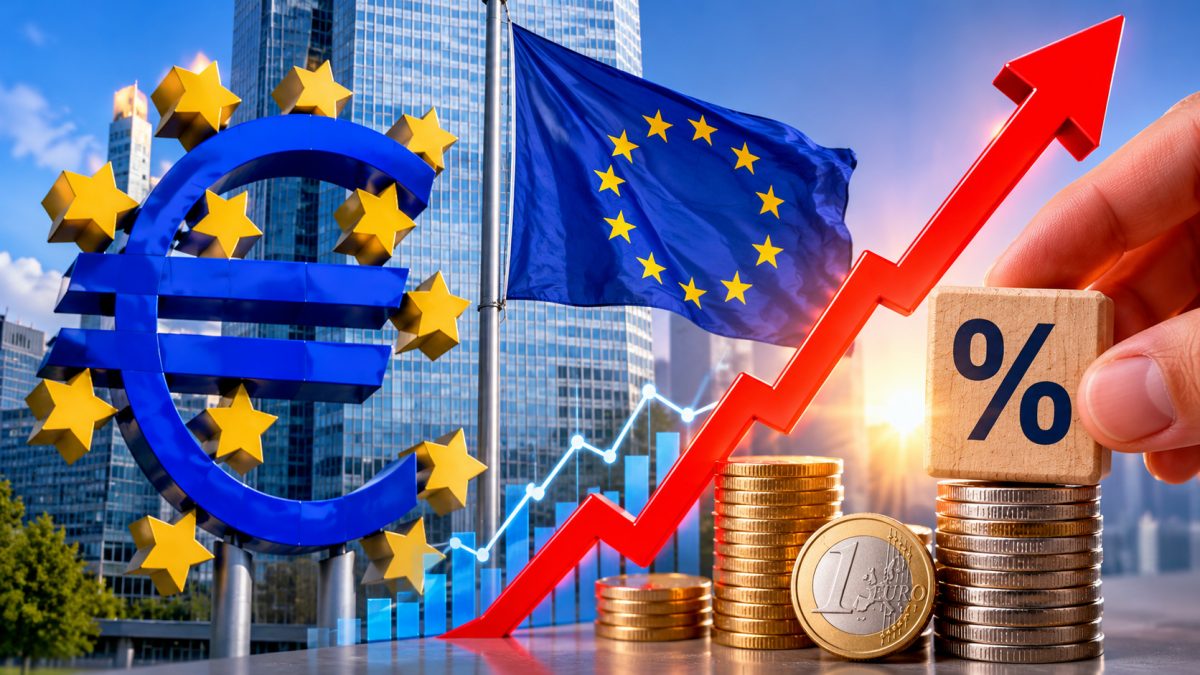
The euro symbol in front of the European Central Bank headquarters in Frankfurt, Germany

ECB raises its key interest rates: what changes for you in 2026

Publié le 13 Juin 2026

It is a decision that will directly affect the wallets of millions of Europeans. On Thursday, June 11, 2026, the European Central Bank (ECB) announced an increase in its key interest rates of 25 basis points, bringing its deposit rate to 2.25 %. It is the first increase in three years and marks a major turning point in eurozone monetary policy.

Why did the ECB decide to raise rates?

The decision did not surprise experts: signals had been multiplying for several weeks. Inflation in the eurozone reached 3.2 % in May 2026, well above the 2 % target set by the institution. Faced with these persistent pressures, the ECB chose to act.

Among the triggering factors, the geopolitical situation in the Middle East plays a key role. Tensions in the region are weighing on energy prices and fuelling imported inflation. ECB President Christine Lagarde indicated that “the decision to raise rates is robust across all scenarios considered for the evolution of the geopolitical shock”.

“Inflation remains too high and we must act to bring it sustainably back towards our 2 % target.”

— European Central Bank, statement of June 11, 2026

What impact on your mortgage?

This is the question first asked by households planning to buy a home or those who already have a variable-rate loan. The answer is clear: mortgage rates will continue to rise.

Even before the official announcement, markets had already anticipated the increase. Average rates observed in June 2026 therefore stand at:

  • Over 15 years: around 3.20 %
  • Over 20 years: around 3.37 %
  • Over 25 years: around 3.48 %

To give a concrete idea of the consequences: on a loan of 250,000 euros over 20 years, a 0.30-point increase raises the monthly payment by around 40 euros, or an additional cost of nearly 9,300 euros over the full term of the loan. That is far from negligible.

There is some good news, however: French banks have not turned off the credit tap. Several institutions are maintaining commercial pushes to attract new borrowers, which means negotiating your rate remains possible, especially with a strong application.

And what about your savings?

The ECB rate hike is not only bad news. For savers, it may translate into better returns on certain financial products.

The products that react most quickly are term accounts and non-regulated bank savings accounts. Banks generally adjust their offers in the weeks following an ECB decision. By contrast, the Livret A and LDDS, whose rate is set by the state, will not be automatically affected.

Government bonds (French OATs) and euro funds in life insurance policies could also offer better medium-term prospects, as new issues will benefit from more attractive rates.

Are more increases expected?

This June increase is unlikely to be the last. Analysts broadly agree that the ECB is considering at least one further increase before the end of 2026, provided inflation remains above target. Everything will depend on economic data in the coming months, particularly consumer prices and the global energy situation.

For variable-rate borrowers, it is therefore advisable to start anticipating a possible renegotiation or switch to a fixed rate, in order to protect against further increases.

What should you do in practice?

In this context, here are a few ways to adapt your situation:

  • Do you want to borrow? Do not wait to finalize your application if your project is ready: each additional rise increases the total cost of credit.
  • Do you have a variable-rate loan? Contact your bank to assess whether switching to a fixed rate would be worthwhile.
  • Are you a saver? Compare term account offers, which should quickly incorporate the ECB increase into their rates.
  • Do you have life insurance? Euro funds could see their future returns improve gradually.

ECB monetary policy is never trivial. This June 2026 increase is a reminder that balancing the fight against inflation with support for growth remains a delicate tightrope walk — with very concrete consequences for Europeans’ daily lives.

Envoyer à un ami
Signaler cet article
A propos de l'auteur
The euro symbol in front of the European Central Bank headquarters in Frankfurt, Germany

ECB raises its key interest rates: what changes for you in 2026

Publié le 13 Juin 2026

It is a decision that will directly affect the wallets of millions of Europeans. On Thursday, June 11, 2026, the European Central Bank (ECB) announced an increase in its key interest rates of 25 basis points, bringing its deposit rate to 2.25 %. It is the first increase in three years and marks a major turning point in eurozone monetary policy.

Why did the ECB decide to raise rates?

The decision did not surprise experts: signals had been multiplying for several weeks. Inflation in the eurozone reached 3.2 % in May 2026, well above the 2 % target set by the institution. Faced with these persistent pressures, the ECB chose to act.

Among the triggering factors, the geopolitical situation in the Middle East plays a key role. Tensions in the region are weighing on energy prices and fuelling imported inflation. ECB President Christine Lagarde indicated that “the decision to raise rates is robust across all scenarios considered for the evolution of the geopolitical shock”.

“Inflation remains too high and we must act to bring it sustainably back towards our 2 % target.”

— European Central Bank, statement of June 11, 2026

What impact on your mortgage?

This is the question first asked by households planning to buy a home or those who already have a variable-rate loan. The answer is clear: mortgage rates will continue to rise.

Even before the official announcement, markets had already anticipated the increase. Average rates observed in June 2026 therefore stand at:

  • Over 15 years: around 3.20 %
  • Over 20 years: around 3.37 %
  • Over 25 years: around 3.48 %

To give a concrete idea of the consequences: on a loan of 250,000 euros over 20 years, a 0.30-point increase raises the monthly payment by around 40 euros, or an additional cost of nearly 9,300 euros over the full term of the loan. That is far from negligible.

There is some good news, however: French banks have not turned off the credit tap. Several institutions are maintaining commercial pushes to attract new borrowers, which means negotiating your rate remains possible, especially with a strong application.

And what about your savings?

The ECB rate hike is not only bad news. For savers, it may translate into better returns on certain financial products.

The products that react most quickly are term accounts and non-regulated bank savings accounts. Banks generally adjust their offers in the weeks following an ECB decision. By contrast, the Livret A and LDDS, whose rate is set by the state, will not be automatically affected.

Government bonds (French OATs) and euro funds in life insurance policies could also offer better medium-term prospects, as new issues will benefit from more attractive rates.

Are more increases expected?

This June increase is unlikely to be the last. Analysts broadly agree that the ECB is considering at least one further increase before the end of 2026, provided inflation remains above target. Everything will depend on economic data in the coming months, particularly consumer prices and the global energy situation.

For variable-rate borrowers, it is therefore advisable to start anticipating a possible renegotiation or switch to a fixed rate, in order to protect against further increases.

What should you do in practice?

In this context, here are a few ways to adapt your situation:

  • Do you want to borrow? Do not wait to finalize your application if your project is ready: each additional rise increases the total cost of credit.
  • Do you have a variable-rate loan? Contact your bank to assess whether switching to a fixed rate would be worthwhile.
  • Are you a saver? Compare term account offers, which should quickly incorporate the ECB increase into their rates.
  • Do you have life insurance? Euro funds could see their future returns improve gradually.

ECB monetary policy is never trivial. This June 2026 increase is a reminder that balancing the fight against inflation with support for growth remains a delicate tightrope walk — with very concrete consequences for Europeans’ daily lives.

Envoyer à un ami
Signaler cet article
A propos de l'auteur
The euro symbol in front of the European Central Bank headquarters in Frankfurt, Germany

ECB raises its key interest rates: what changes for you in 2026

Publié le 13 Juin 2026

It is a decision that will directly affect the wallets of millions of Europeans. On Thursday, June 11, 2026, the European Central Bank (ECB) announced an increase in its key interest rates of 25 basis points, bringing its deposit rate to 2.25 %. It is the first increase in three years and marks a major turning point in eurozone monetary policy.

Why did the ECB decide to raise rates?

The decision did not surprise experts: signals had been multiplying for several weeks. Inflation in the eurozone reached 3.2 % in May 2026, well above the 2 % target set by the institution. Faced with these persistent pressures, the ECB chose to act.

Among the triggering factors, the geopolitical situation in the Middle East plays a key role. Tensions in the region are weighing on energy prices and fuelling imported inflation. ECB President Christine Lagarde indicated that “the decision to raise rates is robust across all scenarios considered for the evolution of the geopolitical shock”.

“Inflation remains too high and we must act to bring it sustainably back towards our 2 % target.”

— European Central Bank, statement of June 11, 2026

What impact on your mortgage?

This is the question first asked by households planning to buy a home or those who already have a variable-rate loan. The answer is clear: mortgage rates will continue to rise.

Even before the official announcement, markets had already anticipated the increase. Average rates observed in June 2026 therefore stand at:

  • Over 15 years: around 3.20 %
  • Over 20 years: around 3.37 %
  • Over 25 years: around 3.48 %

To give a concrete idea of the consequences: on a loan of 250,000 euros over 20 years, a 0.30-point increase raises the monthly payment by around 40 euros, or an additional cost of nearly 9,300 euros over the full term of the loan. That is far from negligible.

There is some good news, however: French banks have not turned off the credit tap. Several institutions are maintaining commercial pushes to attract new borrowers, which means negotiating your rate remains possible, especially with a strong application.

And what about your savings?

The ECB rate hike is not only bad news. For savers, it may translate into better returns on certain financial products.

The products that react most quickly are term accounts and non-regulated bank savings accounts. Banks generally adjust their offers in the weeks following an ECB decision. By contrast, the Livret A and LDDS, whose rate is set by the state, will not be automatically affected.

Government bonds (French OATs) and euro funds in life insurance policies could also offer better medium-term prospects, as new issues will benefit from more attractive rates.

Are more increases expected?

This June increase is unlikely to be the last. Analysts broadly agree that the ECB is considering at least one further increase before the end of 2026, provided inflation remains above target. Everything will depend on economic data in the coming months, particularly consumer prices and the global energy situation.

For variable-rate borrowers, it is therefore advisable to start anticipating a possible renegotiation or switch to a fixed rate, in order to protect against further increases.

What should you do in practice?

In this context, here are a few ways to adapt your situation:

  • Do you want to borrow? Do not wait to finalize your application if your project is ready: each additional rise increases the total cost of credit.
  • Do you have a variable-rate loan? Contact your bank to assess whether switching to a fixed rate would be worthwhile.
  • Are you a saver? Compare term account offers, which should quickly incorporate the ECB increase into their rates.
  • Do you have life insurance? Euro funds could see their future returns improve gradually.

ECB monetary policy is never trivial. This June 2026 increase is a reminder that balancing the fight against inflation with support for growth remains a delicate tightrope walk — with very concrete consequences for Europeans’ daily lives.

Envoyer à un ami
Signaler cet article
A propos de l'auteur