
 English
  French
  German
  Spanish
  Hindi
Hindi  Italian
  Japanese
  Korean
  Norwegian
  Chinese
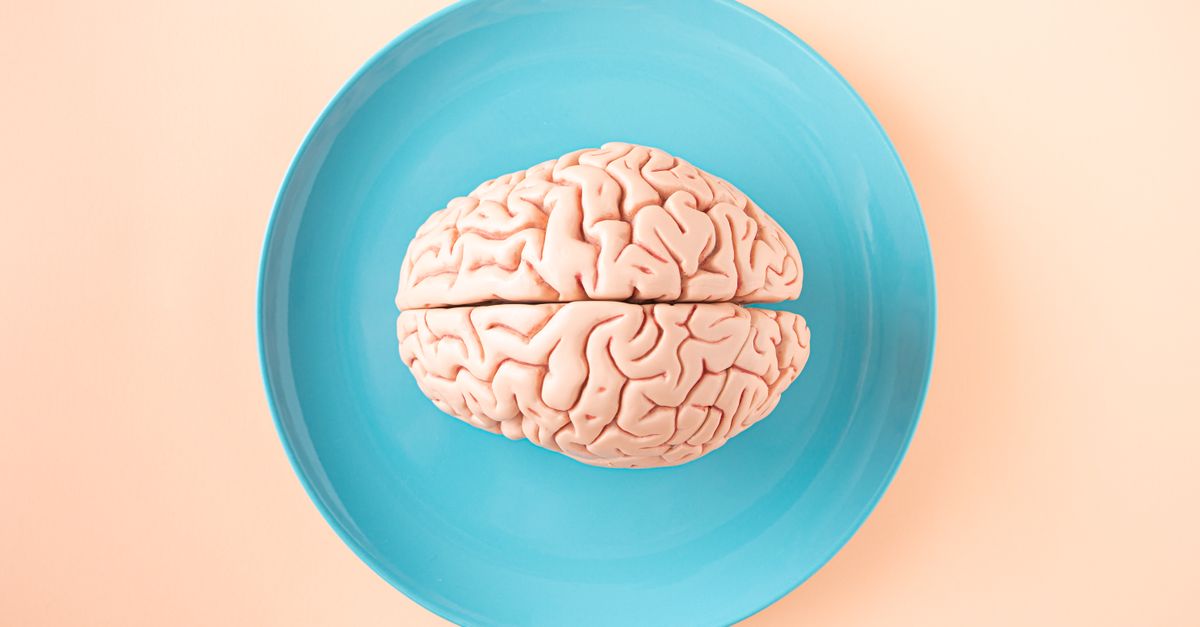
False memories: when the brain rewrites your past
You probably have this clear, precise memory, firmly anchored in your mind: that childhood birthday party, that family argument, that first meeting with someone important. You can describe the details—the colors, the smells, what people were wearing. You are certain of it. And yet science tells us you may have it all wrong.
For around thirty years, researchers in cognitive psychology have been accumulating evidence of a disturbing fact: our memory is not a faithful recorder. On the contrary, it is a machine that reconstructs—and sometimes invents.
The experiment that changed everything
In 1995, American psychologist Elizabeth Loftus and her colleague Jacqueline Pickrell conducted an apparently simple experiment. They convinced young adults that their parents had shared a childhood memory with them: getting lost in a shopping mall at the age of five, being found in tears by a kindly elderly woman, and then being reunited with their family. The memory was entirely fabricated.
The result: about 25% of the participants eventually came to “remember” this fictional event. With details. Emotions. Genuine conviction. Some described the woman's appearance, the color of the floor, and their own panic. Yet none of it had ever happened.
This study, known as Lost in the Mall, remains one of the most frequently cited in experimental psychology. It launched an entire field devoted to understanding how the brain creates memories that correspond to nothing real.
What reconsolidation reveals
The key to the phenomenon lies in a fundamental neurological mechanism: reconsolidation. Every time you recall a memory, your brain does not “read” it like an unchanging file—it actively reconstructs it from fragments scattered across several areas of the cortex. And during that reconstruction, it almost inevitably incorporates new information: your current mood, what you have heard since then, and conversations about the event.
In other words, remembering also means, ever so slightly, rewriting. Each act of recall imperceptibly alters the original memory. Over decades, a real event may end up resembling what we have been told about it more than what we actually experienced.
“Memory is not a snapshot of the past. It is a narrative reconstruction in the present.” — Elizabeth Loftus
When you can be made to believe almost anything
The implications are staggering. In 2015, researcher Julia Shaw published a study in which she managed to convince adult participants that, as teenagers, they had committed a crime—either theft or assault—that led to police intervention. After three structured interviews, a substantial proportion of the participants had developed a false memory elaborate enough to be mistaken for a lived experience.
The study is controversial: critics argue that Shaw's protocol defined the idea of a “false memory” too broadly, and later reassessments produced more conservative figures. But even in its most cautious interpretation, the finding remains troubling: with the right suggestion techniques, ordinary people can be led to “remember” things they never did.
This is not merely a laboratory curiosity. The Innocence Project, an American organization that works to exonerate people who were wrongfully imprisoned, has established that eyewitness misidentification is among the leading causes of wrongful convictions—involved in nearly 70% of cases reexamined through DNA evidence. People have spent decades in prison because of witnesses who were sincerely convinced that what they described was true.
A bug or a feature?
Faced with these findings, we might conclude that our memory is simply defective. But specialists offer the opposite interpretation: memory's plasticity may actually be an evolutionary adaptation.
A brain that remembered everything with photographic precision would be paralyzed by detail. Forgetting and reconstruction allow human beings to generalize, extract principles from specific experiences, and adapt future behavior instead of endlessly replaying past scenes. Memory is not an archive—it is a tool serving the present and helping us anticipate the future.
The famous patient H.M., whose case fascinated neurologists for decades, was unable to form new memories after severe damage to the hippocampus. His immediate memory remained intact, but every conversation and every encounter faded within minutes. To live without episodic memory is to lose the continuity of the self. Our memories—even imperfect ones—form the thread that connects us to who we once were.
What should we do with this knowledge?
Knowing that our memories are malleable does not mean they are all false—or that we should treat them with paralyzing, systematic distrust. But a few intellectual attitudes can help.
First, we should be cautious about the stories we tell about our own lives. Our mental autobiographies are constructions. They say as much about who we are today as they do about what actually happened yesterday. That is not a problem—but recognizing it helps us be less dogmatic about our own version of events and more open to the perspectives of the other people involved.
Second, we need a measure of humility toward testimony—our own as well as other people's. Subjective conviction is not proof of truth. A witness can be absolutely certain of something and be entirely wrong. This reality has implications in fields as varied as justice, oral history, therapy, and family relationships.
Finally, and perhaps most importantly, we can cultivate a compassionate curiosity toward our own memory. Our distorted memories are not flaws to be corrected—they bear the imprint of what we felt, what left its mark on us, and how we made sense of events. In their own way, they are a form of truth. Not the truth of facts, but the truth of who we are.
The brain does not photograph the world. It paints it. And like every painting, it says something about the painter.



False memories: when the brain rewrites your past
You probably have this clear, precise memory, firmly anchored in your mind: that childhood birthday party, that family argument, that first meeting with someone important. You can describe the details—the colors, the smells, what people were wearing. You are certain of it. And yet science tells us you may have it all wrong.
For around thirty years, researchers in cognitive psychology have been accumulating evidence of a disturbing fact: our memory is not a faithful recorder. On the contrary, it is a machine that reconstructs—and sometimes invents.
The experiment that changed everything
In 1995, American psychologist Elizabeth Loftus and her colleague Jacqueline Pickrell conducted an apparently simple experiment. They convinced young adults that their parents had shared a childhood memory with them: getting lost in a shopping mall at the age of five, being found in tears by a kindly elderly woman, and then being reunited with their family. The memory was entirely fabricated.
The result: about 25% of the participants eventually came to “remember” this fictional event. With details. Emotions. Genuine conviction. Some described the woman's appearance, the color of the floor, and their own panic. Yet none of it had ever happened.
This study, known as Lost in the Mall, remains one of the most frequently cited in experimental psychology. It launched an entire field devoted to understanding how the brain creates memories that correspond to nothing real.
What reconsolidation reveals
The key to the phenomenon lies in a fundamental neurological mechanism: reconsolidation. Every time you recall a memory, your brain does not “read” it like an unchanging file—it actively reconstructs it from fragments scattered across several areas of the cortex. And during that reconstruction, it almost inevitably incorporates new information: your current mood, what you have heard since then, and conversations about the event.
In other words, remembering also means, ever so slightly, rewriting. Each act of recall imperceptibly alters the original memory. Over decades, a real event may end up resembling what we have been told about it more than what we actually experienced.
“Memory is not a snapshot of the past. It is a narrative reconstruction in the present.” — Elizabeth Loftus
When you can be made to believe almost anything
The implications are staggering. In 2015, researcher Julia Shaw published a study in which she managed to convince adult participants that, as teenagers, they had committed a crime—either theft or assault—that led to police intervention. After three structured interviews, a substantial proportion of the participants had developed a false memory elaborate enough to be mistaken for a lived experience.
The study is controversial: critics argue that Shaw's protocol defined the idea of a “false memory” too broadly, and later reassessments produced more conservative figures. But even in its most cautious interpretation, the finding remains troubling: with the right suggestion techniques, ordinary people can be led to “remember” things they never did.
This is not merely a laboratory curiosity. The Innocence Project, an American organization that works to exonerate people who were wrongfully imprisoned, has established that eyewitness misidentification is among the leading causes of wrongful convictions—involved in nearly 70% of cases reexamined through DNA evidence. People have spent decades in prison because of witnesses who were sincerely convinced that what they described was true.
A bug or a feature?
Faced with these findings, we might conclude that our memory is simply defective. But specialists offer the opposite interpretation: memory's plasticity may actually be an evolutionary adaptation.
A brain that remembered everything with photographic precision would be paralyzed by detail. Forgetting and reconstruction allow human beings to generalize, extract principles from specific experiences, and adapt future behavior instead of endlessly replaying past scenes. Memory is not an archive—it is a tool serving the present and helping us anticipate the future.
The famous patient H.M., whose case fascinated neurologists for decades, was unable to form new memories after severe damage to the hippocampus. His immediate memory remained intact, but every conversation and every encounter faded within minutes. To live without episodic memory is to lose the continuity of the self. Our memories—even imperfect ones—form the thread that connects us to who we once were.
What should we do with this knowledge?
Knowing that our memories are malleable does not mean they are all false—or that we should treat them with paralyzing, systematic distrust. But a few intellectual attitudes can help.
First, we should be cautious about the stories we tell about our own lives. Our mental autobiographies are constructions. They say as much about who we are today as they do about what actually happened yesterday. That is not a problem—but recognizing it helps us be less dogmatic about our own version of events and more open to the perspectives of the other people involved.
Second, we need a measure of humility toward testimony—our own as well as other people's. Subjective conviction is not proof of truth. A witness can be absolutely certain of something and be entirely wrong. This reality has implications in fields as varied as justice, oral history, therapy, and family relationships.
Finally, and perhaps most importantly, we can cultivate a compassionate curiosity toward our own memory. Our distorted memories are not flaws to be corrected—they bear the imprint of what we felt, what left its mark on us, and how we made sense of events. In their own way, they are a form of truth. Not the truth of facts, but the truth of who we are.
The brain does not photograph the world. It paints it. And like every painting, it says something about the painter.
False memories: when the brain rewrites your past
You probably have this clear, precise memory, firmly anchored in your mind: that childhood birthday party, that family argument, that first meeting with someone important. You can describe the details—the colors, the smells, what people were wearing. You are certain of it. And yet science tells us you may have it all wrong.
For around thirty years, researchers in cognitive psychology have been accumulating evidence of a disturbing fact: our memory is not a faithful recorder. On the contrary, it is a machine that reconstructs—and sometimes invents.
The experiment that changed everything
In 1995, American psychologist Elizabeth Loftus and her colleague Jacqueline Pickrell conducted an apparently simple experiment. They convinced young adults that their parents had shared a childhood memory with them: getting lost in a shopping mall at the age of five, being found in tears by a kindly elderly woman, and then being reunited with their family. The memory was entirely fabricated.
The result: about 25% of the participants eventually came to “remember” this fictional event. With details. Emotions. Genuine conviction. Some described the woman's appearance, the color of the floor, and their own panic. Yet none of it had ever happened.
This study, known as Lost in the Mall, remains one of the most frequently cited in experimental psychology. It launched an entire field devoted to understanding how the brain creates memories that correspond to nothing real.
What reconsolidation reveals
The key to the phenomenon lies in a fundamental neurological mechanism: reconsolidation. Every time you recall a memory, your brain does not “read” it like an unchanging file—it actively reconstructs it from fragments scattered across several areas of the cortex. And during that reconstruction, it almost inevitably incorporates new information: your current mood, what you have heard since then, and conversations about the event.
In other words, remembering also means, ever so slightly, rewriting. Each act of recall imperceptibly alters the original memory. Over decades, a real event may end up resembling what we have been told about it more than what we actually experienced.
“Memory is not a snapshot of the past. It is a narrative reconstruction in the present.” — Elizabeth Loftus
When you can be made to believe almost anything
The implications are staggering. In 2015, researcher Julia Shaw published a study in which she managed to convince adult participants that, as teenagers, they had committed a crime—either theft or assault—that led to police intervention. After three structured interviews, a substantial proportion of the participants had developed a false memory elaborate enough to be mistaken for a lived experience.
The study is controversial: critics argue that Shaw's protocol defined the idea of a “false memory” too broadly, and later reassessments produced more conservative figures. But even in its most cautious interpretation, the finding remains troubling: with the right suggestion techniques, ordinary people can be led to “remember” things they never did.
This is not merely a laboratory curiosity. The Innocence Project, an American organization that works to exonerate people who were wrongfully imprisoned, has established that eyewitness misidentification is among the leading causes of wrongful convictions—involved in nearly 70% of cases reexamined through DNA evidence. People have spent decades in prison because of witnesses who were sincerely convinced that what they described was true.
A bug or a feature?
Faced with these findings, we might conclude that our memory is simply defective. But specialists offer the opposite interpretation: memory's plasticity may actually be an evolutionary adaptation.
A brain that remembered everything with photographic precision would be paralyzed by detail. Forgetting and reconstruction allow human beings to generalize, extract principles from specific experiences, and adapt future behavior instead of endlessly replaying past scenes. Memory is not an archive—it is a tool serving the present and helping us anticipate the future.
The famous patient H.M., whose case fascinated neurologists for decades, was unable to form new memories after severe damage to the hippocampus. His immediate memory remained intact, but every conversation and every encounter faded within minutes. To live without episodic memory is to lose the continuity of the self. Our memories—even imperfect ones—form the thread that connects us to who we once were.
What should we do with this knowledge?
Knowing that our memories are malleable does not mean they are all false—or that we should treat them with paralyzing, systematic distrust. But a few intellectual attitudes can help.
First, we should be cautious about the stories we tell about our own lives. Our mental autobiographies are constructions. They say as much about who we are today as they do about what actually happened yesterday. That is not a problem—but recognizing it helps us be less dogmatic about our own version of events and more open to the perspectives of the other people involved.
Second, we need a measure of humility toward testimony—our own as well as other people's. Subjective conviction is not proof of truth. A witness can be absolutely certain of something and be entirely wrong. This reality has implications in fields as varied as justice, oral history, therapy, and family relationships.
Finally, and perhaps most importantly, we can cultivate a compassionate curiosity toward our own memory. Our distorted memories are not flaws to be corrected—they bear the imprint of what we felt, what left its mark on us, and how we made sense of events. In their own way, they are a form of truth. Not the truth of facts, but the truth of who we are.
The brain does not photograph the world. It paints it. And like every painting, it says something about the painter.