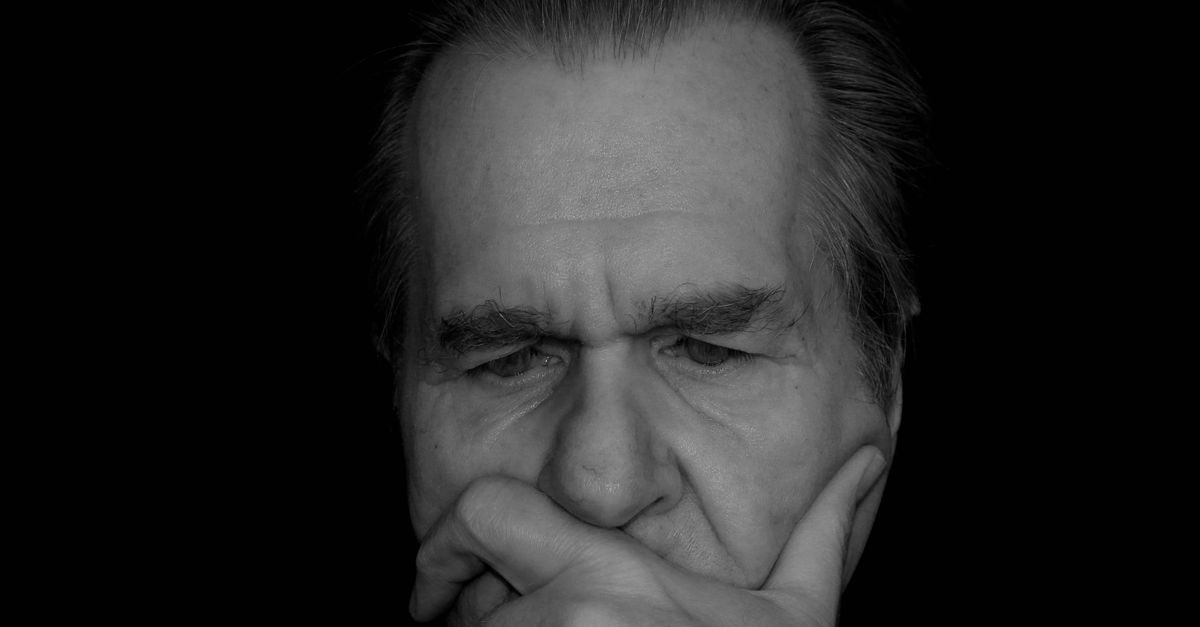


Loss aversion: losing hurts twice as much as winning
Imagine the scene: you lose a fifty-euro note that slips from your fingers at a market. You search for it, curse, and replay the incident for hours. Now imagine that you happen to find a fifty-euro note in the street. The joy is real, but it barely lasts.
These two events are symmetrical in terms of monetary value. Yet your brain does not treat them in the same way. According to all available psychological measures, the pain of loss is noticeably stronger than the pleasure of an equivalent gain. This phenomenon is called loss aversion, and it silently shapes a large part of our decisions.
The origins: Kahneman, Tversky and prospect theory
In the 1970s, psychologists Daniel Kahneman and Amos Tversky began mapping the systematic irrationalities of human decision-making. Their work led in 1979 to the publication of Prospect Theory in the journal Econometrica, one of the most cited publications in economics.
The central idea is simple but radical: we do not evaluate situations in absolute terms, but in relation to a reference point. Above all, negative deviations from that reference point carry far more psychological weight than positive deviations of the same size.
In their experiments, Kahneman and Tversky presented participants with different gambling scenarios. The recurring result was clear: to accept taking a risk, people generally required the potential gain to be about 1.5 to 2.5 times higher than the potential loss. In other words, for a bet to feel acceptable, a gain of 100 euros had to offset a possible loss of around 50 euros — not the cold logic of calculation, but the logic of emotion.
Daniel Kahneman received the Nobel Prize in Economic Sciences in 2002 for this body of work. Amos Tversky, his lifelong intellectual partner, had died in 1996 — the Nobel Prize is not awarded posthumously.
Why our brain works this way
From an evolutionary point of view, this asymmetry has a certain logic. For a living being in a hostile environment, a loss — of food, territory, or a limb — can be fatal. An equivalent gain improves comfort, but is not a matter of immediate survival. The brain therefore developed heightened sensitivity to negative signals.
This vigilance is partly managed by the amygdala, a brain structure involved in processing emotions and fear responses. Neuroscience studies have shown that potential losses activate this region more intensely than equivalent gains. The reaction is fast, visceral, and often happens before our conscious reasoning has had time to engage.
The problem, of course, is that our Paleolithic brains now navigate a world where most “losses” do not threaten our survival. Losing an argument in a meeting, seeing the value of a stock portfolio fall for a day, or missing out on a promotion: none of these situations justifies the emotional response our brain gives them. Yet the mechanism still kicks in.
The concrete consequences in our lives
Loss aversion does not remain confined to laboratory experiments. It seeps into very concrete areas.
In finance
One of the best-documented effects is what economists call the disposition effect: investors tend to sell winning stocks too quickly — to “lock in the gain” — and keep losing stocks for too long, hoping to “recover the losses”. This is exactly the opposite of what rational logic would recommend.
This behavior was measured by economist Terrance Odean in a 1998 study published in the Journal of Finance, using real brokerage account data. Individual investors sold their winning positions 1.68 times more often than their losing positions — a massive distortion directly attributable to loss aversion.
In negotiations
A salesperson who frames an argument in terms of what the buyer risks losing if they do not act is often more persuasive than one who presents the exact same argument in terms of what they can gain. “Without this insurance, you risk losing 20,000 euros” produces a different emotional response from “With this insurance, you can protect 20,000 euros”, even though the two sentences describe the same reality.
Sales and marketing professionals have learned to exploit this bias — often without the awareness of the people they are trying to persuade.
In relationships and everyday life
Loss aversion also explains why we persist in relationships, jobs, or projects that no longer suit us. Leaving something means accepting a loss — of invested time, effort, or an identity built around that choice. Behavioral economics calls this the sunk cost bias (sunk cost fallacy): we continue to invest in something only because we have already put a lot into it, even when reason tells us it is a dead end.
Can we free ourselves from it?
The honest answer is: not completely. Loss aversion is deeply wired. But being aware of its existence already helps reduce its effects.
- Mentally reframe situations. When you hesitate to make a decision out of fear of losing, ask yourself: if I did not already have this object, this job, this situation, would I actively try to obtain it? If the answer is no, your resistance to loss may be keeping you in a suboptimal position.
- Distinguish real losses from perceived losses. Not all “losses” are equivalent. Losing time in a useless meeting is not the same kind of loss as losing your savings. Our brain, however, can process both with the same emotional intensity.
- Make decisions with a cool head. When an important decision is influenced by the fear of losing, postponing it for a few hours can allow the emotion to fade and reasoning to regain its place.
A universal asymmetry
Loss aversion has been found in very different cultures, in children as well as adults. In a 2005 study published in the journal Nature, Keith Chen and his colleagues showed that capuchin monkeys trained to use tokens as a medium of exchange also displayed behaviors consistent with loss aversion when faced with risky options.
This suggests that the bias is not a cultural aberration or a product of modern financial education: it is a deeply rooted cognitive trait, shared by species very far apart on the evolutionary tree.
Conclusion
Loss aversion is one of the strongest and most unsettling discoveries in behavioral psychology. It reminds us that we are far less rational than we imagine — and that our decisions are often driven by the fear of losing far more than by the hope of winning.
The next time you hesitate to change course, negotiate more firmly, or hold on to a losing position, ask yourself: is this logic speaking, or the ancient voice of a brain that learned, long ago, that losses can be fatal? Understanding this mechanism does not remove it. But it sometimes helps us avoid letting it decide in our place.
Loss aversion: losing hurts twice as much as winning
Imagine the scene: you lose a fifty-euro note that slips from your fingers at a market. You search for it, curse, and replay the incident for hours. Now imagine that you happen to find a fifty-euro note in the street. The joy is real, but it barely lasts.
These two events are symmetrical in terms of monetary value. Yet your brain does not treat them in the same way. According to all available psychological measures, the pain of loss is noticeably stronger than the pleasure of an equivalent gain. This phenomenon is called loss aversion, and it silently shapes a large part of our decisions.
The origins: Kahneman, Tversky and prospect theory
In the 1970s, psychologists Daniel Kahneman and Amos Tversky began mapping the systematic irrationalities of human decision-making. Their work led in 1979 to the publication of Prospect Theory in the journal Econometrica, one of the most cited publications in economics.
The central idea is simple but radical: we do not evaluate situations in absolute terms, but in relation to a reference point. Above all, negative deviations from that reference point carry far more psychological weight than positive deviations of the same size.
In their experiments, Kahneman and Tversky presented participants with different gambling scenarios. The recurring result was clear: to accept taking a risk, people generally required the potential gain to be about 1.5 to 2.5 times higher than the potential loss. In other words, for a bet to feel acceptable, a gain of 100 euros had to offset a possible loss of around 50 euros — not the cold logic of calculation, but the logic of emotion.
Daniel Kahneman received the Nobel Prize in Economic Sciences in 2002 for this body of work. Amos Tversky, his lifelong intellectual partner, had died in 1996 — the Nobel Prize is not awarded posthumously.
Why our brain works this way
From an evolutionary point of view, this asymmetry has a certain logic. For a living being in a hostile environment, a loss — of food, territory, or a limb — can be fatal. An equivalent gain improves comfort, but is not a matter of immediate survival. The brain therefore developed heightened sensitivity to negative signals.
This vigilance is partly managed by the amygdala, a brain structure involved in processing emotions and fear responses. Neuroscience studies have shown that potential losses activate this region more intensely than equivalent gains. The reaction is fast, visceral, and often happens before our conscious reasoning has had time to engage.
The problem, of course, is that our Paleolithic brains now navigate a world where most “losses” do not threaten our survival. Losing an argument in a meeting, seeing the value of a stock portfolio fall for a day, or missing out on a promotion: none of these situations justifies the emotional response our brain gives them. Yet the mechanism still kicks in.
The concrete consequences in our lives
Loss aversion does not remain confined to laboratory experiments. It seeps into very concrete areas.
In finance
One of the best-documented effects is what economists call the disposition effect: investors tend to sell winning stocks too quickly — to “lock in the gain” — and keep losing stocks for too long, hoping to “recover the losses”. This is exactly the opposite of what rational logic would recommend.
This behavior was measured by economist Terrance Odean in a 1998 study published in the Journal of Finance, using real brokerage account data. Individual investors sold their winning positions 1.68 times more often than their losing positions — a massive distortion directly attributable to loss aversion.
In negotiations
A salesperson who frames an argument in terms of what the buyer risks losing if they do not act is often more persuasive than one who presents the exact same argument in terms of what they can gain. “Without this insurance, you risk losing 20,000 euros” produces a different emotional response from “With this insurance, you can protect 20,000 euros”, even though the two sentences describe the same reality.
Sales and marketing professionals have learned to exploit this bias — often without the awareness of the people they are trying to persuade.
In relationships and everyday life
Loss aversion also explains why we persist in relationships, jobs, or projects that no longer suit us. Leaving something means accepting a loss — of invested time, effort, or an identity built around that choice. Behavioral economics calls this the sunk cost bias (sunk cost fallacy): we continue to invest in something only because we have already put a lot into it, even when reason tells us it is a dead end.
Can we free ourselves from it?
The honest answer is: not completely. Loss aversion is deeply wired. But being aware of its existence already helps reduce its effects.
- Mentally reframe situations. When you hesitate to make a decision out of fear of losing, ask yourself: if I did not already have this object, this job, this situation, would I actively try to obtain it? If the answer is no, your resistance to loss may be keeping you in a suboptimal position.
- Distinguish real losses from perceived losses. Not all “losses” are equivalent. Losing time in a useless meeting is not the same kind of loss as losing your savings. Our brain, however, can process both with the same emotional intensity.
- Make decisions with a cool head. When an important decision is influenced by the fear of losing, postponing it for a few hours can allow the emotion to fade and reasoning to regain its place.
A universal asymmetry
Loss aversion has been found in very different cultures, in children as well as adults. In a 2005 study published in the journal Nature, Keith Chen and his colleagues showed that capuchin monkeys trained to use tokens as a medium of exchange also displayed behaviors consistent with loss aversion when faced with risky options.
This suggests that the bias is not a cultural aberration or a product of modern financial education: it is a deeply rooted cognitive trait, shared by species very far apart on the evolutionary tree.
Conclusion
Loss aversion is one of the strongest and most unsettling discoveries in behavioral psychology. It reminds us that we are far less rational than we imagine — and that our decisions are often driven by the fear of losing far more than by the hope of winning.
The next time you hesitate to change course, negotiate more firmly, or hold on to a losing position, ask yourself: is this logic speaking, or the ancient voice of a brain that learned, long ago, that losses can be fatal? Understanding this mechanism does not remove it. But it sometimes helps us avoid letting it decide in our place.
Loss aversion: losing hurts twice as much as winning
Imagine the scene: you lose a fifty-euro note that slips from your fingers at a market. You search for it, curse, and replay the incident for hours. Now imagine that you happen to find a fifty-euro note in the street. The joy is real, but it barely lasts.
These two events are symmetrical in terms of monetary value. Yet your brain does not treat them in the same way. According to all available psychological measures, the pain of loss is noticeably stronger than the pleasure of an equivalent gain. This phenomenon is called loss aversion, and it silently shapes a large part of our decisions.
The origins: Kahneman, Tversky and prospect theory
In the 1970s, psychologists Daniel Kahneman and Amos Tversky began mapping the systematic irrationalities of human decision-making. Their work led in 1979 to the publication of Prospect Theory in the journal Econometrica, one of the most cited publications in economics.
The central idea is simple but radical: we do not evaluate situations in absolute terms, but in relation to a reference point. Above all, negative deviations from that reference point carry far more psychological weight than positive deviations of the same size.
In their experiments, Kahneman and Tversky presented participants with different gambling scenarios. The recurring result was clear: to accept taking a risk, people generally required the potential gain to be about 1.5 to 2.5 times higher than the potential loss. In other words, for a bet to feel acceptable, a gain of 100 euros had to offset a possible loss of around 50 euros — not the cold logic of calculation, but the logic of emotion.
Daniel Kahneman received the Nobel Prize in Economic Sciences in 2002 for this body of work. Amos Tversky, his lifelong intellectual partner, had died in 1996 — the Nobel Prize is not awarded posthumously.
Why our brain works this way
From an evolutionary point of view, this asymmetry has a certain logic. For a living being in a hostile environment, a loss — of food, territory, or a limb — can be fatal. An equivalent gain improves comfort, but is not a matter of immediate survival. The brain therefore developed heightened sensitivity to negative signals.
This vigilance is partly managed by the amygdala, a brain structure involved in processing emotions and fear responses. Neuroscience studies have shown that potential losses activate this region more intensely than equivalent gains. The reaction is fast, visceral, and often happens before our conscious reasoning has had time to engage.
The problem, of course, is that our Paleolithic brains now navigate a world where most “losses” do not threaten our survival. Losing an argument in a meeting, seeing the value of a stock portfolio fall for a day, or missing out on a promotion: none of these situations justifies the emotional response our brain gives them. Yet the mechanism still kicks in.
The concrete consequences in our lives
Loss aversion does not remain confined to laboratory experiments. It seeps into very concrete areas.
In finance
One of the best-documented effects is what economists call the disposition effect: investors tend to sell winning stocks too quickly — to “lock in the gain” — and keep losing stocks for too long, hoping to “recover the losses”. This is exactly the opposite of what rational logic would recommend.
This behavior was measured by economist Terrance Odean in a 1998 study published in the Journal of Finance, using real brokerage account data. Individual investors sold their winning positions 1.68 times more often than their losing positions — a massive distortion directly attributable to loss aversion.
In negotiations
A salesperson who frames an argument in terms of what the buyer risks losing if they do not act is often more persuasive than one who presents the exact same argument in terms of what they can gain. “Without this insurance, you risk losing 20,000 euros” produces a different emotional response from “With this insurance, you can protect 20,000 euros”, even though the two sentences describe the same reality.
Sales and marketing professionals have learned to exploit this bias — often without the awareness of the people they are trying to persuade.
In relationships and everyday life
Loss aversion also explains why we persist in relationships, jobs, or projects that no longer suit us. Leaving something means accepting a loss — of invested time, effort, or an identity built around that choice. Behavioral economics calls this the sunk cost bias (sunk cost fallacy): we continue to invest in something only because we have already put a lot into it, even when reason tells us it is a dead end.
Can we free ourselves from it?
The honest answer is: not completely. Loss aversion is deeply wired. But being aware of its existence already helps reduce its effects.
- Mentally reframe situations. When you hesitate to make a decision out of fear of losing, ask yourself: if I did not already have this object, this job, this situation, would I actively try to obtain it? If the answer is no, your resistance to loss may be keeping you in a suboptimal position.
- Distinguish real losses from perceived losses. Not all “losses” are equivalent. Losing time in a useless meeting is not the same kind of loss as losing your savings. Our brain, however, can process both with the same emotional intensity.
- Make decisions with a cool head. When an important decision is influenced by the fear of losing, postponing it for a few hours can allow the emotion to fade and reasoning to regain its place.
A universal asymmetry
Loss aversion has been found in very different cultures, in children as well as adults. In a 2005 study published in the journal Nature, Keith Chen and his colleagues showed that capuchin monkeys trained to use tokens as a medium of exchange also displayed behaviors consistent with loss aversion when faced with risky options.
This suggests that the bias is not a cultural aberration or a product of modern financial education: it is a deeply rooted cognitive trait, shared by species very far apart on the evolutionary tree.
Conclusion
Loss aversion is one of the strongest and most unsettling discoveries in behavioral psychology. It reminds us that we are far less rational than we imagine — and that our decisions are often driven by the fear of losing far more than by the hope of winning.
The next time you hesitate to change course, negotiate more firmly, or hold on to a losing position, ask yourself: is this logic speaking, or the ancient voice of a brain that learned, long ago, that losses can be fatal? Understanding this mechanism does not remove it. But it sometimes helps us avoid letting it decide in our place.
English
French
German
Spanish
Hindi
Italian
Japanese
Korean
Norwegian
Chinese