
 English
 French
 German
 Spanish
 Hindi
 Italian
 Japanese
 Korean
 Norwegian
 Chinese
TV series: are they really France’s favorite pastime?
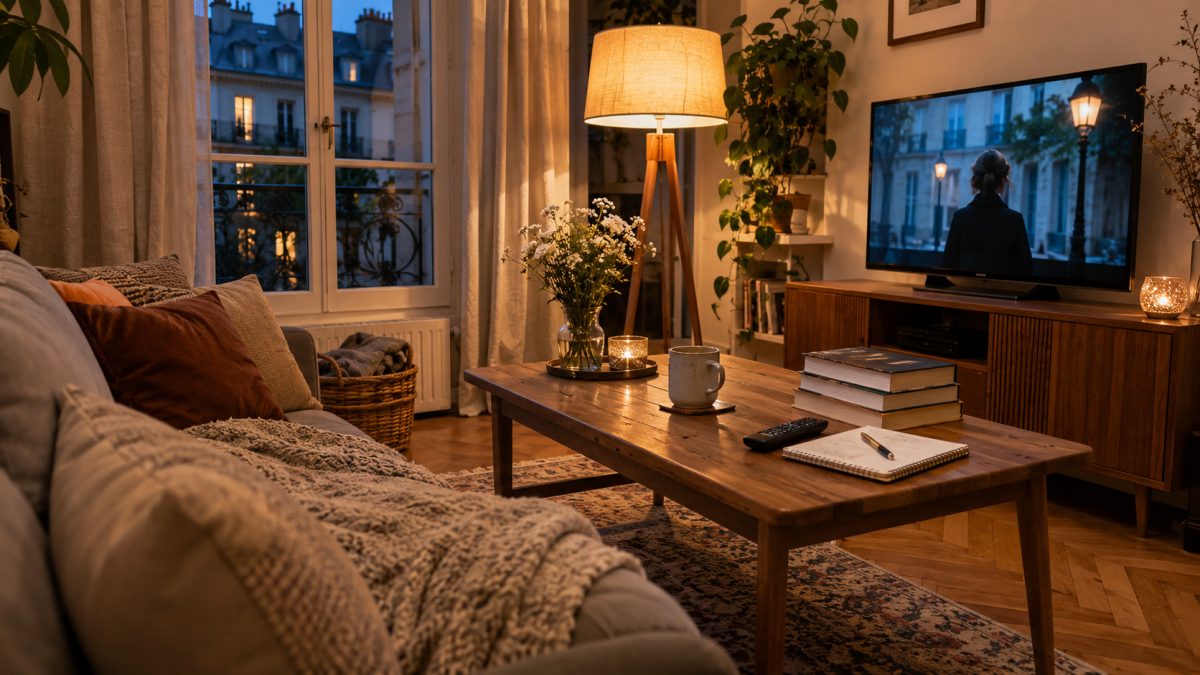
TV series play a major role in contemporary culture, but can we really say they have become France's number-one pastime? The available statistics cannot confirm that ranking or accurately measure time spent watching series by age or social group.
To understand the place of TV series in French leisure activities, we must distinguish viewing habits, general television data and genuine sociological surveys. This distinction matters: watching television, using a streaming platform and following a series are not exactly the same activity.
Why is time spent watching series so difficult to measure?
A survey of audiovisual consumption may measure several different behaviors, including time spent in front of a television, use of streaming services and the content actually watched. These measures are related but not interchangeable.
Someone might watch a film on a platform, a documentary on television or several episodes of a series on a computer. All three involve audiovisual content, but only the last necessarily involves watching a series.
That is why general television and streaming statistics cannot establish a ranking of leisure activities based specifically on series.
What does the TV.fr Observatory 2026 tell us?
The TV.fr Observatory 2026 is an initiative dedicated to analyzing television habits. Its inaugural edition is scheduled for November 20, 2026. It draws in particular on Médiamétrie measurements, Arcom information, platform statements and its own panel of 4,500 households.
However, this information must be interpreted carefully. Figures announced before publication are described as provisional and based on partial data from April 2026.
Above all, the available information does not provide a breakdown identifying time spent on series by age group or socioeconomic category.
It would therefore be misleading to turn general television data into statistics specifically about series.
How much time do French people of different ages spend watching series?
Answering this requires a survey that explicitly separates series from other audiovisual content and measures viewing across different age groups.
The information currently accessible does not allow such a table to be compiled. These sources alone cannot reliably establish how much time teenagers, young adults, middle-aged people or seniors spend watching series.
The lack of precise figures does not prevent us from exploring viewing habits. It simply means impressions must not be presented as statistical findings.
Why does social background matter too?
Comparing age groups alone could conceal other differences. A proper study of leisure activities should consider several characteristics together: employment status, socioeconomic category, household composition and available free time.
These variables could distinguish behaviors that appear identical at first glance.
For example, watching an episode after work and devoting part of a weekend to a series involve different ways of organizing time. These are possible scenarios, not findings measured by the available sources.
A thorough survey would need to disclose its definitions, population categories and data collection methods. Without these details, comparisons between social groups remain unreliable.
Have series overtaken cinema and reading?
The available figures do not establish this with certainty. A sound comparison would need to measure comparable activities over the same period.
Cinema can be studied through theater attendance, while reading can be measured by books read or time devoted to it. For series, possible indicators include episodes watched, viewing duration and viewing frequency.
These indicators do not all answer the same question.
Someone who rarely visits the cinema may regularly watch films at home. Likewise, someone who reads few books may spend time on other forms of reading. Comparing only ticket sales, books and television hours would therefore produce a ranking that is difficult to interpret.
The French National Centre for Cinema and the Moving Image (CNC) has thematic pages on studies of series and television that offer useful research leads. However, the information considered here provides no numerical comparison between series, cinema and reading.
A leading pastime need not be an exclusive one
Another mistake is to portray leisure activities as rivals that must inevitably displace one another.
It is entirely possible to enjoy series, read novels and go to the cinema. The interesting question is not merely which activity ranks first, but how different activities coexist in people's schedules.
This approach avoids a common shortcut: treating the visible popularity of series as proof that other cultural pastimes are gradually disappearing.
How can you manage series viewing without giving it up?
Even without detailed statistics on French viewing habits, everyone can examine their own consumption. The aim is not to condemn series but to give them a deliberate place rather than letting them take over automatically.
The following suggestions are practical personal organization methods, not conclusions attributed to a sociological survey.
1. Measure your actual viewing time
Before deciding to watch fewer series, it may help to observe your habits over an ordinary week.
- Note the days when you watch a series.
- Record approximate start and end times.
- Distinguish episodes you deliberately choose from those played out of habit.
- Identify occasions when viewing replaces another planned activity.
This personal observation provides more directly useful information than a national average: it reveals the actual place of series in your daily life.
2. Decide how many episodes to watch before starting
A simple method is to set a limit before starting the first episode. This can be a time limit or a number of episodes.
The idea is to plan while you still have a clear view of your evening, rather than automatically continuing after every episode.
It can also help to disable autoplay when the platform allows it. This restores a conscious choice between episodes.
3. Choose your series instead of starting too many
A platform's catalog can tempt you to start several shows without knowing which are worth your time.
One solution is to keep a short watchlist and choose according to personal criteria: genre, atmosphere, episode length or current mood.
You can also stop watching a series you no longer enjoy. Finishing a season just because you started it is not mandatory.
4. Deliberately make room for other pastimes
Rather than setting series against books or cinema, you can make room for all of them.
For example, setting aside evenings for reading, planning a cultural outing or keeping screen-free moments helps diversify activities without eliminating series.
This method has an advantage: it turns a potentially frustrating restriction into a positive choice. The goal is no longer simply to watch less, but to make more room for other things you enjoy.
Why should surveys about series be read cautiously?
A statistic becomes truly useful when we know exactly what it measures. A finding about audiovisual programs cannot automatically be used to describe television series.
We must also distinguish a publication announcement, a provisional result and a complete study with an accessible methodology.
CNRS Le Journal has published an article about our interest in series entitled “Why do we love series so much?” Its existence shows that the subject deserves reflection, but it does not by itself establish viewing figures for specific population groups.
In my view, the best use of a leisure survey is not to crown one winner but to understand what the figures actually reveal. An overall ranking may attract attention, but clearly defined data are far more useful for understanding behavior.
Until detailed, comparable results become available, the reasonable conclusion remains nuanced: series are a major subject in the study of audiovisual habits, but the statistics examined here do not prove they are France's leading cultural pastime.
Frequently asked questions
How much time do French people spend watching series?
The statistics available here cannot provide a reliable figure for time spent specifically watching TV series. General measures of television and streaming should not be confused with series viewing time.
Do young people watch more series than older people?
The usable sources offer no numerical comparison of series viewing by age group. These figures therefore cannot support a reliable ranking of generations.
Have series replaced cinema and reading?
No usable statistical comparison here demonstrates that series have surpassed these two pastimes. A proper answer would require consistent indicators covering clearly defined activities.
How can you avoid watching too many series?
Tracking viewing time, setting a limit before starting an episode and disabling autoplay are simple steps worth trying. Deliberately making time for reading, outings and other activities also helps keep viewing intentional.
Sources
- National data – Population | Insee (insee.fr)
- Supplementary historical series tables in France ... – INSEE (insee.fr)
- Historical population census series – data.gouv.fr (data.gouv.fr)
- Why do we love series so much? (lejournal.cnrs.fr)
- TV.fr Observatory 2026 — Annual study | TV.fr (tv.fr)
- Studies and reports – Series and TV | CNC (cnc.fr)