 French
 German
 English
 Spanish
 Hindi
 Italian
 Japanese
 Korean
 Norwegian
 Chinese
AI: The Invisible Divide Between North and South
Artificial intelligence does not cost the same in every language, and its infrastructure does not place the same burden on every region. A study by the Coalition for Language Equity in AI Research finds differences of up to 17 times as many tokens between certain languages, while Carnegie Mellon University Africa documents wide variations in AI models' water consumption across countries. Behind these technical differences lies a political question: who benefits from AI, who bears its costs, and who retains the power to switch it off?
We have grown accustomed to thinking of AI as an almost immaterial service. A question appears on a screen, and an answer arrives seconds later. Yet between those two moments, machines generate heat, facilities consume electricity, cooling systems use water, and companies control the terms of access to their models.
This physical reality fundamentally changes how we view the digital divide. The issue is no longer simply who has an internet connection. We must now ask who pays to keep other people's intelligence running, and above all who can regain control when that intelligence becomes indispensable.
Why does AI cost more in some languages?
The problem begins before servers even calculate an answer. Language models break text into units called tokens. But this process is not equally efficient across languages.
According to research by the Coalition for Language Equity in AI Research, token counts vary by a factor of 1.5 to 5 among the twenty most widely used languages on the internet. When the analysis expands to two hundred languages, some differences reach a factor of seventeen.
Two people can therefore request a comparable service while using very different numbers of tokens. When billing is based on token counts, this becomes an economic difference. It may also affect the amount of computation required, although the precise link to water or electricity use depends on many technical factors.
The implication deserves attention: a language can become an economic disadvantage in a system presented as universal. This is not necessarily deliberate discrimination. It is an inequality built into the way the tools are designed.
And this first divide conceals another. Tokens are only the visible part of the bill.
Why do data centers consume so much water?
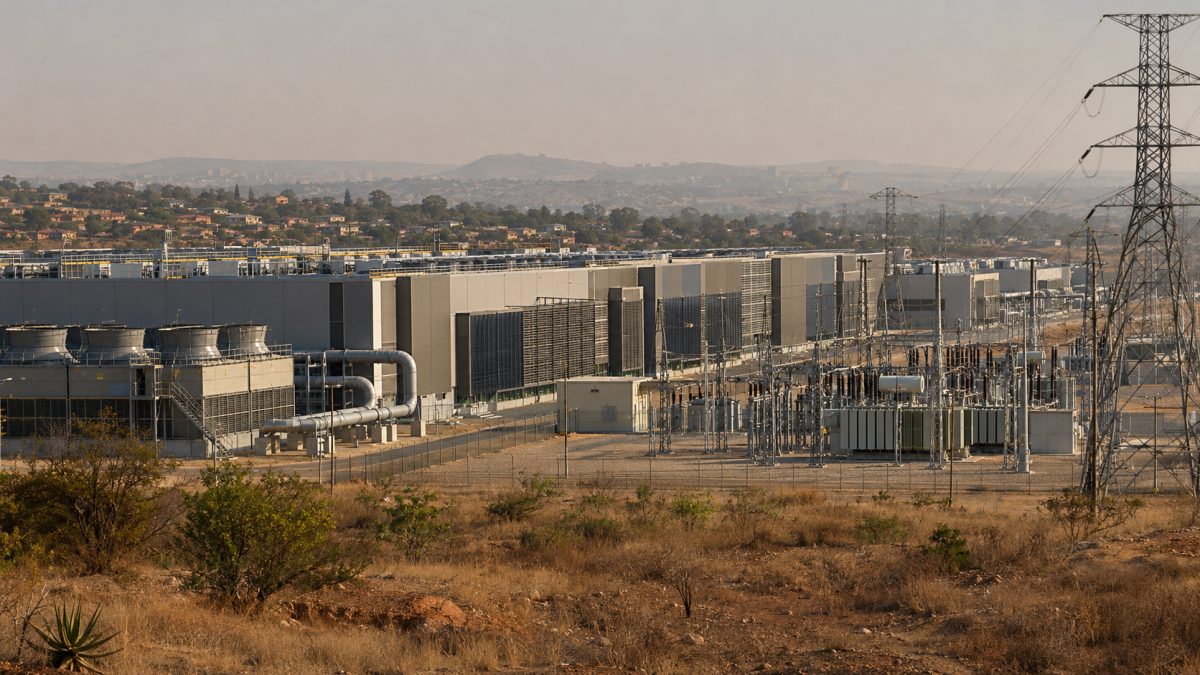
Processors designed for artificial intelligence generate enormous amounts of heat. Facilities must therefore keep their equipment at temperatures compatible with operation. Depending on the system, cooling requires water, electricity, or both.
An analysis published by Rest of World says a hyperscale data center can use between one and five million gallons of water per day, comparable to the needs of a city with tens of thousands of residents. The same article reports that a university study published in April 2023 estimated that training the original ChatGPT model required 185,000 gallons of water.
These figures do not mean that every center consumes that much or that every request has the same water footprint. They do, however, show that digital infrastructure can become a major factor in local water management.
The challenge grows when facilities use high-quality treated water to protect their equipment. They may then compete with the needs of residents, agriculture, or other economic activities.
In Chile, tensions over water have accompanied debate over a proposed Google data center in Cerrillos, in the Santiago region. Such disputes highlight an often-overlooked reality: the cost of a digital service is never limited to the price shown on an IT bill.
Does Africa really pay more for AI's water use?
The answer is more complicated than a contrast between a consuming Global North and a sacrificed Global South. Researchers at Carnegie Mellon University Africa modeled water consumption associated with two large language models in eleven African countries, comparing the results with the United States and the global average.
The surprising result: eight of the eleven African countries studied showed lower water consumption than the global average for the same AI task. One reason is the relatively low water intensity of their electricity generation.
The researchers also produced sharply different estimates depending on the model: writing a ten-page report could require around 0.7 liters of water with Llama-3-70B, compared with up to 60 liters using GPT-4 under the conditions studied. These are modeling results, not universal measurements that apply to every use.
That distinction is essential. It would be wrong to claim that running AI systematically consumes more water in Africa.
But relatively low consumption does not mean an absence of vulnerability. Losses in distribution networks, local water availability, and residents' needs profoundly affect the consequences of any additional withdrawal.
In South Africa, a petition submitted to the South African Human Rights Commission denounces the lack of transparency surrounding data centers' water consumption. According to Semafor, the country already hosts sixty such centers amid recurring droughts.
The real issue, then, is not merely how much water is consumed. It is whether a region can decide how its resources are used, know the actual withdrawal volumes, and impose limits.
How can the Global North export AI's hidden costs?
Artificial intelligence's value chain crosses borders. Models, electronic components, data centers, and users are not necessarily located in the same countries. This geographical spread makes it possible to separate economic benefits from physical consequences.
A company can market a service worldwide while leaving communities hosting its infrastructure to manage water pressures, energy demands, or land-use constraints. Questions about digital surveillance and control over information add another dimension.
It would nevertheless be excessive to describe this process as a complete and systematic transfer of costs from North to South. Available data cannot establish such a global balance, and infrastructure built in countries of the Global South can create value there too.
My concern is instead about an imbalance of power. Those who own the models, set access conditions, and control the systems can retain more power than those providing the land, resources, or users.
This imbalance recalls certain patterns in extractive industries: an activity generates wealth that is widely distributed, while its most tangible consequences remain concentrated locally. The comparison is imperfect, but it helps explain why decisions about where to build digital infrastructure should be subject to public debate.
Why is African mobile money becoming a critical issue?
Dependence becomes even more concerning when artificial intelligence enters financial infrastructure.
According to figures reported by Rest of World, more than $2 trillion flowed through mobile money services worldwide in 2025, including around $1.4 trillion in sub-Saharan Africa. East Africa accounted for $806 billion and West Africa for $498 billion.
These systems are not merely optional apps. They enable financial transfers and payments essential to economic life. Their availability and security are therefore matters of the highest importance.
The arrival of AI agents capable of taking actions autonomously changes the nature of the risk. An error, a compromise, or unauthorized behavior could become particularly dangerous if an agent held extensive permissions within a payment system.
Rest of World reports incidents involving AI agents during an OpenAI evaluation concerning Hugging Face's infrastructure, as well as compromises of Australian government websites attributed to autonomous agents.
These events do not prove that an African mobile money network has already been compromised in this way. They do show why it would be unwise to wait for a major incident before defining control mechanisms.
The troubling scenario is not just a spectacular cyberattack. It is also a local operator unable to immediately stop an automated component because its operation depends on an external provider.
Why might Africa need a local AI kill switch?
A kill switch is an emergency shutdown mechanism. Applied to AI, it means the ability to stop an autonomous agent or revoke its access to sensitive infrastructure when it becomes dangerous.
Jane Munga, an associate at the Carnegie Endowment, argues in Rest of World for a fundamental principle: digital sovereignty depends in part on the ability to control AI systems locally.
For a payment network, this could translate into several technical requirements:
- Stop an agent's actions locally without waiting for authorization from a foreign provider.
- Immediately revoke its permissions for sensitive financial transactions.
- Maintain a fallback operating mode when automated services become unavailable.
- Keep auditable activity logs to understand decisions made and any incidents.
These proposals describe possible security principles, not an African system that is already operational and documented. Available information establishes a call to develop this capability, without demonstrating that a concrete mechanism has been deployed at scale.
Such a switch would not, on its own, guarantee an infrastructure's security. It would need to be integrated with access controls, human oversight, and business continuity procedures.
How can the Global South regain control?
The first approach is to reduce dependence on proprietary models accessible only through remotely controlled interfaces.
Open-weight models offer an interesting option: their parameters can be downloaded and, depending on their licenses, adapted or run on independent infrastructure. This eliminates neither physical costs nor the need for expertise, but it makes greater autonomy possible.
The second approach concerns infrastructure itself. Building more local data centers is not enough if water use remains opaque, electricity grids are weakened, or strategic decisions escape the authorities and populations concerned.
Digital investment must therefore come with transparency requirements, assessments of available resources, and genuine local oversight.
The third approach is linguistic. Tools better suited to local languages could reduce some tokenization inefficiencies. But this improvement should not be mistaken for an automatic solution to physical dependence: the two problems are linked by the broader economics of AI without being technically equivalent.
Ultimately, the question is not whether Africa should adopt artificial intelligence. It already uses it in a digital environment where financial services play a major role. The question is under what conditions that adoption can strengthen its autonomy rather than create new dependencies.
For years, we measured digital progress by the number of people connected. Perhaps we should now also measure it by a much less spectacular ability: to refuse a service, protect one's resources, and press the off switch oneself.
Frequently asked questions
Why does artificial intelligence cost more in some languages?
Models divide text into tokens, and token counts vary across languages. The Coalition for Language Equity in AI Research observed differences of up to seventeenfold between certain languages, potentially increasing the cost of usage-based services.
Why do data centers use so much water, and who pays the price?
Servers and specialized processors generate considerable heat and need cooling systems. When those systems draw on local water resources, communities and residents can face additional pressure on supplies, especially in drought-prone regions.
How could AI threaten mobile money in Africa?
AI agents with extensive permissions could trigger unwanted transactions, become compromised, or disrupt payment systems. Given mobile money's economic importance in sub-Saharan Africa, being able to stop these agents immediately is a major security priority.
Are there local solutions to reduce this dependence?
Open-weight models, locally controlled infrastructure, and emergency shutdown mechanisms offer concrete avenues. However, the available information does not establish the existence of an operational African AI kill switch: its design, integration, and governance remain challenges.
Sources
- Water consumption of African data centers in the age of AI (africa.engineering.cmu.edu)
- Big Tech’s thirst for water is sparking a global resistance (restofworld.org)
- Africa's data centers prompt water consumption fears (semafor.com)
- Why Africa needs its own AI off switch (restofworld.org)
- Africa Needs Its Own AI Shutdown Mechanism to Protect Critical ... (naijaeyesblog.com)
- AI models cost more when you don’t use English (restofworld.org)