 Japanese
  French
  English
  Spanish
  Chinese
  Korean
  Hindi
Hindi  German
  Norwegian
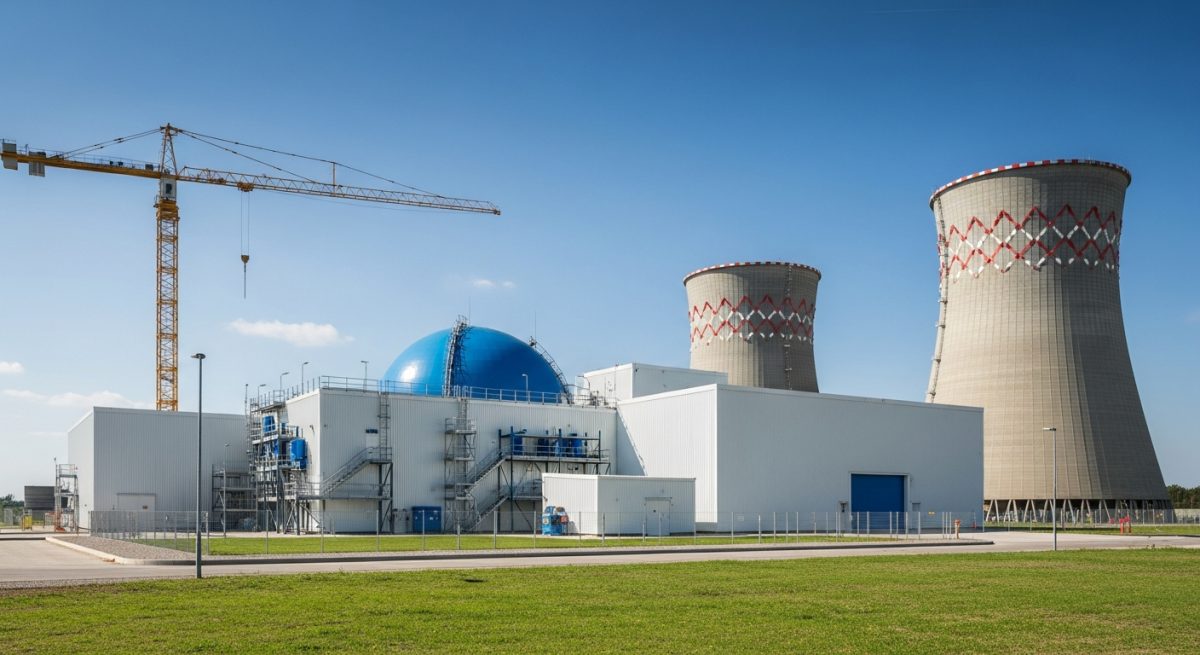
SMR: The Small Modular Reactor Revolution in 2026
Long overshadowed by the rise of renewable energy, nuclear power is making a spectacular comeback in 2026. At the heart of this renaissance: SMRs (Small Modular Reactors), a technology that promises to revolutionize the way we produce clean electricity. Smaller, more flexible, and faster to deploy than traditional power plants, SMRs are emerging as one of the most serious answers to the energy challenges of our time.
What exactly is an SMR?
A Small Modular Reactor is a nuclear reactor with a capacity of less than 300 MWe (megawatts electric), compared to 900 to 1,600 MWe for conventional reactors. The reduced size is not a constraint — it is a design philosophy: manufacturing most components in factories, assembling them on-site like building blocks, and deploying additional modules as demand grows.
This modular approach offers several decisive advantages:
- Much shorter construction timelines — a few years compared to over a decade for a conventional plant;
- A more accessible upfront cost, although the cost per megawatt remains debated;
- Geographic flexibility: SMRs can be installed in remote regions, industrial zones, or even on floating platforms;
- Improved passive safety, with systems that require no electricity to cool the reactor in an emergency.
Brussels acts in March 2026
The political turning point came on March 10, 2026, when the European Commission officially backed the deployment of mini nuclear plants by the 2030s. Eleven EU member states — including France, Poland, Finland and Czechia — signed a declaration of enhanced cooperation on SMRs. The goal is clear: use next-generation nuclear energy to produce low-carbon electricity and decarbonize heavy industries such as steel and chemicals.
"SMRs are no longer a laboratory project. They are the next concrete building block of Europe's energy transition." — European Commission, March 2026
This decision comes amid energy supply tensions and rapidly growing electricity demand, driven in particular by the massive expansion of data centers powering artificial intelligence.
France in the front line: Nuward and Framatome
France, historically committed to civilian nuclear power, has no intention of being a mere spectator. Two major projects illustrate the French commitment:
Nuward, led by EDF, is France's flagship project. This PWR-type SMR (pressurized water reactor) targets 400 MWe of capacity. In 2026, the project enters its Basic Design phase, aiming to deliver a commercial product by the 2030s. The roadmap calls for finalizing the core reactor design by mid-2026.
Framatome, meanwhile, signed two strategic agreements in 24 hours at the start of March 2026: one with US company NuScale Power on SMR fuel, and another with Slovak firm VUJE on nuclear engineering. A strong signal to the entire industry: the supply chain is being built now, well before the first deliveries.
Beyond Nuward, France is teeming with talent in the sector: around ten startups and SMEs are working on innovative SMR concepts, exploring technologies such as molten salt reactors and fast neutron reactors.
AI: the unexpected driver of the nuclear renaissance
While fighting climate change is the well-known argument for nuclear power, a more recent factor has upended the calculus: the explosion in energy demand driven by artificial intelligence. Training a large language model or running thousands of inference servers consumes astronomical amounts of electricity. Major cloud players — Amazon, Microsoft, Google — need reliable, round-the-clock, low-carbon energy sources. Nuclear power, which produces electricity continuously (unlike solar or wind), fits the bill perfectly.
In the United States, Microsoft even signed a deal to restart a reactor at Three Mile Island to power its data centers. In Europe, similar discussions are underway. SMRs, easier to site near industrial or technology zones, could become the natural energy partners of the AI era.
Challenges that remain
Despite the enthusiasm, significant obstacles remain. Economically, the first SMRs built will inevitably cost more than expected: the "first-of-a-kind" always carries learning cost overruns, and no economies of scale are yet achievable. The true cost per megawatt-hour remains uncertain and will be fiercely debated in the years ahead.
The question of radioactive waste recurs: while some next-generation SMRs promise to burn existing waste, this remains to be demonstrated at scale. Social acceptability is another barrier: finding communities willing to host a reactor, even a small one, is not straightforward.
Finally, timelines remain a concern. The nuclear industry has a long history of delays and cost overruns — the Flamanville EPR is the most painful example. SMR promoters must prove that their "modular and industrialized" model delivers on its promises.
A historic momentum not to be missed
Despite these challenges, expert consensus is clear: 2026 marks a genuine turning point for nuclear energy. Never since the 1970s has nuclear technology benefited from such an alignment of favorable conditions — political support, climate urgency, digital energy needs, and the technological maturity of SMRs. The scientific journal Nature ranked SMRs among the seven technologies to watch most closely in 2026.
For France, a country where 70% of electricity already comes from nuclear power, this is a historic opportunity to reassert its industrial and technological leadership in a sector where it holds unique worldwide expertise. The question is no longer whether SMRs will emerge, but at what speed — and who will lead the pack.



SMR: The Small Modular Reactor Revolution in 2026
Long overshadowed by the rise of renewable energy, nuclear power is making a spectacular comeback in 2026. At the heart of this renaissance: SMRs (Small Modular Reactors), a technology that promises to revolutionize the way we produce clean electricity. Smaller, more flexible, and faster to deploy than traditional power plants, SMRs are emerging as one of the most serious answers to the energy challenges of our time.
What exactly is an SMR?
A Small Modular Reactor is a nuclear reactor with a capacity of less than 300 MWe (megawatts electric), compared to 900 to 1,600 MWe for conventional reactors. The reduced size is not a constraint — it is a design philosophy: manufacturing most components in factories, assembling them on-site like building blocks, and deploying additional modules as demand grows.
This modular approach offers several decisive advantages:
- Much shorter construction timelines — a few years compared to over a decade for a conventional plant;
- A more accessible upfront cost, although the cost per megawatt remains debated;
- Geographic flexibility: SMRs can be installed in remote regions, industrial zones, or even on floating platforms;
- Improved passive safety, with systems that require no electricity to cool the reactor in an emergency.
Brussels acts in March 2026
The political turning point came on March 10, 2026, when the European Commission officially backed the deployment of mini nuclear plants by the 2030s. Eleven EU member states — including France, Poland, Finland and Czechia — signed a declaration of enhanced cooperation on SMRs. The goal is clear: use next-generation nuclear energy to produce low-carbon electricity and decarbonize heavy industries such as steel and chemicals.
"SMRs are no longer a laboratory project. They are the next concrete building block of Europe's energy transition." — European Commission, March 2026
This decision comes amid energy supply tensions and rapidly growing electricity demand, driven in particular by the massive expansion of data centers powering artificial intelligence.
France in the front line: Nuward and Framatome
France, historically committed to civilian nuclear power, has no intention of being a mere spectator. Two major projects illustrate the French commitment:
Nuward, led by EDF, is France's flagship project. This PWR-type SMR (pressurized water reactor) targets 400 MWe of capacity. In 2026, the project enters its Basic Design phase, aiming to deliver a commercial product by the 2030s. The roadmap calls for finalizing the core reactor design by mid-2026.
Framatome, meanwhile, signed two strategic agreements in 24 hours at the start of March 2026: one with US company NuScale Power on SMR fuel, and another with Slovak firm VUJE on nuclear engineering. A strong signal to the entire industry: the supply chain is being built now, well before the first deliveries.
Beyond Nuward, France is teeming with talent in the sector: around ten startups and SMEs are working on innovative SMR concepts, exploring technologies such as molten salt reactors and fast neutron reactors.
AI: the unexpected driver of the nuclear renaissance
While fighting climate change is the well-known argument for nuclear power, a more recent factor has upended the calculus: the explosion in energy demand driven by artificial intelligence. Training a large language model or running thousands of inference servers consumes astronomical amounts of electricity. Major cloud players — Amazon, Microsoft, Google — need reliable, round-the-clock, low-carbon energy sources. Nuclear power, which produces electricity continuously (unlike solar or wind), fits the bill perfectly.
In the United States, Microsoft even signed a deal to restart a reactor at Three Mile Island to power its data centers. In Europe, similar discussions are underway. SMRs, easier to site near industrial or technology zones, could become the natural energy partners of the AI era.
Challenges that remain
Despite the enthusiasm, significant obstacles remain. Economically, the first SMRs built will inevitably cost more than expected: the "first-of-a-kind" always carries learning cost overruns, and no economies of scale are yet achievable. The true cost per megawatt-hour remains uncertain and will be fiercely debated in the years ahead.
The question of radioactive waste recurs: while some next-generation SMRs promise to burn existing waste, this remains to be demonstrated at scale. Social acceptability is another barrier: finding communities willing to host a reactor, even a small one, is not straightforward.
Finally, timelines remain a concern. The nuclear industry has a long history of delays and cost overruns — the Flamanville EPR is the most painful example. SMR promoters must prove that their "modular and industrialized" model delivers on its promises.
A historic momentum not to be missed
Despite these challenges, expert consensus is clear: 2026 marks a genuine turning point for nuclear energy. Never since the 1970s has nuclear technology benefited from such an alignment of favorable conditions — political support, climate urgency, digital energy needs, and the technological maturity of SMRs. The scientific journal Nature ranked SMRs among the seven technologies to watch most closely in 2026.
For France, a country where 70% of electricity already comes from nuclear power, this is a historic opportunity to reassert its industrial and technological leadership in a sector where it holds unique worldwide expertise. The question is no longer whether SMRs will emerge, but at what speed — and who will lead the pack.
SMR: The Small Modular Reactor Revolution in 2026
Long overshadowed by the rise of renewable energy, nuclear power is making a spectacular comeback in 2026. At the heart of this renaissance: SMRs (Small Modular Reactors), a technology that promises to revolutionize the way we produce clean electricity. Smaller, more flexible, and faster to deploy than traditional power plants, SMRs are emerging as one of the most serious answers to the energy challenges of our time.
What exactly is an SMR?
A Small Modular Reactor is a nuclear reactor with a capacity of less than 300 MWe (megawatts electric), compared to 900 to 1,600 MWe for conventional reactors. The reduced size is not a constraint — it is a design philosophy: manufacturing most components in factories, assembling them on-site like building blocks, and deploying additional modules as demand grows.
This modular approach offers several decisive advantages:
- Much shorter construction timelines — a few years compared to over a decade for a conventional plant;
- A more accessible upfront cost, although the cost per megawatt remains debated;
- Geographic flexibility: SMRs can be installed in remote regions, industrial zones, or even on floating platforms;
- Improved passive safety, with systems that require no electricity to cool the reactor in an emergency.
Brussels acts in March 2026
The political turning point came on March 10, 2026, when the European Commission officially backed the deployment of mini nuclear plants by the 2030s. Eleven EU member states — including France, Poland, Finland and Czechia — signed a declaration of enhanced cooperation on SMRs. The goal is clear: use next-generation nuclear energy to produce low-carbon electricity and decarbonize heavy industries such as steel and chemicals.
"SMRs are no longer a laboratory project. They are the next concrete building block of Europe's energy transition." — European Commission, March 2026
This decision comes amid energy supply tensions and rapidly growing electricity demand, driven in particular by the massive expansion of data centers powering artificial intelligence.
France in the front line: Nuward and Framatome
France, historically committed to civilian nuclear power, has no intention of being a mere spectator. Two major projects illustrate the French commitment:
Nuward, led by EDF, is France's flagship project. This PWR-type SMR (pressurized water reactor) targets 400 MWe of capacity. In 2026, the project enters its Basic Design phase, aiming to deliver a commercial product by the 2030s. The roadmap calls for finalizing the core reactor design by mid-2026.
Framatome, meanwhile, signed two strategic agreements in 24 hours at the start of March 2026: one with US company NuScale Power on SMR fuel, and another with Slovak firm VUJE on nuclear engineering. A strong signal to the entire industry: the supply chain is being built now, well before the first deliveries.
Beyond Nuward, France is teeming with talent in the sector: around ten startups and SMEs are working on innovative SMR concepts, exploring technologies such as molten salt reactors and fast neutron reactors.
AI: the unexpected driver of the nuclear renaissance
While fighting climate change is the well-known argument for nuclear power, a more recent factor has upended the calculus: the explosion in energy demand driven by artificial intelligence. Training a large language model or running thousands of inference servers consumes astronomical amounts of electricity. Major cloud players — Amazon, Microsoft, Google — need reliable, round-the-clock, low-carbon energy sources. Nuclear power, which produces electricity continuously (unlike solar or wind), fits the bill perfectly.
In the United States, Microsoft even signed a deal to restart a reactor at Three Mile Island to power its data centers. In Europe, similar discussions are underway. SMRs, easier to site near industrial or technology zones, could become the natural energy partners of the AI era.
Challenges that remain
Despite the enthusiasm, significant obstacles remain. Economically, the first SMRs built will inevitably cost more than expected: the "first-of-a-kind" always carries learning cost overruns, and no economies of scale are yet achievable. The true cost per megawatt-hour remains uncertain and will be fiercely debated in the years ahead.
The question of radioactive waste recurs: while some next-generation SMRs promise to burn existing waste, this remains to be demonstrated at scale. Social acceptability is another barrier: finding communities willing to host a reactor, even a small one, is not straightforward.
Finally, timelines remain a concern. The nuclear industry has a long history of delays and cost overruns — the Flamanville EPR is the most painful example. SMR promoters must prove that their "modular and industrialized" model delivers on its promises.
A historic momentum not to be missed
Despite these challenges, expert consensus is clear: 2026 marks a genuine turning point for nuclear energy. Never since the 1970s has nuclear technology benefited from such an alignment of favorable conditions — political support, climate urgency, digital energy needs, and the technological maturity of SMRs. The scientific journal Nature ranked SMRs among the seven technologies to watch most closely in 2026.
For France, a country where 70% of electricity already comes from nuclear power, this is a historic opportunity to reassert its industrial and technological leadership in a sector where it holds unique worldwide expertise. The question is no longer whether SMRs will emerge, but at what speed — and who will lead the pack.