 English
  French
  German
  Spanish
  Hindi
Hindi  Italian
  Japanese
  Korean
  Norwegian
  Chinese
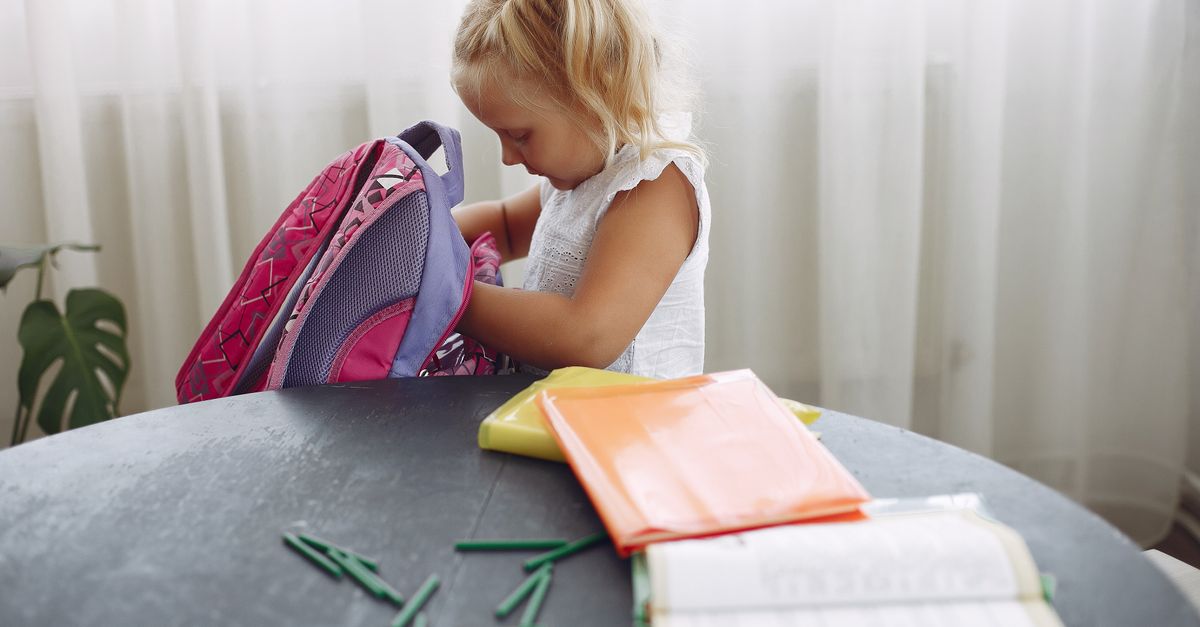
Back to school 2026: budget, assistance and planning tips
In a few weeks, school bags will be heading back to the classroom. The 2026 school year begins on Tuesday 1 September for every zone and every level, from nursery school to upper secondary school. To prepare calmly — and avoid the rush in stationery aisles at the end of August — it is better to start now. Here is a complete overview of the dates, supplies, budget and available assistance.
The 2026 back-to-school date
Unlike some years when zones A, B and C had staggered dates, the 2026 return to school is unified on 1 September for all pupils in state schools and state-contracted private schools, from nursery through the final year of upper secondary education. Teachers return one day earlier, on Monday 31 August.
As a reminder, the long summer holiday began on Saturday 5 July 2026. There are therefore still a few weeks left to prepare for the new school year without stress.
Supplies by school level: what to plan for
Official lists are issued by each school and are generally available from mid-July on the digital learning platform or the school website. It is therefore best not to buy anything before receiving your school’s list, otherwise you may face unpleasant surprises.
At primary school (CP to CM2)
Requirements are relatively limited: exercise books, pencils, a pencil case, glue, scissors and a ruler. A small calculator may occasionally be requested in CE2 or CM1. As a general rule, local authorities provide textbooks, which helps keep costs down.
At lower secondary school (6e to 3e)
The list becomes longer: ring binders, dividers, a scientific calculator, compulsory from 5e, compasses, a protractor and a dictionary. One new feature for the 2026 school year is worth noting: new mathematics and French textbooks for 5e pupils are being introduced as part of the reform of the cycle 4 curriculum. The ministry has allocated €26 million for this purpose, meaning that some schools will provide these books directly.
At upper secondary school (2nde, 1re and Terminale)
This is where the list can become considerably longer depending on subjects and specialisms: a graphing calculator costing between €50 and €80, specific equipment for art, sport and science, not to mention practical-work clothing for science courses.
Average budget: how much should you set aside in 2026?
According to figures compiled by consumer organisations and confirmed by several recent studies, the average back-to-school budget for 2026 is approximately:
- €180 per primary-school child
- €280 per lower-secondary pupil
- €320 per upper-secondary pupil
These figures include school supplies but not clothing, canteen fees or school transport. A family with one child in lower secondary school and another in primary school can therefore easily spend €450–€500 on supplies alone.
The 2026 Back-to-School Allowance (ARS)
Good news for eligible families: the Back-to-School Allowance (ARS) is paid every year at the end of August. For the 2026 school year, payment is expected around 18 August, directly into beneficiaries’ bank accounts.
The 2026 amounts are as follows, depending on the child’s age:
- €426.87 for children aged 6 to 10
- €450.41 for children aged 11 to 14
- €466.02 for young people aged 15 to 18
To qualify, families must remain below an income ceiling that varies according to the number of dependent children. The allowance is awarded automatically through CAF to families already receiving benefits. For the 2026 school year, automatic allocation now also covers pupils in state-contracted private schools, a measure introduced after an initial phase limited to state schools in 2025.
Good to know: the ARS is not linked to the actual school start date. It is paid in advance in August specifically so families can purchase school supplies under good conditions.
5 ways to save money on school supplies
1. Wait for the official list
Avoid the ready-made “back-to-school packs” sold in supermarkets before you receive the school’s list. Some items will never be needed, while others must meet precise specifications such as size, colour or required brand.
2. Take stock before buying
Pencils, rulers, scissors, compasses and many other supplies from the previous year may still be usable. A quick sort beforehand can reduce the bill by 30% to 40%.
3. Compare prices online and in stores
Major online retailers such as Amazon, Cdiscount and Fnac often offer competitive prices on calculators, binders and office supplies. Physical supermarkets, however, sometimes run aggressive promotions on consumables such as exercise books and pens in July and August.
4. Make the most of the summer sales
Summer sales generally end in early August. This is a good time to buy clothes or school bags at reduced prices before costs surge during the final week of August.
5. Look into group purchasing
Some parents’ associations organise bulk orders for supplies at negotiated prices. Ask the school’s parents’ council for information.
Educational changes to know about in 2026
The 2026 school year brings several notable changes to the education system:
- New curricula in 5e: French and mathematics are changing, with new textbooks and revised teaching progressions.
- More school psychologists and nurses: the 2026 budget provides for 300 additional posts to strengthen pupil support.
- Stronger inclusive education: 2,000 additional posts are dedicated to supporting pupils with disabilities.
- A better pupil-to-teacher ratio: with 6.24 teachers per 100 pupils at the start of the 2026 school year, compared with 5.46 in 2017, staffing levels continue to improve.
In summary
The 2026 school year begins on 1 September, but preparation should start now. While waiting for the official lists, expected in mid-July, begin by sorting last year’s supplies, watch for bargains in the summer sales and check your eligibility for the ARS, which is due to be paid on 18 August. With a little organisation, the return to school can be stress-free without putting too much pressure on the household budget.



Back to school 2026: budget, assistance and planning tips
In a few weeks, school bags will be heading back to the classroom. The 2026 school year begins on Tuesday 1 September for every zone and every level, from nursery school to upper secondary school. To prepare calmly — and avoid the rush in stationery aisles at the end of August — it is better to start now. Here is a complete overview of the dates, supplies, budget and available assistance.
The 2026 back-to-school date
Unlike some years when zones A, B and C had staggered dates, the 2026 return to school is unified on 1 September for all pupils in state schools and state-contracted private schools, from nursery through the final year of upper secondary education. Teachers return one day earlier, on Monday 31 August.
As a reminder, the long summer holiday began on Saturday 5 July 2026. There are therefore still a few weeks left to prepare for the new school year without stress.
Supplies by school level: what to plan for
Official lists are issued by each school and are generally available from mid-July on the digital learning platform or the school website. It is therefore best not to buy anything before receiving your school’s list, otherwise you may face unpleasant surprises.
At primary school (CP to CM2)
Requirements are relatively limited: exercise books, pencils, a pencil case, glue, scissors and a ruler. A small calculator may occasionally be requested in CE2 or CM1. As a general rule, local authorities provide textbooks, which helps keep costs down.
At lower secondary school (6e to 3e)
The list becomes longer: ring binders, dividers, a scientific calculator, compulsory from 5e, compasses, a protractor and a dictionary. One new feature for the 2026 school year is worth noting: new mathematics and French textbooks for 5e pupils are being introduced as part of the reform of the cycle 4 curriculum. The ministry has allocated €26 million for this purpose, meaning that some schools will provide these books directly.
At upper secondary school (2nde, 1re and Terminale)
This is where the list can become considerably longer depending on subjects and specialisms: a graphing calculator costing between €50 and €80, specific equipment for art, sport and science, not to mention practical-work clothing for science courses.
Average budget: how much should you set aside in 2026?
According to figures compiled by consumer organisations and confirmed by several recent studies, the average back-to-school budget for 2026 is approximately:
- €180 per primary-school child
- €280 per lower-secondary pupil
- €320 per upper-secondary pupil
These figures include school supplies but not clothing, canteen fees or school transport. A family with one child in lower secondary school and another in primary school can therefore easily spend €450–€500 on supplies alone.
The 2026 Back-to-School Allowance (ARS)
Good news for eligible families: the Back-to-School Allowance (ARS) is paid every year at the end of August. For the 2026 school year, payment is expected around 18 August, directly into beneficiaries’ bank accounts.
The 2026 amounts are as follows, depending on the child’s age:
- €426.87 for children aged 6 to 10
- €450.41 for children aged 11 to 14
- €466.02 for young people aged 15 to 18
To qualify, families must remain below an income ceiling that varies according to the number of dependent children. The allowance is awarded automatically through CAF to families already receiving benefits. For the 2026 school year, automatic allocation now also covers pupils in state-contracted private schools, a measure introduced after an initial phase limited to state schools in 2025.
Good to know: the ARS is not linked to the actual school start date. It is paid in advance in August specifically so families can purchase school supplies under good conditions.
5 ways to save money on school supplies
1. Wait for the official list
Avoid the ready-made “back-to-school packs” sold in supermarkets before you receive the school’s list. Some items will never be needed, while others must meet precise specifications such as size, colour or required brand.
2. Take stock before buying
Pencils, rulers, scissors, compasses and many other supplies from the previous year may still be usable. A quick sort beforehand can reduce the bill by 30% to 40%.
3. Compare prices online and in stores
Major online retailers such as Amazon, Cdiscount and Fnac often offer competitive prices on calculators, binders and office supplies. Physical supermarkets, however, sometimes run aggressive promotions on consumables such as exercise books and pens in July and August.
4. Make the most of the summer sales
Summer sales generally end in early August. This is a good time to buy clothes or school bags at reduced prices before costs surge during the final week of August.
5. Look into group purchasing
Some parents’ associations organise bulk orders for supplies at negotiated prices. Ask the school’s parents’ council for information.
Educational changes to know about in 2026
The 2026 school year brings several notable changes to the education system:
- New curricula in 5e: French and mathematics are changing, with new textbooks and revised teaching progressions.
- More school psychologists and nurses: the 2026 budget provides for 300 additional posts to strengthen pupil support.
- Stronger inclusive education: 2,000 additional posts are dedicated to supporting pupils with disabilities.
- A better pupil-to-teacher ratio: with 6.24 teachers per 100 pupils at the start of the 2026 school year, compared with 5.46 in 2017, staffing levels continue to improve.
In summary
The 2026 school year begins on 1 September, but preparation should start now. While waiting for the official lists, expected in mid-July, begin by sorting last year’s supplies, watch for bargains in the summer sales and check your eligibility for the ARS, which is due to be paid on 18 August. With a little organisation, the return to school can be stress-free without putting too much pressure on the household budget.
Back to school 2026: budget, assistance and planning tips
In a few weeks, school bags will be heading back to the classroom. The 2026 school year begins on Tuesday 1 September for every zone and every level, from nursery school to upper secondary school. To prepare calmly — and avoid the rush in stationery aisles at the end of August — it is better to start now. Here is a complete overview of the dates, supplies, budget and available assistance.
The 2026 back-to-school date
Unlike some years when zones A, B and C had staggered dates, the 2026 return to school is unified on 1 September for all pupils in state schools and state-contracted private schools, from nursery through the final year of upper secondary education. Teachers return one day earlier, on Monday 31 August.
As a reminder, the long summer holiday began on Saturday 5 July 2026. There are therefore still a few weeks left to prepare for the new school year without stress.
Supplies by school level: what to plan for
Official lists are issued by each school and are generally available from mid-July on the digital learning platform or the school website. It is therefore best not to buy anything before receiving your school’s list, otherwise you may face unpleasant surprises.
At primary school (CP to CM2)
Requirements are relatively limited: exercise books, pencils, a pencil case, glue, scissors and a ruler. A small calculator may occasionally be requested in CE2 or CM1. As a general rule, local authorities provide textbooks, which helps keep costs down.
At lower secondary school (6e to 3e)
The list becomes longer: ring binders, dividers, a scientific calculator, compulsory from 5e, compasses, a protractor and a dictionary. One new feature for the 2026 school year is worth noting: new mathematics and French textbooks for 5e pupils are being introduced as part of the reform of the cycle 4 curriculum. The ministry has allocated €26 million for this purpose, meaning that some schools will provide these books directly.
At upper secondary school (2nde, 1re and Terminale)
This is where the list can become considerably longer depending on subjects and specialisms: a graphing calculator costing between €50 and €80, specific equipment for art, sport and science, not to mention practical-work clothing for science courses.
Average budget: how much should you set aside in 2026?
According to figures compiled by consumer organisations and confirmed by several recent studies, the average back-to-school budget for 2026 is approximately:
- €180 per primary-school child
- €280 per lower-secondary pupil
- €320 per upper-secondary pupil
These figures include school supplies but not clothing, canteen fees or school transport. A family with one child in lower secondary school and another in primary school can therefore easily spend €450–€500 on supplies alone.
The 2026 Back-to-School Allowance (ARS)
Good news for eligible families: the Back-to-School Allowance (ARS) is paid every year at the end of August. For the 2026 school year, payment is expected around 18 August, directly into beneficiaries’ bank accounts.
The 2026 amounts are as follows, depending on the child’s age:
- €426.87 for children aged 6 to 10
- €450.41 for children aged 11 to 14
- €466.02 for young people aged 15 to 18
To qualify, families must remain below an income ceiling that varies according to the number of dependent children. The allowance is awarded automatically through CAF to families already receiving benefits. For the 2026 school year, automatic allocation now also covers pupils in state-contracted private schools, a measure introduced after an initial phase limited to state schools in 2025.
Good to know: the ARS is not linked to the actual school start date. It is paid in advance in August specifically so families can purchase school supplies under good conditions.
5 ways to save money on school supplies
1. Wait for the official list
Avoid the ready-made “back-to-school packs” sold in supermarkets before you receive the school’s list. Some items will never be needed, while others must meet precise specifications such as size, colour or required brand.
2. Take stock before buying
Pencils, rulers, scissors, compasses and many other supplies from the previous year may still be usable. A quick sort beforehand can reduce the bill by 30% to 40%.
3. Compare prices online and in stores
Major online retailers such as Amazon, Cdiscount and Fnac often offer competitive prices on calculators, binders and office supplies. Physical supermarkets, however, sometimes run aggressive promotions on consumables such as exercise books and pens in July and August.
4. Make the most of the summer sales
Summer sales generally end in early August. This is a good time to buy clothes or school bags at reduced prices before costs surge during the final week of August.
5. Look into group purchasing
Some parents’ associations organise bulk orders for supplies at negotiated prices. Ask the school’s parents’ council for information.
Educational changes to know about in 2026
The 2026 school year brings several notable changes to the education system:
- New curricula in 5e: French and mathematics are changing, with new textbooks and revised teaching progressions.
- More school psychologists and nurses: the 2026 budget provides for 300 additional posts to strengthen pupil support.
- Stronger inclusive education: 2,000 additional posts are dedicated to supporting pupils with disabilities.
- A better pupil-to-teacher ratio: with 6.24 teachers per 100 pupils at the start of the 2026 school year, compared with 5.46 in 2017, staffing levels continue to improve.
In summary
The 2026 school year begins on 1 September, but preparation should start now. While waiting for the official lists, expected in mid-July, begin by sorting last year’s supplies, watch for bargains in the summer sales and check your eligibility for the ARS, which is due to be paid on 18 August. With a little organisation, the return to school can be stress-free without putting too much pressure on the household budget.