
 English
 French
 German
 Spanish
 Hindi
 Italian
 Japanese
 Korean
 Norwegian
 Chinese
mRNA Cancer Vaccines: The Personalized Revolution of 2026
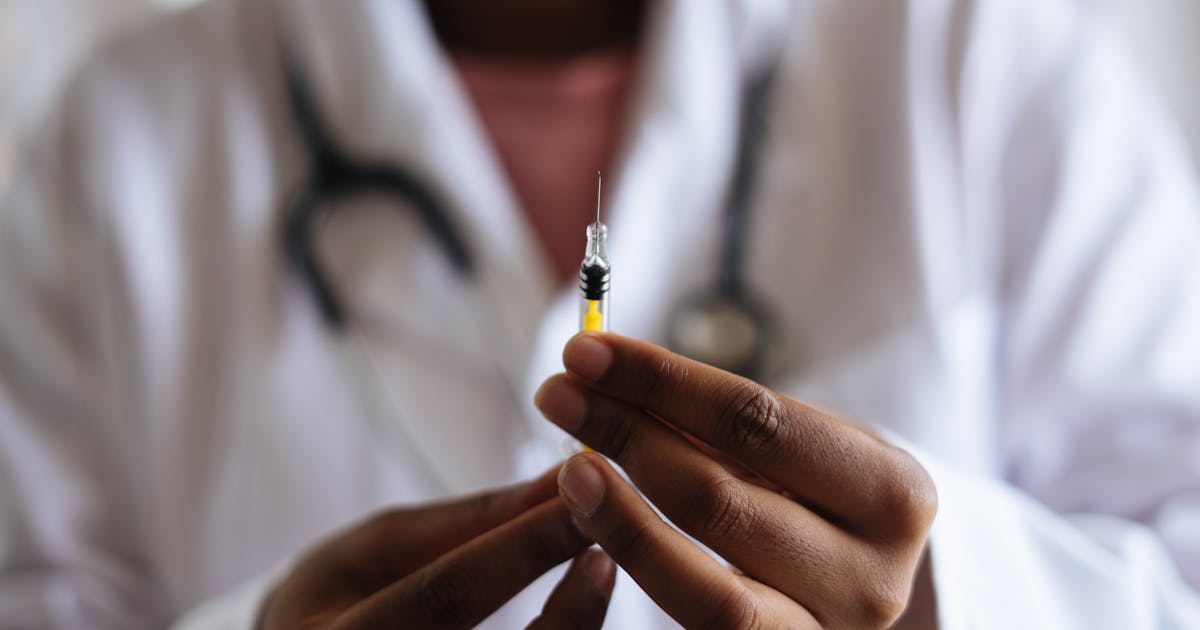
What if the treatment for a cancer were made just for you? This scenario, long relegated to science fiction, is coming closer to reality in 2026. Messenger RNA (mRNA) vaccines, made famous by the fight against Covid-19, are now being tested as tailor-made treatments against certain tumours. A first phase III trial has just succeeded, but other trials have failed: the picture is more nuanced than a simple "revolution".
From Covid to cancer: how mRNA changed its target
mRNA technology was thrust into the spotlight in 2020, when BioNTech and Moderna developed their SARS-CoV-2 vaccines in record time. BioNTech in particular had been founded for a quite different project: using mRNA to teach the immune system to recognise and destroy cancer cells.
The principle is elegant. Every tumour carries its own genetic mutations, like a molecular fingerprint. From a biopsy, researchers sequence the patient's tumour, identify the mutations the immune system can recognise (neoantigens), then make a tailor-made vaccine that encodes them. Once injected, it makes the patient's cells produce these tumour protein fragments and trains their T cells to attack the cells that carry them. It is not a preventive vaccine: it is given to patients who have already had surgery, to reduce the risk of relapse.
Mixed clinical results
The most advanced programme is that of Moderna and MSD (Merck in the United States): intismeran autogene (mRNA-4157 or V940), combined with the immunotherapy pembrolizumab in patients who have had surgery for high-risk melanoma. In August 2026, the phase III INTerpath-001 trial, involving 1,137 patients, met its primary endpoint, recurrence-free survival. The detailed results, presented at the ESMO congress in October, show a 42% reduction in the risk of recurrence or death compared with pembrolizumab alone. The two companies plan to file for approval: it could become the first personalised therapeutic cancer vaccine to be approved.
At BioNTech, the record is more mixed. Its candidate autogene cevumeran (BNT122), developed with Genentech, has been tested in pancreatic cancer, colorectal cancer and melanoma. In August 2026, BioNTech stopped the phase II trial in patients who had undergone surgery for high-risk colorectal cancer: the independent monitoring committee judged that continuing it would not change the efficacy outcome. Triple-negative breast cancer, for its part, was targeted by another of the company's vaccines, BNT114, which is not personalised.
Pancreatic cancer remains the most closely watched avenue. This cancer, one of the hardest to treat, has a five-year survival rate of around 10%. At Memorial Sloan Kettering Cancer Center in New York, a phase I trial published in Nature in 2023 showed that the vaccine triggered an immune response in half of the 16 patients who had undergone surgery, and that these responders relapsed later. A phase II trial (IMCODE003), combining the vaccine with immunotherapy and chemotherapy, is continuing.
Artificial intelligence in the service of precision
These vaccines rely on the convergence of molecular biology and computing. Algorithms analyse the tumour genome to rank the mutations most likely to trigger an immune response: this is the step of neoantigen discovery. At Moderna, making a personalised vaccine takes about six weeks after the biopsy, still a long time for a fast-growing cancer.
Delivery systems are also improving. Lipid nanoparticles, which protect the mRNA and carry it into cells, are the subject of much research to target immune cells better. In trials, these vaccines mainly cause fatigue, chills or pain at the injection site.
A narrowing race
Many mRNA cancer vaccines are in clinical development, led in particular by Moderna, MSD, BioNTech and Genentech. The targets are varied: melanoma, colorectal cancer, non-small cell lung cancer, pancreatic cancer, glioblastoma. The sector also has its failures: Gritstone bio, which was developing personalised cancer vaccines, filed for Chapter 11 bankruptcy protection in October 2024.
The first approvals could come in melanoma, following the success of the phase III trial. But what is at stake is often presented too simply: these vaccines do not replace existing treatments, they are added to them. In INTerpath-001, the vaccine is given on top of immunotherapy, whose side effects it does not remove. It does not spare "all healthy tissue": it trains the immune system against specific tumour targets, which is already a great deal.
Challenges still to overcome
Despite the enthusiasm, major obstacles remain. The cost of making a personalised vaccine is still high: each dose is a unique product, made for a single patient. Production times are a problem for fast-moving cancers, where every week counts.
Research funding is also a crucial issue. In the United States, the budget cuts decided in 2025 at federal health agencies worry researchers, who fear a slowdown in clinical trials. In Europe, public and private funding seems more stable for now, with active collaborations between the pharmaceutical industry and university hospitals.
Finally, the immune response varies from one patient to another. Not everyone reacts to the vaccine in the same way, and researchers are working to identify predictive biomarkers to better select the patients who will benefit most.
Towards a new era in the fight against cancer?
Personalised mRNA vaccines are more than a technical advance: they illustrate a kind of medicine in which treatment is designed from the molecular profile of each tumour. This approach, often called precision oncology, could reduce relapses after surgery. But it does not work everywhere: the halt of the colorectal cancer trial is a reminder that each cancer will have to prove itself.
As the first personalised therapeutic vaccine nears approval, one question arises: are we ready to enter the era of truly personalised medicine? The 2026 results suggest the answer could be yes for some cancers, provided we keep a cool head in the face of announcements.
Sources
- Merck and Moderna announce phase 3 INTerpath-001 trial met its endpoints (Merck, 19 August 2026) (merck.com)
- Personalized mRNA vaccine reduced melanoma recurrence risk 42% after surgery (Healio, 23 October 2026) (healio.com)
- Autogene cevumeran trial terminated in resected colorectal cancer (CancerNetwork, 31 August 2026) (cancernetwork.com)
- Personalized RNA neoantigen vaccines stimulate T cells in pancreatic cancer (Nature, 2023) (nature.com)
- Gritstone bio files for Chapter 11 (Form 8-K, SEC, 10 October 2024) (sec.gov)