
 English
 French
 German
 Spanish
 Hindi
 Italian
 Japanese
 Korean
 Norwegian
 Chinese
Removing old dams: what if demolition were progress?
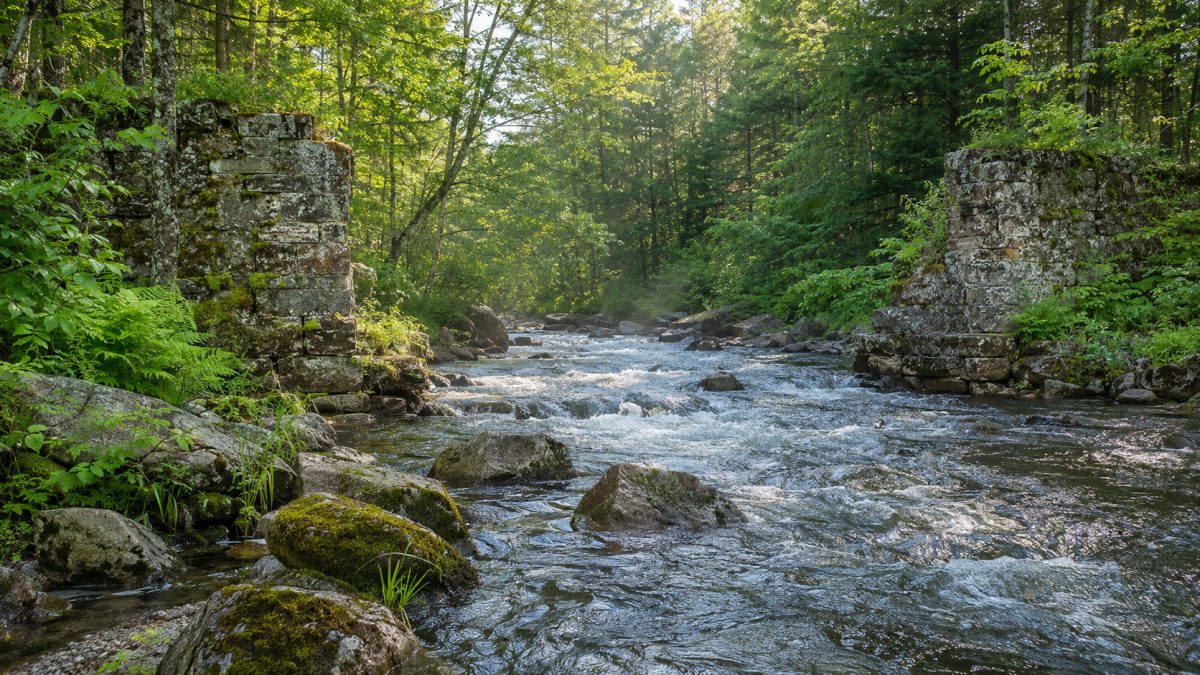
In 1999, the removal of the Edwards Dam on the Kennebec River in Maine allowed migratory fish to regain habitats they had been denied for generations. According to Futura, dismantling the 162-year-old structure reopened 27 kilometres of river. This ecological recovery invites us to reconsider how we manage ageing infrastructure: removing it can sometimes provide more benefits than preserving it.
When removing a structure means repairing an ecosystem
We tend to associate progress with something we build. A bridge, road, power plant or dam embodies human ambition. Its inauguration celebrates an achievement. Its demolition, by contrast, can easily look like an admission of failure.
On the Kennebec River, this conventional interpretation is reversed. Built in 1837, the Edwards Dam obstructed migratory fish. Its removal allowed alewives, shad and sturgeon to return. The benefits extended beyond aquatic species: ospreys and bald eagles also benefited from the return of their prey.
A study published in 2021 in Transactions of the American Fisheries Society recorded a 228% increase in average river herring counts following the removal of the Edwards Dam.
Restoration continued with the removal of the Fort Halifax Dam. According to observations reported by Futura, 64 bald eagles were counted in a single day in 2014 along eight kilometres of the Sebasticook River.
This outcome does not mean that every river will automatically regain its balance after demolition. It does, however, show that a physical barrier can conceal a considerable capacity for recovery.
Why can nature recover so quickly?
What distinguishes ecological restoration is that it does not necessarily seek to create a new ecosystem. It may simply restore the conditions that allow natural processes to operate.
When a river is fragmented by a dam, restoring its connectivity makes previously separated areas accessible again. Fish can recolonise certain habitats, and their presence then benefits other species.
This chain of effects explains why removing a barrier can generate benefits far beyond its immediate location. It is not merely about giving fish a passage, but about restoring relationships between different components of the living world.
The distinction matters: we are not necessarily rebuilding nature; sometimes we are simply no longer preventing it from functioning.
However, it would be excessive to turn the Kennebec's success into a universal rule. Recovery depends on environmental conditions, remaining pressures and the particular circumstances of each river. Dismantling offers an opportunity for restoration, not a guarantee of success.
The sacred infrastructure bias
Why does this logic seem so difficult to apply to the structures we have inherited? One interesting approach is to relate our attachment to infrastructure to the sunk cost fallacy, familiar in behavioural economics.
This bias describes our tendency to stick with a decision because we have already devoted resources to it, even when that past investment should no longer determine our future choices.
Imagine a road that has become of little use. Building it required money, labour and major changes to the landscape. Removing it may seem like wasting all those efforts. Yet resources spent in the past cannot be recovered by artificially prolonging its existence.
The real economic question should concern what the road will provide from now on, its future maintenance and the potential benefits of removing it.
I will call this extension of the reasoning the sacred infrastructure bias. It is not an established scientific concept, but an interpretive framework: once a structure exists, we may be tempted to regard its preservation as an obligation rather than a decision to be reconsidered.
This hypothesis could also shed light on our relationship with levees, unused buildings and road infrastructure. Their age or initial cost alone cannot demonstrate their present usefulness.
Does France know how to remove its dams?
Dismantling hydraulic structures is not uniquely American. According to European Rivers Network, opposition to their environmental consequences emerged in the United States in the 1970s. In France, it gained particular resonance in the late 1980s with the Loire Vivante campaign.
European Rivers Network lists several French projects illustrating different ways of restoring some freedom to rivers:
- The dismantling of the Maisons Dam in 1998.
- The removal of the Blois structure in 2005.
- The partial transformation of the Poutès Dam on the Allier between 2019 and 2021.
- The removal of the Vezins and Roche-qui-Boit dams on the Sélune between 2019 and 2022.
The projects on the Sélune show that this approach is not limited to small barriers. According to European Rivers Network, the Vezins and Roche-qui-Boit dams were 36 and 16 metres high respectively.
Nevertheless, keeping a dam can meet legitimate needs. In a response published in July 2025, the French government acknowledged the ecological benefits of removing small structures while emphasising the importance of preserving certain uses.
The challenge is therefore to distinguish infrastructure that is still necessary from infrastructure we preserve mainly because it already exists.
What if we learned to plan for the disappearance of infrastructure?
A structure should be assessed on more than its ability to endure. Its design could also account for the conditions under which it might be transformed, abandoned or dismantled when its function no longer justifies its presence.
Before extending its lifespan, several questions would then deserve consideration:
- What need does it still meet today?
- What benefits and costs will preserving it entail?
- What could transforming or removing it achieve?
- Which uses and interests must be protected?
This approach does not mean systematically pitting human infrastructure against nature. It means recognising that its usefulness can change and that its removal sometimes deserves as much serious consideration as its construction.
Perhaps that is the real lesson of the Edwards Dam. A society capable of building ambitious structures should also be capable of recognising when they cease to serve the collective interest. Progress is not measured exclusively by what we add to the landscape. Sometimes it is also measured by what we know how to remove.
Frequently asked questions
Why does biodiversity return after a dam is removed?
Removing a dam can restore a river's ecological connectivity and allow migratory fish to regain previously inaccessible habitats. Their return can then benefit predators and help restore ecological relationships. The speed of recovery varies according to the characteristics of the environment.
Why do we preserve infrastructure that has become useless?
The sunk cost fallacy offers a possible explanation: past investments can exert excessive influence on present decisions. Attachment to heritage and the desire to preserve certain uses may also play a role. However, these considerations should be distinguished from the actual expected future benefits.
Are there examples of dams dismantled in France?
Yes, particularly on the Loire and its tributaries and on the Sélune in Normandy. European Rivers Network notably documents the dismantling of the Vezins and Roche-qui-Boit dams between 2019 and 2022.
Should all old dams be removed?
No. Each structure must be assessed according to its current functions, environmental consequences and the needs it meets. Demolition is one option among others, particularly when the future benefits of preservation no longer justify its consequences.
Sources
- In 1999, Maine demolished a 162-year-old dam. Millions of fish returned (futura-sciences.com)
- Dam removal - European Rivers Network | ERN (ern.org)
- Dam removals - All - European Rivers Network | ERN (ern.org)
- Sunk Cost Fallacy | Philopedia (philopedia.org)
- Ecological restoration: definition, restoration and practical examples (dictionnaires.com)