

Loading...
By continuing to browse this site, you agree to the use of cookies that ensure its proper functioning.
enEnglish
frFrench
esSpanish
zhChinese
jaJapanese
koKorean
hiHindi
deGerman
noNorwegian
Recherche article
Me connecter
Fleche top bulle Fleche top bulle
DE EN ES FR HI JA KO NO ZH
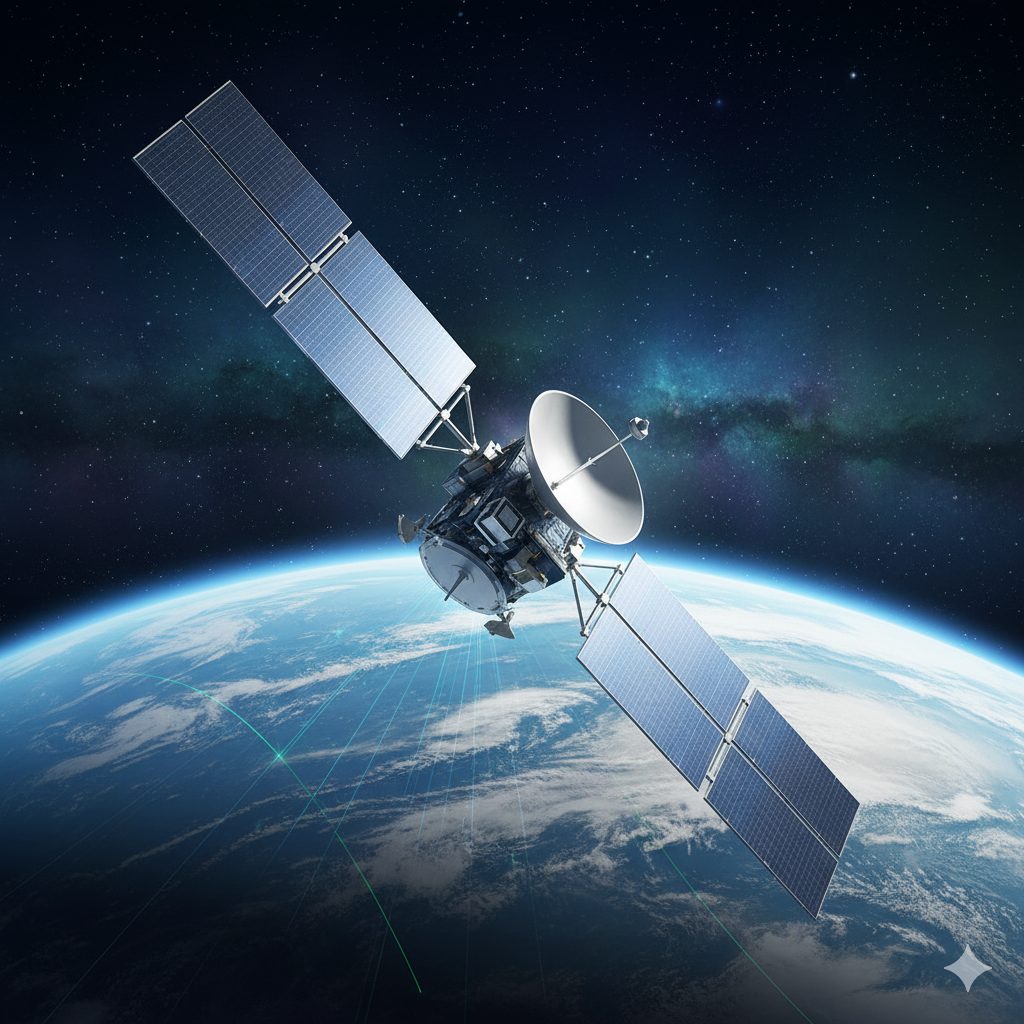
Sentinel-6B satellite orbiting Earth monitoring ocean levels and climate from space on behalf of Europe

Sentinel-6B: Europe's New Guardian of Sea Level Rise

Publié le 24 Avril 2026

The European **Copernicus** programme takes a major new step with the successful launch of its latest ocean and climate observation satellite, **Sentinel-6B**. This eagerly anticipated launch by the scientific community ensures the continuity of crucial measurements for monitoring sea levels and studying climate change.

This satellite is the twin of Sentinel-6A, launched a few years ago, and its primary mission is to ensure **high-precision altimetric monitoring**. Space altimetry measures the distance between the satellite and the sea surface, which is essential for detecting even the slightest variations in ocean levels. This data is not only vital for climate research, but also for practical applications such as weather forecasting and maritime navigation.

Sentinel-6B does more than just measure ocean heights. It also provides detailed information on **significant wave height** and surface wind speeds. This multispectral capability considerably enriches the dataset collected by Copernicus, making it an unparalleled tool for environmental management on a global scale. Scientists will thus be able to refine ocean circulation models and future sea level rise projections.

The success of this mission is the result of exemplary **European collaboration**, involving the European Space Agency (ESA), EUMETSAT, NASA, NOAA, and CNES. Such an international partnership underlines the urgency and importance of concerted action in the face of global environmental challenges. The Copernicus programme thus positions itself as a pillar of European autonomy in Earth observation.

In conclusion, with the launch of Sentinel-6B into orbit, Europe reaffirms its leadership role in space climate observation. The data to be transmitted over the coming years will form an **invaluable resource** for political decision-making and the protection of our marine ecosystems. It is now crucial that this information is exploited to its full potential to inform climate change adaptation and mitigation strategies.

Tags
Sentinel-6B
Copernicus
satellite
altimetry
sea level
climate change
ESA
EUMETSAT
Earth observation
space
Envoyer à un ami
Signaler cet article
A propos de l'auteur
Sentinel-6B satellite orbiting Earth monitoring ocean levels and climate from space on behalf of Europe

Sentinel-6B: Europe's New Guardian of Sea Level Rise

Publié le 24 Avril 2026

The European **Copernicus** programme takes a major new step with the successful launch of its latest ocean and climate observation satellite, **Sentinel-6B**. This eagerly anticipated launch by the scientific community ensures the continuity of crucial measurements for monitoring sea levels and studying climate change.

This satellite is the twin of Sentinel-6A, launched a few years ago, and its primary mission is to ensure **high-precision altimetric monitoring**. Space altimetry measures the distance between the satellite and the sea surface, which is essential for detecting even the slightest variations in ocean levels. This data is not only vital for climate research, but also for practical applications such as weather forecasting and maritime navigation.

Sentinel-6B does more than just measure ocean heights. It also provides detailed information on **significant wave height** and surface wind speeds. This multispectral capability considerably enriches the dataset collected by Copernicus, making it an unparalleled tool for environmental management on a global scale. Scientists will thus be able to refine ocean circulation models and future sea level rise projections.

The success of this mission is the result of exemplary **European collaboration**, involving the European Space Agency (ESA), EUMETSAT, NASA, NOAA, and CNES. Such an international partnership underlines the urgency and importance of concerted action in the face of global environmental challenges. The Copernicus programme thus positions itself as a pillar of European autonomy in Earth observation.

In conclusion, with the launch of Sentinel-6B into orbit, Europe reaffirms its leadership role in space climate observation. The data to be transmitted over the coming years will form an **invaluable resource** for political decision-making and the protection of our marine ecosystems. It is now crucial that this information is exploited to its full potential to inform climate change adaptation and mitigation strategies.

Tags
Sentinel-6B
Copernicus
satellite
altimetry
sea level
climate change
ESA
EUMETSAT
Earth observation
space
Envoyer à un ami
Signaler cet article
A propos de l'auteur
Sentinel-6B satellite orbiting Earth monitoring ocean levels and climate from space on behalf of Europe

Sentinel-6B: Europe's New Guardian of Sea Level Rise

Publié le 24 Avril 2026

The European **Copernicus** programme takes a major new step with the successful launch of its latest ocean and climate observation satellite, **Sentinel-6B**. This eagerly anticipated launch by the scientific community ensures the continuity of crucial measurements for monitoring sea levels and studying climate change.

This satellite is the twin of Sentinel-6A, launched a few years ago, and its primary mission is to ensure **high-precision altimetric monitoring**. Space altimetry measures the distance between the satellite and the sea surface, which is essential for detecting even the slightest variations in ocean levels. This data is not only vital for climate research, but also for practical applications such as weather forecasting and maritime navigation.

Sentinel-6B does more than just measure ocean heights. It also provides detailed information on **significant wave height** and surface wind speeds. This multispectral capability considerably enriches the dataset collected by Copernicus, making it an unparalleled tool for environmental management on a global scale. Scientists will thus be able to refine ocean circulation models and future sea level rise projections.

The success of this mission is the result of exemplary **European collaboration**, involving the European Space Agency (ESA), EUMETSAT, NASA, NOAA, and CNES. Such an international partnership underlines the urgency and importance of concerted action in the face of global environmental challenges. The Copernicus programme thus positions itself as a pillar of European autonomy in Earth observation.

In conclusion, with the launch of Sentinel-6B into orbit, Europe reaffirms its leadership role in space climate observation. The data to be transmitted over the coming years will form an **invaluable resource** for political decision-making and the protection of our marine ecosystems. It is now crucial that this information is exploited to its full potential to inform climate change adaptation and mitigation strategies.

Tags
Sentinel-6B
Copernicus
satellite
altimetry
sea level
climate change
ESA
EUMETSAT
Earth observation
space
Envoyer à un ami
Signaler cet article
A propos de l'auteur
24 April 2026 09:03:10

Lula Relaunches the Fossil Fuel Debate at COP30 in Brazil

The 30th Conference of the Parties (COP30), held this year under the Brazilian sun, concluded on a familiar note: that of the climate emergency and the persistent gap between national ambitions and scientific reality. Yet one standout moment marked this edition: the forceful intervention of...
Read more
24 April 2026 12:13:23

NASA Prepares OSIRIS-APEX for the Historic Flyby of Asteroid Apophis in 2029

The race for space exploration never slows down, and one of NASA's next targets is particularly intriguing: the near-Earth asteroid (99942) Apophis. Initially identified as a potential threat to Earth during its 2029 flyby, more recent calculations have ruled out any collision risk. However, this...
Read more