
 English
 French
 German
 Spanish
 Hindi
 Italian
 Japanese
 Korean
 Norwegian
 Chinese
Used electric cars in 2026: key criteria for choosing
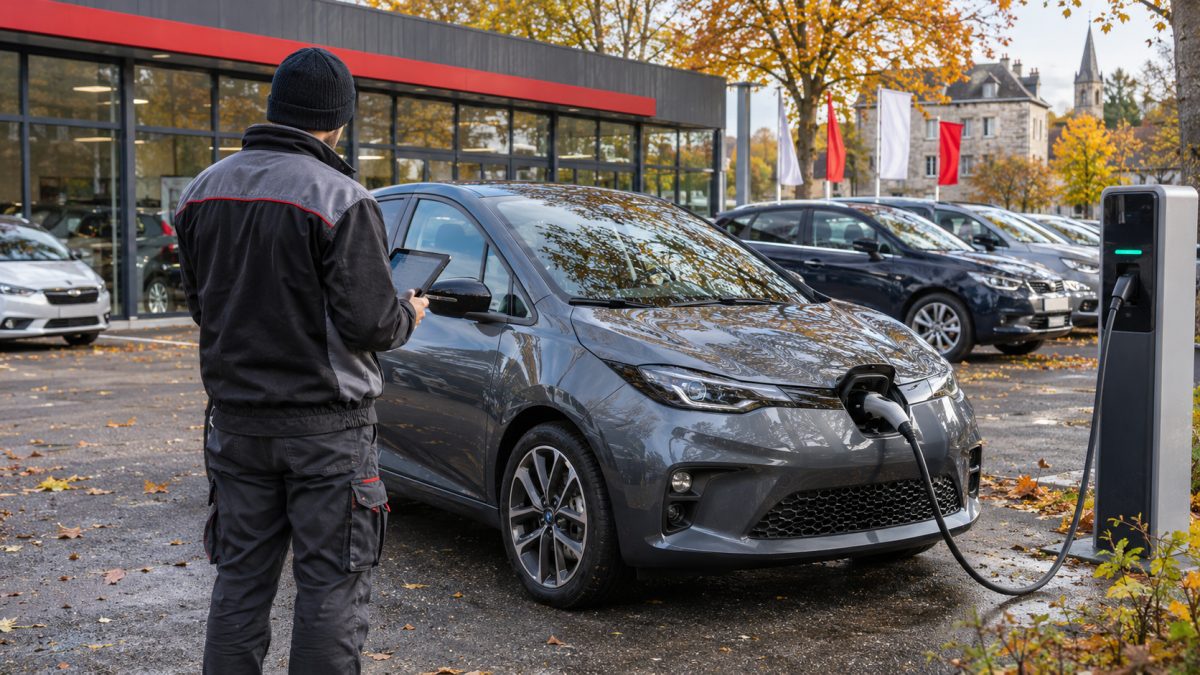
To choose a used electric car in 2026 wisely, three checks are essential: measure the battery’s actual health, compare its range with your journeys, and assess its price against the model’s depreciation. According to a market analysis published by Actu Électrique using Leboncoin listings, ten widely sold electric models lose an average of 59% of their value after five years.
That depreciation can be a real opportunity for buyers, but it does not guarantee a bargain. Two examples of the same used electric car model can have different battery capacities. The right approach is therefore to inspect the individual vehicle rather than relying solely on its age, mileage or advertised price.
How can you find out the battery’s true condition before buying?
The figure to request from the seller is SoH, or State of Health. Expressed as a percentage, it measures the remaining storage capacity compared with when the battery was new. A high SoH means the battery has retained much of its original capacity, but you should still check that the vehicle operates correctly.
According to figures presented by Euromotor, a three-year-old small electric car has an average SoH of 93%. The same specialist cites a January 2026 Geotab study of 22,700 vehicles estimating average annual degradation at 2.3%. It can reach 3% per year with frequent fast charging.
Which SoH thresholds should you pay attention to?
- Around 93%: the average Euromotor reports for a three-year-old small EV. This is a benchmark, not an individual guarantee.
- From 80%: the vehicle may meet the battery-health requirement of the used-car CEE incentive described by Monsieur Courtier, provided the other conditions are met.
- Between 70% and 80%: the remaining capacity deserves particular scrutiny. Compare the asking price with the range you can actually use.
- Below 70%: a major warning sign. According to JeVendsMonVE, manufacturers’ battery warranties generally apply around this threshold, subject to their contractual terms.
Avoid a common misunderstanding: 80% SoH does not automatically mean the battery needs replacing. This threshold is also an administrative criterion for a purchase incentive. The remaining capacity may still suit some drivers, but not others.
What document should you ask the seller for?
Ask for a recent battery-health certificate based on a recognised test. Euromotor considers dynamic measurements performed at a dealership or using an Aviloo device particularly useful for documenting the vehicle’s condition and negotiating its price.
Since June 2026, Euromotor reports that some Aviloo tests also come with a warranty that may compensate the buyer by up to €3,000 if a battery fault occurs within a year of the inspection. Check the exact terms of this protection.
Displaying SoH in listings is not yet a general requirement. However, the Rambouillet pact announced in September 2026 includes a voluntary commitment by Renault, Stellantis and Aramis Auto to publish this information. Without a certificate, request an inspection before signing.
How do you check real-world range rather than the advertised figure?
The range shown in an advertisement is not necessarily what you will get every day. Battery condition, traffic conditions and driving habits all affect the distance you can actually travel.
Activ Automobiles recommends starting with a fully charged battery, driving a route combining urban streets and open roads, and then checking the remaining range. Compare the result with the distance travelled and the manufacturer’s figures.
For a meaningful test, choose a route that reflects your own use. A car mainly intended for local journeys should not be assessed solely as if it regularly covered long distances.
I also recommend asking the seller how the car was normally charged. The Geotab study cited by Euromotor indicates that frequent fast charging may be associated with greater degradation. This information supplements the certificate but cannot replace it.
Which used electric models lose the least value?
Depreciation helps identify models that have become affordable, as well as those that hold their value relatively well. Actu Électrique’s analysis of ten models provides a particularly useful ranking.
| Model | Depreciation over 5 years | Reference new price | Observed used price |
|---|---|---|---|
| Dacia Spring | -53 % | Not specified | 8 347 € in 2025 |
| Tesla Model 3 | -56 % | 52 136 € in 2020 | 23 180 € |
| Volkswagen ID.3 | -57 % | Not specified | Not specified |
| Mini Cooper SE | -57 % | Not specified | Not specified |
| Kia e-Niro | -58 % | Not specified | Not specified |
| Peugeot e-208 | -60 % | 35 096 € in 2020 | Approximately 13 873 € |
| Renault Twingo E-Tech | -62 % | Not specified | Not specified |
| Peugeot e-2008 | -62 % | Not specified | Not specified |
| Renault Zoé | -65 % | 32 445 € in 2020 | 11 477 € |
Comparison based on the analysis published by Actu Électrique in August 2026. Available reference prices notably concern new vehicles from 2020 and the used values recorded in the analysis. The data do not allow reliable depreciation to be calculated for every intervening year.
The Dacia Spring retains its value relatively well, depreciating 53% over five years. The analysis attributes this partly to its initially low new-car price, which mechanically limits the loss in value.
By contrast, the Renault Zoé shows 65% depreciation. This drop may appeal to buyers on a limited budget, provided they check the battery and the exact specifications of the car on offer.
Heavy depreciation is therefore not necessarily a drawback for a used buyer. It can provide an immediate advantage, although it does not predict the future resale price. Retained value also depends on perceptions of the model and confidence in its battery.
What does a used electric car really cost over five years?
Comparing only the purchase prices of electric and combustion-engine cars gives an incomplete picture. A meaningful calculation must include purchase cost, energy, maintenance, insurance and estimated resale value.
| Cost item | Used electric car | Equivalent combustion car |
|---|---|---|
| Purchase | Negotiated used price | Negotiated used price |
| Energy | Home and public charging | Fuel consumed |
| Maintenance | Generally lower | Generally higher |
| Insurance | Potentially more expensive | Compare quotes |
| Resale | Estimate residual value | Estimate residual value |
According to The Conversation, EVs generally have an advantage in maintenance costs but may be more expensive to insure. Savings in one category should not obscure additional expenses in another.
How can you calculate charging costs accurately?
Distinguish charging power, measured in kilowatts, from the energy purchased, billed in kilowatt-hours. Higher power may shorten charging time, but does not by itself determine the amount paid.
To set your budget, identify the actual consumption of the model you are considering, then apply the tariff of your electricity contract or the public charger used. If the operator also charges for parking time, include that fee.
Repeat the calculation for home charging, regular public charging and occasional long trips. Without verified charging rates and vehicle-specific consumption, claiming a universal five-year saving would be misleading.
Use the same approach when comparing a combustion-engine car: fuel, maintenance, insurance and depreciation must be counted over the same period. Autovista Group, cited by Actu Électrique, reports three-year value losses of 45–55% for EVs versus 30–40% for comparable combustion cars. These historical trends are not individual forecasts.
Can you negotiate using SoH and receive an incentive in 2026?
A battery certificate provides a concrete basis for negotiation. Euromotor gives the example of a Renault 5 whose new 52 kWh battery costs €14,600, with an estimated reduction in value of €146 per missing SoH percentage point. This valuation is specific to that example and must not be applied automatically to every model.
Since September 2026, a €337 CEE incentive described by Monsieur Courtier has been subject to technical and administrative conditions, including an SoH of at least 80%. The scheme mentioned covers certain vehicles registered between 2017 and 2023, purchased from a professional and kept for 36 months.
Before buying, check your precise eligibility rather than automatically deducting the incentive from the advertised price. SoH is a necessary condition under this scheme, but not the only one.
My advice is to treat the advertised price as the start of the discussion, not the conclusion. A cheaper car without a battery diagnostic may carry more uncertainty than a slightly more expensive, properly documented example.
Frequently asked questions
What SoH should you look for in a used EV?
According to Euromotor, an SoH near 93% matches the average observed in some three-year-old small EVs. The 80% threshold is particularly important for eligibility for the CEE incentive described in 2026. Your choice still depends on the car’s age and your range requirements.
How can you check battery condition without relying on the seller?
Request a documented diagnostic, ideally performed by a professional or using a recognised dynamic test such as Aviloo. Supplement it with a test drive on mixed roads, monitoring consumption and remaining range. A dashboard estimate alone is no substitute for a certificate.
Which used electric car holds its value best?
In Actu Électrique’s analysis of ten models, the Dacia Spring has the lowest five-year depreciation at 53%. The Tesla Model 3 follows with a 56% loss in value. These historical results do not guarantee future rankings.
Is a used EV cheaper than a combustion car over five years?
It may be more economical thanks to a depreciated used purchase price and generally lower maintenance costs, but insurance and charging arrangements can change the outcome. Compare purchase prices, energy costs, maintenance, insurance and resale values. Without real consumption figures and personalised tariffs, no reliable universal amount can be stated.
Sources
- Used electric car: how to check battery condition ... (orelnienergie.com)
- Small used EV: check SoH and negotiate in 2026 (euromotor.fr)
- Used electric car: checking battery condition (monsieurcourtier.fr)
- Checking a used electric car: 2026 guide (jevendsmonve.fr)
- Used EV battery: how to check its condition (activ-automobiles.com)
- Used EV depreciation: 2026 figures and market trends ... (actu-electrique.com)