 English
  French
  Spanish
  Chinese
  Japanese
  Korean
  Hindi
Hindi  German
  Norwegian
2026 World Cup: The Biggest Tournament in History
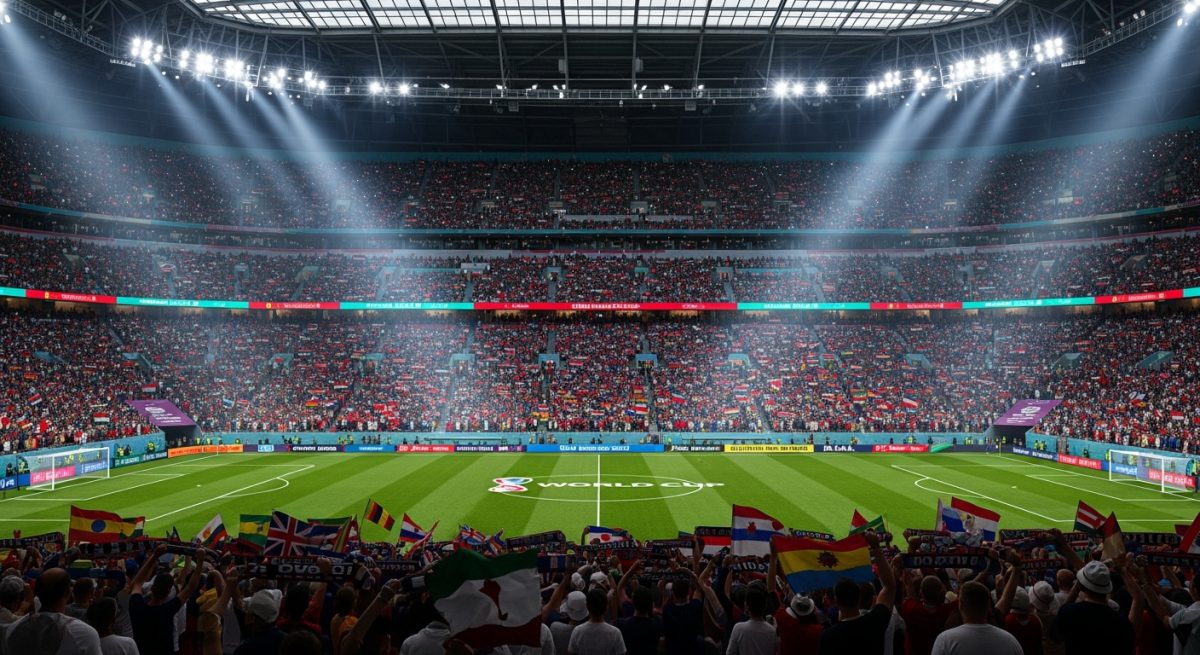
In a few months, the entire world will have its eyes fixed on North America. From June 11 to July 19, 2026, the FIFA World Cup comes, for the first time, to three countries simultaneously: the United States, Canada and Mexico. A historic edition in more ways than one, promising to be the greatest ever staged in the history of football.
An unprecedented format: 48 teams for the first time
The big novelty of this 2026 edition is its revolutionary format. FIFA decided to expand the competition from 32 to 48 teams, split into 12 groups of 4. The result: more nations represented, more matches on the schedule, and a football celebration that is more inclusive than ever for continents previously underrepresented.
Concretely, this means 104 matches in total, compared to 64 in previous editions. For fans, it is a promise of entire weeks of top-level football, with unprecedented clashes between nations that would never have had the chance to meet at a World Cup.
"It's a World Cup for the whole world," declared the FIFA president when announcing this expanded format. A formula that does not convince purists, but thrills supporters of newly qualified nations.
16 stadiums spread across three nations
To host a competition of this scale, no fewer than 16 stadiums have been selected across North America:
- 11 cities in the United States: Atlanta, Boston, Dallas, Houston, Kansas City, Los Angeles, Miami, New York/New Jersey, Philadelphia, San Francisco and Seattle.
- 3 cities in Mexico: Mexico City (with the legendary Estadio Azteca), Guadalajara and Monterrey.
- 2 cities in Canada: Toronto and Vancouver.
The opening match will take place at the Estadio Azteca in Mexico City on June 11, 2026 — a stadium steeped in history, having already hosted two World Cup finals (1970 and 1986). The final will be played at MetLife Stadium in New York/New Jersey on July 19, 2026, one of the world's largest sporting arenas.
Which teams have qualified?
With 48 places available, the list of qualified teams is longer than ever. Here is an overview by confederation:
- Europe (UEFA): Germany, England, Austria, Belgium, Croatia, Scotland, Spain, France, Norway, Netherlands, Portugal, Switzerland — and more via play-offs.
- South America (CONMEBOL): Argentina (defending champions), Brazil, Colombia, Ecuador, Paraguay, Uruguay.
- Africa (CAF): Algeria, Cape Verde, Ivory Coast, Egypt, Ghana, Morocco, Senegal, Tunisia, South Africa.
- Asia (AFC): Saudi Arabia, Australia, Japan, Jordan, Uzbekistan, Qatar, South Korea, Iran.
- Central America and Caribbean (Concacaf): Curacao, Haiti, Panama, plus the three host nations.
France in Group I: a tough but manageable path
The Bleus secured their qualification with a convincing victory over Ukraine. They are in Group I, alongside Senegal, Norway (led by the formidable Erling Haaland) and a play-off team (Bolivia, Suriname or Iraq).
France's group stage schedule:
- June 16 — France vs Senegal in New York
- June 22 — France vs Play-off team in Philadelphia
- June 26 — France vs Norway in Boston
A tough but manageable group on paper. The real battle will begin in the round of 16. France will start among the favorites, with a high-quality squad and a clear ambition: to bring the trophy home in 2026 after the final lost to Argentina in 2022.
Argentina, defending champions, under pressure
Victorious in Qatar in 2022 in one of the most epic matches in football history, Lionel Messi's Argentina arrives at this World Cup in a particular position. Messi, who will be 38 in 2026, will he still be there to defend the title? The question captivates supporters worldwide. Whatever happens, the Albiceleste remain one of the big favorites, with an exceptional generation of players.
How to watch the 2026 World Cup?
Broadcasting rights vary by country. Fans will need to check their local broadcaster for coverage details. Streaming platforms are also expected to offer comprehensive coverage of all 104 matches.
Be mindful of the time difference: host cities are between 5 and 9 hours behind European time zones. Some group stage matches may therefore kick off late in the evening in Europe — a reason to plan some long summer evenings in front of the screen.
An edition that is already inspiring dreams
The 2026 World Cup will be far more than a football tournament. It is a planetary event staged in one of the world's biggest sports markets, with iconic stadiums, an unprecedented format and a diversity of nations never before seen at this level. For football lovers everywhere, the coming months will be filled with hope, debate and emotion.
See you on June 11, 2026 for the kick-off of history.



2026 World Cup: The Biggest Tournament in History
In a few months, the entire world will have its eyes fixed on North America. From June 11 to July 19, 2026, the FIFA World Cup comes, for the first time, to three countries simultaneously: the United States, Canada and Mexico. A historic edition in more ways than one, promising to be the greatest ever staged in the history of football.
An unprecedented format: 48 teams for the first time
The big novelty of this 2026 edition is its revolutionary format. FIFA decided to expand the competition from 32 to 48 teams, split into 12 groups of 4. The result: more nations represented, more matches on the schedule, and a football celebration that is more inclusive than ever for continents previously underrepresented.
Concretely, this means 104 matches in total, compared to 64 in previous editions. For fans, it is a promise of entire weeks of top-level football, with unprecedented clashes between nations that would never have had the chance to meet at a World Cup.
"It's a World Cup for the whole world," declared the FIFA president when announcing this expanded format. A formula that does not convince purists, but thrills supporters of newly qualified nations.
16 stadiums spread across three nations
To host a competition of this scale, no fewer than 16 stadiums have been selected across North America:
- 11 cities in the United States: Atlanta, Boston, Dallas, Houston, Kansas City, Los Angeles, Miami, New York/New Jersey, Philadelphia, San Francisco and Seattle.
- 3 cities in Mexico: Mexico City (with the legendary Estadio Azteca), Guadalajara and Monterrey.
- 2 cities in Canada: Toronto and Vancouver.
The opening match will take place at the Estadio Azteca in Mexico City on June 11, 2026 — a stadium steeped in history, having already hosted two World Cup finals (1970 and 1986). The final will be played at MetLife Stadium in New York/New Jersey on July 19, 2026, one of the world's largest sporting arenas.
Which teams have qualified?
With 48 places available, the list of qualified teams is longer than ever. Here is an overview by confederation:
- Europe (UEFA): Germany, England, Austria, Belgium, Croatia, Scotland, Spain, France, Norway, Netherlands, Portugal, Switzerland — and more via play-offs.
- South America (CONMEBOL): Argentina (defending champions), Brazil, Colombia, Ecuador, Paraguay, Uruguay.
- Africa (CAF): Algeria, Cape Verde, Ivory Coast, Egypt, Ghana, Morocco, Senegal, Tunisia, South Africa.
- Asia (AFC): Saudi Arabia, Australia, Japan, Jordan, Uzbekistan, Qatar, South Korea, Iran.
- Central America and Caribbean (Concacaf): Curacao, Haiti, Panama, plus the three host nations.
France in Group I: a tough but manageable path
The Bleus secured their qualification with a convincing victory over Ukraine. They are in Group I, alongside Senegal, Norway (led by the formidable Erling Haaland) and a play-off team (Bolivia, Suriname or Iraq).
France's group stage schedule:
- June 16 — France vs Senegal in New York
- June 22 — France vs Play-off team in Philadelphia
- June 26 — France vs Norway in Boston
A tough but manageable group on paper. The real battle will begin in the round of 16. France will start among the favorites, with a high-quality squad and a clear ambition: to bring the trophy home in 2026 after the final lost to Argentina in 2022.
Argentina, defending champions, under pressure
Victorious in Qatar in 2022 in one of the most epic matches in football history, Lionel Messi's Argentina arrives at this World Cup in a particular position. Messi, who will be 38 in 2026, will he still be there to defend the title? The question captivates supporters worldwide. Whatever happens, the Albiceleste remain one of the big favorites, with an exceptional generation of players.
How to watch the 2026 World Cup?
Broadcasting rights vary by country. Fans will need to check their local broadcaster for coverage details. Streaming platforms are also expected to offer comprehensive coverage of all 104 matches.
Be mindful of the time difference: host cities are between 5 and 9 hours behind European time zones. Some group stage matches may therefore kick off late in the evening in Europe — a reason to plan some long summer evenings in front of the screen.
An edition that is already inspiring dreams
The 2026 World Cup will be far more than a football tournament. It is a planetary event staged in one of the world's biggest sports markets, with iconic stadiums, an unprecedented format and a diversity of nations never before seen at this level. For football lovers everywhere, the coming months will be filled with hope, debate and emotion.
See you on June 11, 2026 for the kick-off of history.
2026 World Cup: The Biggest Tournament in History
In a few months, the entire world will have its eyes fixed on North America. From June 11 to July 19, 2026, the FIFA World Cup comes, for the first time, to three countries simultaneously: the United States, Canada and Mexico. A historic edition in more ways than one, promising to be the greatest ever staged in the history of football.
An unprecedented format: 48 teams for the first time
The big novelty of this 2026 edition is its revolutionary format. FIFA decided to expand the competition from 32 to 48 teams, split into 12 groups of 4. The result: more nations represented, more matches on the schedule, and a football celebration that is more inclusive than ever for continents previously underrepresented.
Concretely, this means 104 matches in total, compared to 64 in previous editions. For fans, it is a promise of entire weeks of top-level football, with unprecedented clashes between nations that would never have had the chance to meet at a World Cup.
"It's a World Cup for the whole world," declared the FIFA president when announcing this expanded format. A formula that does not convince purists, but thrills supporters of newly qualified nations.
16 stadiums spread across three nations
To host a competition of this scale, no fewer than 16 stadiums have been selected across North America:
- 11 cities in the United States: Atlanta, Boston, Dallas, Houston, Kansas City, Los Angeles, Miami, New York/New Jersey, Philadelphia, San Francisco and Seattle.
- 3 cities in Mexico: Mexico City (with the legendary Estadio Azteca), Guadalajara and Monterrey.
- 2 cities in Canada: Toronto and Vancouver.
The opening match will take place at the Estadio Azteca in Mexico City on June 11, 2026 — a stadium steeped in history, having already hosted two World Cup finals (1970 and 1986). The final will be played at MetLife Stadium in New York/New Jersey on July 19, 2026, one of the world's largest sporting arenas.
Which teams have qualified?
With 48 places available, the list of qualified teams is longer than ever. Here is an overview by confederation:
- Europe (UEFA): Germany, England, Austria, Belgium, Croatia, Scotland, Spain, France, Norway, Netherlands, Portugal, Switzerland — and more via play-offs.
- South America (CONMEBOL): Argentina (defending champions), Brazil, Colombia, Ecuador, Paraguay, Uruguay.
- Africa (CAF): Algeria, Cape Verde, Ivory Coast, Egypt, Ghana, Morocco, Senegal, Tunisia, South Africa.
- Asia (AFC): Saudi Arabia, Australia, Japan, Jordan, Uzbekistan, Qatar, South Korea, Iran.
- Central America and Caribbean (Concacaf): Curacao, Haiti, Panama, plus the three host nations.
France in Group I: a tough but manageable path
The Bleus secured their qualification with a convincing victory over Ukraine. They are in Group I, alongside Senegal, Norway (led by the formidable Erling Haaland) and a play-off team (Bolivia, Suriname or Iraq).
France's group stage schedule:
- June 16 — France vs Senegal in New York
- June 22 — France vs Play-off team in Philadelphia
- June 26 — France vs Norway in Boston
A tough but manageable group on paper. The real battle will begin in the round of 16. France will start among the favorites, with a high-quality squad and a clear ambition: to bring the trophy home in 2026 after the final lost to Argentina in 2022.
Argentina, defending champions, under pressure
Victorious in Qatar in 2022 in one of the most epic matches in football history, Lionel Messi's Argentina arrives at this World Cup in a particular position. Messi, who will be 38 in 2026, will he still be there to defend the title? The question captivates supporters worldwide. Whatever happens, the Albiceleste remain one of the big favorites, with an exceptional generation of players.
How to watch the 2026 World Cup?
Broadcasting rights vary by country. Fans will need to check their local broadcaster for coverage details. Streaming platforms are also expected to offer comprehensive coverage of all 104 matches.
Be mindful of the time difference: host cities are between 5 and 9 hours behind European time zones. Some group stage matches may therefore kick off late in the evening in Europe — a reason to plan some long summer evenings in front of the screen.
An edition that is already inspiring dreams
The 2026 World Cup will be far more than a football tournament. It is a planetary event staged in one of the world's biggest sports markets, with iconic stadiums, an unprecedented format and a diversity of nations never before seen at this level. For football lovers everywhere, the coming months will be filled with hope, debate and emotion.
See you on June 11, 2026 for the kick-off of history.