
Loading...
By continuing to browse this site, you agree to the use of cookies that ensure its proper functioning.
enEnglish
frFrench
esSpanish
zhChinese
jaJapanese
koKorean
hiHindi
deGerman
noNorwegian
Recherche article
Me connecter
Fleche top bulle Fleche top bulle
DE EN ES FR HI JA KO NO ZH
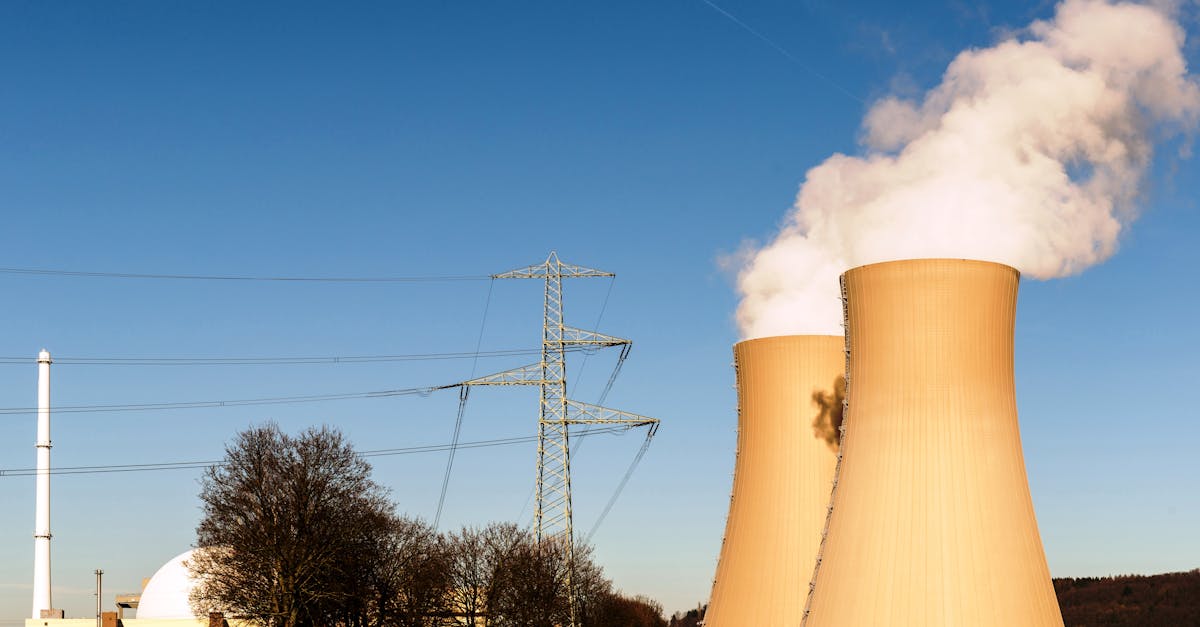
Illustration of a small modular nuclear reactor SMR against a background of an energy plant

Small modular nuclear reactors SMR: France's ambitions in 2026

Publié le 27 Avril 2026

For several years now, a silent revolution has been taking place in the world of nuclear energy. Small modular nuclear reactors, better known by the English acronym SMR (Small Modular Reactors), are emerging as one of the most promising technologies for addressing the climate and energy challenges of the 21st century. In France, the question is now posed without ambiguity: can the country win the global race for SMRs?

What exactly is an SMR?

A small modular reactor is, as its name suggests, a small-scale nuclear reactor. Unlike conventional nuclear power plants that produce more than 1,000 megawatts of electricity (MWe), an SMR generally does not exceed 300 MWe. This modularity is precisely what makes them so attractive: they can be manufactured in factories, transported to sites and assembled much faster than a large power plant.

Several technologies coexist under this generic term. These include miniaturised pressurised water reactors, molten salt reactors, fast neutron reactors and high-temperature reactors. Each concept has its own advantages in terms of safety, thermal efficiency or fuel use.

Why is France so interested?

France did not choose nuclear power by chance. Since the 1970s, it has drawn more than 70% of its electricity from its 56 operating reactors. But this fleet is ageing, and the construction of new EPRs (large third-generation reactors) is proving costly and time-consuming. The Flamanville 3 construction site is a prime example: originally scheduled for 2012, the reactor was only connected to the grid in 2024, with considerable cost overruns.

Faced with this reality, SMRs appear as a serious alternative. Their smaller size makes it possible to limit financial risk, accelerate construction timelines and ensure decentralised production of decarbonised electricity. In the context of energy transition and the carbon neutrality targets set for 2050, this technology represents a major strategic asset.

« France must intensify research and development to accelerate the emergence of small modular reactors. »

— Emmanuel Macron, Nuclear Energy Summit, Paris 2026

The NUWARD project: France's SMR flagship

At the heart of the French strategy lies the NUWARD project, led by EDF in partnership with the CEA (Commissariat à l'Énergie Atomique). This pressurised water reactor with a capacity of 340 MWe is designed to be modular, safe and competitive. Its design is based on two independent modules integrated within a single containment structure, which enhances safety margins.

The roadmap is ambitious:

  • 2026-2029: finalisation of design studies and obtaining regulatory approvals.
  • 2030: planned start of construction of the first-of-a-kind unit, estimated to cost around one billion euros.
  • 2035: target commissioning date, after five years of construction and testing.

The Multi-Year Energy Plan (PPE3), published in February 2026, formalises this commitment: the French state commits to supporting NUWARD and aims for « at least one prototype by 2030 ».

Serious competitors on the global stage

France is not alone in this race. The United States, with companies such as X-energy and NuScale, has taken a head start on private financing. South Korea has been developing its own SMART concept for more than twenty years. China, for its part, commissioned its first modular HTR-PM reactor at Shidaowan on the east coast as early as 2023.

The United Kingdom is heavily backing Rolls-Royce SMR, which aims to build 16 reactors by 2050. Poland, in the midst of phasing out coal, is considering installing several SMRs on former mining sites. In this context, Europe is struggling to develop a common strategy, with funding calls remaining fragmented and insufficient.

Challenges to overcome

Despite the enthusiasm, the obstacles are real. Economically, no new-generation SMR has yet proven its competitiveness at scale. The economies of scale assumed by serial manufacturing have yet to be demonstrated. On the regulatory front, authorisation processes are lengthy and complex, even if the Nuclear Safety Authority (ASN), now integrated into the ASNR, is working to simplify the approval pathways.

There is also the question of social acceptability. Even if SMRs are often presented as safer than large power stations thanks to their passive cooling systems, public distrust of nuclear energy remains a significant political challenge.

An industrial and climate opportunity

Beyond electricity generation, SMRs open up unprecedented prospects. Their residual heat could supply urban heating networks, decarbonise energy-intensive industrial processes (steel, cement, chemicals) or produce green hydrogen at scale. These multiple uses make SMRs a potentially central tool in the decarbonisation of the French economy.

The France 2030 programme has already supported several French start-ups in the sector — Newcleo, Naarea, Jimmy — which are developing innovative fast neutron or molten salt reactor concepts. These young companies inject a welcome entrepreneurial dynamic into a sector long dominated by large public operators alone.

Conclusion: a bet on the future

Small modular reactors are not a miracle solution, but they constitute a serious lever in the range of tools available to France to meet its climate targets. The success of the NUWARD project will depend on the country's ability to mobilise funding, accelerate regulatory procedures and build solid European alliances.

One thing is certain: the SMR race is on, and France cannot afford to watch from the sidelines. The coming years will be decisive in determining whether French nuclear expertise can adapt to this new era of the atom.

Tags
SMR modular reactors
nuclear France
NUWARD
decarbonised energy
small reactor
Envoyer à un ami
Signaler cet article
A propos de l'auteur
Illustration of a small modular nuclear reactor SMR against a background of an energy plant

Small modular nuclear reactors SMR: France's ambitions in 2026

Publié le 27 Avril 2026

For several years now, a silent revolution has been taking place in the world of nuclear energy. Small modular nuclear reactors, better known by the English acronym SMR (Small Modular Reactors), are emerging as one of the most promising technologies for addressing the climate and energy challenges of the 21st century. In France, the question is now posed without ambiguity: can the country win the global race for SMRs?

What exactly is an SMR?

A small modular reactor is, as its name suggests, a small-scale nuclear reactor. Unlike conventional nuclear power plants that produce more than 1,000 megawatts of electricity (MWe), an SMR generally does not exceed 300 MWe. This modularity is precisely what makes them so attractive: they can be manufactured in factories, transported to sites and assembled much faster than a large power plant.

Several technologies coexist under this generic term. These include miniaturised pressurised water reactors, molten salt reactors, fast neutron reactors and high-temperature reactors. Each concept has its own advantages in terms of safety, thermal efficiency or fuel use.

Why is France so interested?

France did not choose nuclear power by chance. Since the 1970s, it has drawn more than 70% of its electricity from its 56 operating reactors. But this fleet is ageing, and the construction of new EPRs (large third-generation reactors) is proving costly and time-consuming. The Flamanville 3 construction site is a prime example: originally scheduled for 2012, the reactor was only connected to the grid in 2024, with considerable cost overruns.

Faced with this reality, SMRs appear as a serious alternative. Their smaller size makes it possible to limit financial risk, accelerate construction timelines and ensure decentralised production of decarbonised electricity. In the context of energy transition and the carbon neutrality targets set for 2050, this technology represents a major strategic asset.

« France must intensify research and development to accelerate the emergence of small modular reactors. »

— Emmanuel Macron, Nuclear Energy Summit, Paris 2026

The NUWARD project: France's SMR flagship

At the heart of the French strategy lies the NUWARD project, led by EDF in partnership with the CEA (Commissariat à l'Énergie Atomique). This pressurised water reactor with a capacity of 340 MWe is designed to be modular, safe and competitive. Its design is based on two independent modules integrated within a single containment structure, which enhances safety margins.

The roadmap is ambitious:

  • 2026-2029: finalisation of design studies and obtaining regulatory approvals.
  • 2030: planned start of construction of the first-of-a-kind unit, estimated to cost around one billion euros.
  • 2035: target commissioning date, after five years of construction and testing.

The Multi-Year Energy Plan (PPE3), published in February 2026, formalises this commitment: the French state commits to supporting NUWARD and aims for « at least one prototype by 2030 ».

Serious competitors on the global stage

France is not alone in this race. The United States, with companies such as X-energy and NuScale, has taken a head start on private financing. South Korea has been developing its own SMART concept for more than twenty years. China, for its part, commissioned its first modular HTR-PM reactor at Shidaowan on the east coast as early as 2023.

The United Kingdom is heavily backing Rolls-Royce SMR, which aims to build 16 reactors by 2050. Poland, in the midst of phasing out coal, is considering installing several SMRs on former mining sites. In this context, Europe is struggling to develop a common strategy, with funding calls remaining fragmented and insufficient.

Challenges to overcome

Despite the enthusiasm, the obstacles are real. Economically, no new-generation SMR has yet proven its competitiveness at scale. The economies of scale assumed by serial manufacturing have yet to be demonstrated. On the regulatory front, authorisation processes are lengthy and complex, even if the Nuclear Safety Authority (ASN), now integrated into the ASNR, is working to simplify the approval pathways.

There is also the question of social acceptability. Even if SMRs are often presented as safer than large power stations thanks to their passive cooling systems, public distrust of nuclear energy remains a significant political challenge.

An industrial and climate opportunity

Beyond electricity generation, SMRs open up unprecedented prospects. Their residual heat could supply urban heating networks, decarbonise energy-intensive industrial processes (steel, cement, chemicals) or produce green hydrogen at scale. These multiple uses make SMRs a potentially central tool in the decarbonisation of the French economy.

The France 2030 programme has already supported several French start-ups in the sector — Newcleo, Naarea, Jimmy — which are developing innovative fast neutron or molten salt reactor concepts. These young companies inject a welcome entrepreneurial dynamic into a sector long dominated by large public operators alone.

Conclusion: a bet on the future

Small modular reactors are not a miracle solution, but they constitute a serious lever in the range of tools available to France to meet its climate targets. The success of the NUWARD project will depend on the country's ability to mobilise funding, accelerate regulatory procedures and build solid European alliances.

One thing is certain: the SMR race is on, and France cannot afford to watch from the sidelines. The coming years will be decisive in determining whether French nuclear expertise can adapt to this new era of the atom.

Tags
SMR modular reactors
nuclear France
NUWARD
decarbonised energy
small reactor
Envoyer à un ami
Signaler cet article
A propos de l'auteur
Illustration of a small modular nuclear reactor SMR against a background of an energy plant

Small modular nuclear reactors SMR: France's ambitions in 2026

Publié le 27 Avril 2026

For several years now, a silent revolution has been taking place in the world of nuclear energy. Small modular nuclear reactors, better known by the English acronym SMR (Small Modular Reactors), are emerging as one of the most promising technologies for addressing the climate and energy challenges of the 21st century. In France, the question is now posed without ambiguity: can the country win the global race for SMRs?

What exactly is an SMR?

A small modular reactor is, as its name suggests, a small-scale nuclear reactor. Unlike conventional nuclear power plants that produce more than 1,000 megawatts of electricity (MWe), an SMR generally does not exceed 300 MWe. This modularity is precisely what makes them so attractive: they can be manufactured in factories, transported to sites and assembled much faster than a large power plant.

Several technologies coexist under this generic term. These include miniaturised pressurised water reactors, molten salt reactors, fast neutron reactors and high-temperature reactors. Each concept has its own advantages in terms of safety, thermal efficiency or fuel use.

Why is France so interested?

France did not choose nuclear power by chance. Since the 1970s, it has drawn more than 70% of its electricity from its 56 operating reactors. But this fleet is ageing, and the construction of new EPRs (large third-generation reactors) is proving costly and time-consuming. The Flamanville 3 construction site is a prime example: originally scheduled for 2012, the reactor was only connected to the grid in 2024, with considerable cost overruns.

Faced with this reality, SMRs appear as a serious alternative. Their smaller size makes it possible to limit financial risk, accelerate construction timelines and ensure decentralised production of decarbonised electricity. In the context of energy transition and the carbon neutrality targets set for 2050, this technology represents a major strategic asset.

« France must intensify research and development to accelerate the emergence of small modular reactors. »

— Emmanuel Macron, Nuclear Energy Summit, Paris 2026

The NUWARD project: France's SMR flagship

At the heart of the French strategy lies the NUWARD project, led by EDF in partnership with the CEA (Commissariat à l'Énergie Atomique). This pressurised water reactor with a capacity of 340 MWe is designed to be modular, safe and competitive. Its design is based on two independent modules integrated within a single containment structure, which enhances safety margins.

The roadmap is ambitious:

  • 2026-2029: finalisation of design studies and obtaining regulatory approvals.
  • 2030: planned start of construction of the first-of-a-kind unit, estimated to cost around one billion euros.
  • 2035: target commissioning date, after five years of construction and testing.

The Multi-Year Energy Plan (PPE3), published in February 2026, formalises this commitment: the French state commits to supporting NUWARD and aims for « at least one prototype by 2030 ».

Serious competitors on the global stage

France is not alone in this race. The United States, with companies such as X-energy and NuScale, has taken a head start on private financing. South Korea has been developing its own SMART concept for more than twenty years. China, for its part, commissioned its first modular HTR-PM reactor at Shidaowan on the east coast as early as 2023.

The United Kingdom is heavily backing Rolls-Royce SMR, which aims to build 16 reactors by 2050. Poland, in the midst of phasing out coal, is considering installing several SMRs on former mining sites. In this context, Europe is struggling to develop a common strategy, with funding calls remaining fragmented and insufficient.

Challenges to overcome

Despite the enthusiasm, the obstacles are real. Economically, no new-generation SMR has yet proven its competitiveness at scale. The economies of scale assumed by serial manufacturing have yet to be demonstrated. On the regulatory front, authorisation processes are lengthy and complex, even if the Nuclear Safety Authority (ASN), now integrated into the ASNR, is working to simplify the approval pathways.

There is also the question of social acceptability. Even if SMRs are often presented as safer than large power stations thanks to their passive cooling systems, public distrust of nuclear energy remains a significant political challenge.

An industrial and climate opportunity

Beyond electricity generation, SMRs open up unprecedented prospects. Their residual heat could supply urban heating networks, decarbonise energy-intensive industrial processes (steel, cement, chemicals) or produce green hydrogen at scale. These multiple uses make SMRs a potentially central tool in the decarbonisation of the French economy.

The France 2030 programme has already supported several French start-ups in the sector — Newcleo, Naarea, Jimmy — which are developing innovative fast neutron or molten salt reactor concepts. These young companies inject a welcome entrepreneurial dynamic into a sector long dominated by large public operators alone.

Conclusion: a bet on the future

Small modular reactors are not a miracle solution, but they constitute a serious lever in the range of tools available to France to meet its climate targets. The success of the NUWARD project will depend on the country's ability to mobilise funding, accelerate regulatory procedures and build solid European alliances.

One thing is certain: the SMR race is on, and France cannot afford to watch from the sidelines. The coming years will be decisive in determining whether French nuclear expertise can adapt to this new era of the atom.

Tags
SMR modular reactors
nuclear France
NUWARD
decarbonised energy
small reactor
Envoyer à un ami
Signaler cet article
A propos de l'auteur
23 April 2026 21:17:52

SMR: The Small Modular Reactor Revolution in 2026

Long overshadowed by the rise of renewable energy, nuclear power is making a spectacular comeback in 2026. At the heart of this renaissance: SMRs (Small Modular Reactors), a technology that promises to revolutionize the way we produce clean electricity. Smaller, more flexible, and faster to...
Read more