Four curiosities hidden inside the French dictionary
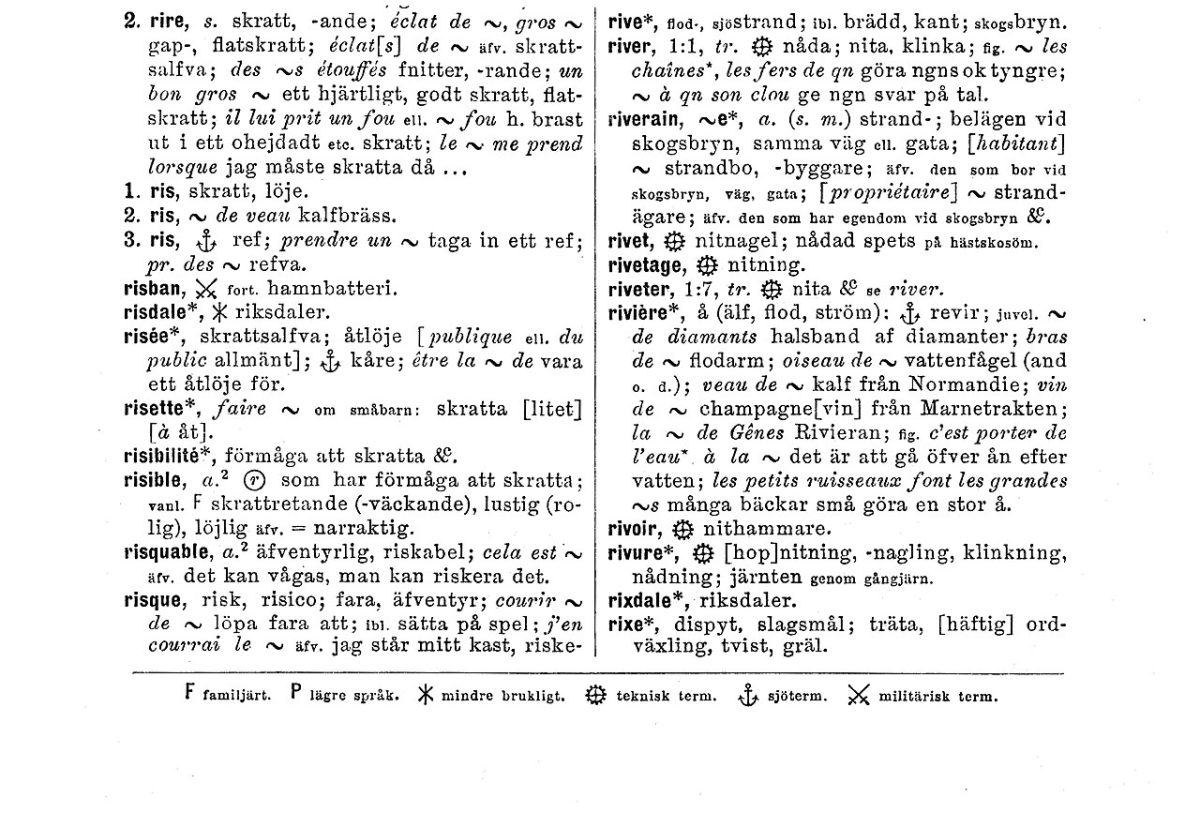
A dictionary is not just a list: it is a landscape. By stacking words in alphabetical order, it unintentionally draws records, symmetries and oddities that nobody notices. I wanted to flush them out by sifting through nearly 197,000 French words. Here are my four favorite finds.
1. « oiseau », champion of concision
French has five vowels — a, e, i, o, u — and one small game is to look for words that contain them all. There are 10,256 of them, which is not rare. The dizzying part is the length: only one word manages the feat in just six letters, and it is « oiseau ». Not « aïeul », not « ouaille »: the bird alone packs the five vowels into a tiny space. The playground legend was true — and the calculation confirms it: no other six-letter word does as well.
2. « stylographique », the word that never repeats itself
An isogram is a word whose letters are all different: none appears twice. The longer a word gets, the more unlikely the feat becomes — there are only twenty-six letters, and French loves doubling consonants. Yet the record stands at fourteen distinct letters: « stylographique » (relating to the fountain pen), closely followed by « xylographiques ». Fourteen letters, fourteen different keys, not one repeated: a small miracle of balance, the French equivalent of the famous English uncopyrightable.
3. « bijoux » and the impossible order
What if we searched for words whose letters respect alphabetical order, from first to last? The alphabet is tyrannical: one step backward is enough to disqualify a word. As a result, the champions top out at six letters, and the list is short but pretty: « bijoux », « chintz », « dehors », « effort », « accent », « afflux »… « Bijoux » is the most elegant — b, i, j, o, u, x parade by without ever retreating. Beyond six letters, the language stubbornly refuses to walk straight.
4. « regagner » ↔ « rengager », the mirror word
The last hunt is the most playful: mirror words, words that, when read backward, form another real word. French hides thirty-three of them with at least five letters. A few gems: « animal » becomes « lamina », « avaler » turns into « relava », « casser » into « ressac ». But the record, at eight letters, pits two almost twin verbs against each other: « regagner » and « rengager ». Read one backward and you get the other. Chance, sometimes, has a sense of humor.
Counting for nothing, and for pleasure
None of these curiosities is useful for anything. You do not win at Scrabble with « stylographique », and knowing that the bird kept all the vowels feeds nobody. But that is precisely the charm of the exercise: taking something as familiar as a dictionary and, through patient counting, making it suddenly strange and alive. The language we think we know by heart keeps, in its corners, symmetries we had never seen.
Method: analysis of a public list of French forms (conjugations and plurals included), reduced to words written with the twenty-six basic letters, without accents or hyphens. All results are reproducible.
Four curiosities hidden inside the French dictionary
A dictionary is not just a list: it is a landscape. By stacking words in alphabetical order, it unintentionally draws records, symmetries and oddities that nobody notices. I wanted to flush them out by sifting through nearly 197,000 French words. Here are my four favorite finds.
1. « oiseau », champion of concision
French has five vowels — a, e, i, o, u — and one small game is to look for words that contain them all. There are 10,256 of them, which is not rare. The dizzying part is the length: only one word manages the feat in just six letters, and it is « oiseau ». Not « aïeul », not « ouaille »: the bird alone packs the five vowels into a tiny space. The playground legend was true — and the calculation confirms it: no other six-letter word does as well.
2. « stylographique », the word that never repeats itself
An isogram is a word whose letters are all different: none appears twice. The longer a word gets, the more unlikely the feat becomes — there are only twenty-six letters, and French loves doubling consonants. Yet the record stands at fourteen distinct letters: « stylographique » (relating to the fountain pen), closely followed by « xylographiques ». Fourteen letters, fourteen different keys, not one repeated: a small miracle of balance, the French equivalent of the famous English uncopyrightable.
3. « bijoux » and the impossible order
What if we searched for words whose letters respect alphabetical order, from first to last? The alphabet is tyrannical: one step backward is enough to disqualify a word. As a result, the champions top out at six letters, and the list is short but pretty: « bijoux », « chintz », « dehors », « effort », « accent », « afflux »… « Bijoux » is the most elegant — b, i, j, o, u, x parade by without ever retreating. Beyond six letters, the language stubbornly refuses to walk straight.
4. « regagner » ↔ « rengager », the mirror word
The last hunt is the most playful: mirror words, words that, when read backward, form another real word. French hides thirty-three of them with at least five letters. A few gems: « animal » becomes « lamina », « avaler » turns into « relava », « casser » into « ressac ». But the record, at eight letters, pits two almost twin verbs against each other: « regagner » and « rengager ». Read one backward and you get the other. Chance, sometimes, has a sense of humor.
Counting for nothing, and for pleasure
None of these curiosities is useful for anything. You do not win at Scrabble with « stylographique », and knowing that the bird kept all the vowels feeds nobody. But that is precisely the charm of the exercise: taking something as familiar as a dictionary and, through patient counting, making it suddenly strange and alive. The language we think we know by heart keeps, in its corners, symmetries we had never seen.
Method: analysis of a public list of French forms (conjugations and plurals included), reduced to words written with the twenty-six basic letters, without accents or hyphens. All results are reproducible.
Four curiosities hidden inside the French dictionary
A dictionary is not just a list: it is a landscape. By stacking words in alphabetical order, it unintentionally draws records, symmetries and oddities that nobody notices. I wanted to flush them out by sifting through nearly 197,000 French words. Here are my four favorite finds.
1. « oiseau », champion of concision
French has five vowels — a, e, i, o, u — and one small game is to look for words that contain them all. There are 10,256 of them, which is not rare. The dizzying part is the length: only one word manages the feat in just six letters, and it is « oiseau ». Not « aïeul », not « ouaille »: the bird alone packs the five vowels into a tiny space. The playground legend was true — and the calculation confirms it: no other six-letter word does as well.
2. « stylographique », the word that never repeats itself
An isogram is a word whose letters are all different: none appears twice. The longer a word gets, the more unlikely the feat becomes — there are only twenty-six letters, and French loves doubling consonants. Yet the record stands at fourteen distinct letters: « stylographique » (relating to the fountain pen), closely followed by « xylographiques ». Fourteen letters, fourteen different keys, not one repeated: a small miracle of balance, the French equivalent of the famous English uncopyrightable.
3. « bijoux » and the impossible order
What if we searched for words whose letters respect alphabetical order, from first to last? The alphabet is tyrannical: one step backward is enough to disqualify a word. As a result, the champions top out at six letters, and the list is short but pretty: « bijoux », « chintz », « dehors », « effort », « accent », « afflux »… « Bijoux » is the most elegant — b, i, j, o, u, x parade by without ever retreating. Beyond six letters, the language stubbornly refuses to walk straight.
4. « regagner » ↔ « rengager », the mirror word
The last hunt is the most playful: mirror words, words that, when read backward, form another real word. French hides thirty-three of them with at least five letters. A few gems: « animal » becomes « lamina », « avaler » turns into « relava », « casser » into « ressac ». But the record, at eight letters, pits two almost twin verbs against each other: « regagner » and « rengager ». Read one backward and you get the other. Chance, sometimes, has a sense of humor.
Counting for nothing, and for pleasure
None of these curiosities is useful for anything. You do not win at Scrabble with « stylographique », and knowing that the bird kept all the vowels feeds nobody. But that is precisely the charm of the exercise: taking something as familiar as a dictionary and, through patient counting, making it suddenly strange and alive. The language we think we know by heart keeps, in its corners, symmetries we had never seen.
Method: analysis of a public list of French forms (conjugations and plurals included), reduced to words written with the twenty-six basic letters, without accents or hyphens. All results are reproducible.
English
French
Spanish
Chinese
Japanese
Korean
Hindi
German
Norwegian