

Loading...
By continuing to browse this site, you agree to the use of cookies that ensure its proper functioning.
enEnglish
frFrench
esSpanish
zhChinese
jaJapanese
koKorean
hiHindi
deGerman
noNorwegian
Recherche article
Me connecter
Fleche top bulle Fleche top bulle
DE EN ES FR HI JA KO NO ZH
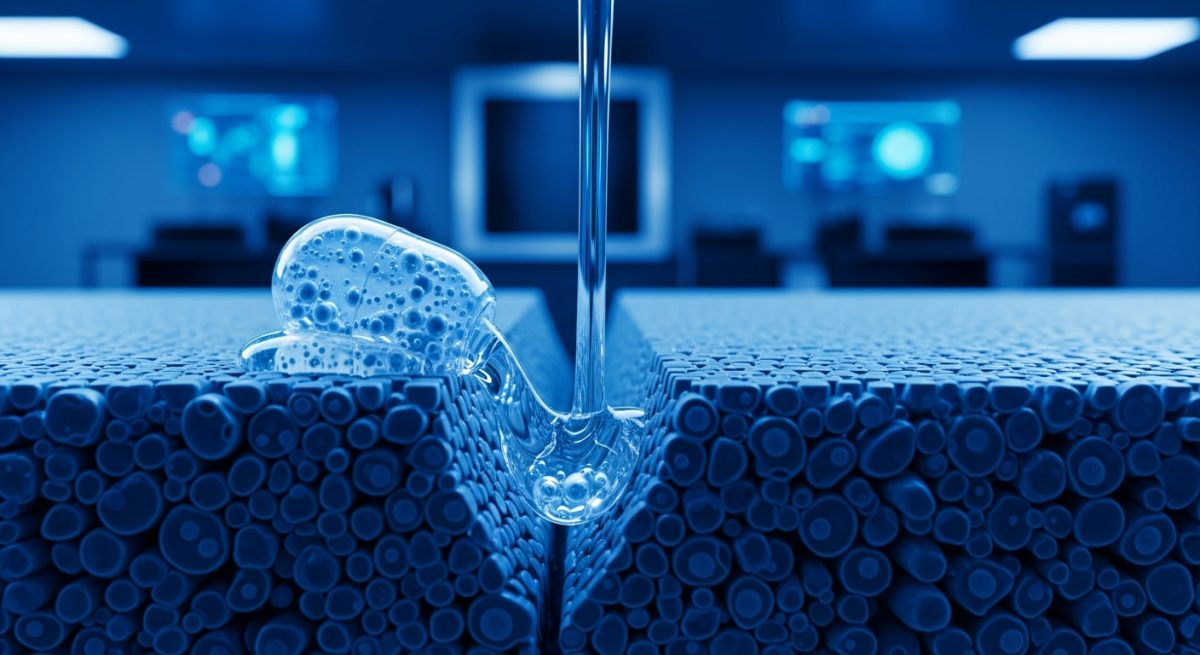
Microscopic structure of a self-healing material showing microcapsules releasing a healing agent into a crack on a scientific blue background

Self-Healing Materials: The Silent Revolution of 2026

Publié le 23 Avril 2026

Imagine a bridge whose microcracks seal themselves overnight, or an aircraft fuselage capable of closing a scratch before sensors even trigger an alert. This scenario, once reserved for science fiction, is becoming reality in 2026 thanks to self-healing materials. Coupled with the Internet of Things (IoT) and artificial intelligence, these next-generation materials promise to radically transform industry, construction, and even our daily lives.

What is a self-healing material?

A self-healing material, or self-healing material, is designed to detect and repair its own damage without human intervention. The principle is directly inspired by biology: just as our skin heals after a cut, these materials contain internal mechanisms that trigger automatically when a crack or degradation appears.

Several approaches coexist today. The most common relies on microcapsules integrated into the material matrix. When a crack propagates, it ruptures these microscopic capsules which release a healing agent — a resin, polymer, or chemical compound — capable of filling the breach and restoring the mechanical properties of the material. Other techniques use internal vascular networks, similar to an artificial blood system, or shape-memory polymers that return to their initial configuration under the effect of heat.

Self-healing concrete: a major advance for construction

The construction sector is one of the first to concretely benefit from this technology. Self-healing concrete incorporates bacteria of the genus Bacillus encapsulated in clay pellets. When water infiltrates a crack, these bacteria wake up and produce limestone that naturally plugs the breach. Tests conducted in the Netherlands and the United Kingdom have shown that this process can seal cracks up to 0.8 millimeters wide.

In 2026, several European pilot projects are already using this bio-inspired concrete for critical infrastructure: underground parking lots, railway tunnels, and bridges exposed to the weather. The stakes are considerable: maintenance of concrete infrastructure represents billions of euros each year in Europe. Reducing even 30% of these costs would have a major economic impact, not to mention the safety gains.

Polymers and smart coatings: self-repair in daily life

Beyond concrete, self-healing polymers are gaining ground in various sectors. The automotive industry is exploring paints and varnishes capable of making micro-scratches disappear under the effect of sunlight or a slight rise in temperature. Some smartphone manufacturers are working on cases and screen protectors integrating polyurethane-based polymers that slowly regenerate after a light impact.

In aeronautics, the stakes are even more critical. The composite materials used in wings and fuselages undergo considerable mechanical and thermal stresses. Researchers from several European universities are developing carbon fiber-reinforced composites integrating microfluidic vascular networks. In the event of micro-damage, a repair agent automatically flows to the damaged area, restoring structural integrity before the damage becomes critical.

IoT and AI: the duo that changes everything

What makes the self-healing materials of 2026 truly revolutionary is their coupling with the Internet of Things and artificial intelligence. Miniaturized sensors, integrated directly into the structure of the materials, monitor the health of the structure in real time: temperature, humidity, mechanical stresses, progression of microcracks.

This data is continuously transmitted to AI-driven analysis platforms, which can then predict failures before they occur. We thus move from corrective maintenance (repairing when it breaks) to predictive maintenance (anticipating and acting before the breakdown). In some cases, the material repairs itself; in others, the system alerts maintenance teams, precisely indicating the area to treat and the degree of urgency.

According to several reports published in early 2026, this combination of smart materials and IoT could reduce industrial maintenance costs by 25 to 40% in the next five years, while significantly increasing the lifespan of infrastructure.

Challenges to overcome

Despite spectacular advances, several obstacles remain. Production costs remain high: integrating microcapsules or vascular networks into a material increases its manufacturing price by 15 to 50% depending on the technologies. The durability of healing agents also raises questions: how many repair cycles can a material withstand before exhausting its reserves?

Large-scale industrialization poses another challenge. Moving from laboratory prototype to serial production requires considerable investment and adaptation of existing manufacturing chains. Finally, standards and certifications must evolve to integrate these new materials into construction and safety regulations, a process that is often long and complex.

A booming market

Despite these challenges, the global self-healing materials market is experiencing sustained growth. Estimated at around 1.5 billion dollars in 2025, it is expected to exceed 4 billion by 2030, driven by growing demand in construction, aerospace, electronics, and automotive. Europe, with its ambitious sustainability and circular economy policies, is positioning itself as a key player in this transformation.

By combining bio-inspiration, nanotechnologies, IoT, and artificial intelligence, self-healing materials embody a vision where our infrastructure becomes more resilient, more durable, and more intelligent. In 2026, this silent revolution is just beginning, but it could well redefine our relationship with the objects and constructions that surround us.

Tags
self-healing materials
smart materials
IoT predictive maintenance
self-healing concrete
intelligent polymers
Envoyer à un ami
Signaler cet article
A propos de l'auteur
Microscopic structure of a self-healing material showing microcapsules releasing a healing agent into a crack on a scientific blue background

Self-Healing Materials: The Silent Revolution of 2026

Publié le 23 Avril 2026

Imagine a bridge whose microcracks seal themselves overnight, or an aircraft fuselage capable of closing a scratch before sensors even trigger an alert. This scenario, once reserved for science fiction, is becoming reality in 2026 thanks to self-healing materials. Coupled with the Internet of Things (IoT) and artificial intelligence, these next-generation materials promise to radically transform industry, construction, and even our daily lives.

What is a self-healing material?

A self-healing material, or self-healing material, is designed to detect and repair its own damage without human intervention. The principle is directly inspired by biology: just as our skin heals after a cut, these materials contain internal mechanisms that trigger automatically when a crack or degradation appears.

Several approaches coexist today. The most common relies on microcapsules integrated into the material matrix. When a crack propagates, it ruptures these microscopic capsules which release a healing agent — a resin, polymer, or chemical compound — capable of filling the breach and restoring the mechanical properties of the material. Other techniques use internal vascular networks, similar to an artificial blood system, or shape-memory polymers that return to their initial configuration under the effect of heat.

Self-healing concrete: a major advance for construction

The construction sector is one of the first to concretely benefit from this technology. Self-healing concrete incorporates bacteria of the genus Bacillus encapsulated in clay pellets. When water infiltrates a crack, these bacteria wake up and produce limestone that naturally plugs the breach. Tests conducted in the Netherlands and the United Kingdom have shown that this process can seal cracks up to 0.8 millimeters wide.

In 2026, several European pilot projects are already using this bio-inspired concrete for critical infrastructure: underground parking lots, railway tunnels, and bridges exposed to the weather. The stakes are considerable: maintenance of concrete infrastructure represents billions of euros each year in Europe. Reducing even 30% of these costs would have a major economic impact, not to mention the safety gains.

Polymers and smart coatings: self-repair in daily life

Beyond concrete, self-healing polymers are gaining ground in various sectors. The automotive industry is exploring paints and varnishes capable of making micro-scratches disappear under the effect of sunlight or a slight rise in temperature. Some smartphone manufacturers are working on cases and screen protectors integrating polyurethane-based polymers that slowly regenerate after a light impact.

In aeronautics, the stakes are even more critical. The composite materials used in wings and fuselages undergo considerable mechanical and thermal stresses. Researchers from several European universities are developing carbon fiber-reinforced composites integrating microfluidic vascular networks. In the event of micro-damage, a repair agent automatically flows to the damaged area, restoring structural integrity before the damage becomes critical.

IoT and AI: the duo that changes everything

What makes the self-healing materials of 2026 truly revolutionary is their coupling with the Internet of Things and artificial intelligence. Miniaturized sensors, integrated directly into the structure of the materials, monitor the health of the structure in real time: temperature, humidity, mechanical stresses, progression of microcracks.

This data is continuously transmitted to AI-driven analysis platforms, which can then predict failures before they occur. We thus move from corrective maintenance (repairing when it breaks) to predictive maintenance (anticipating and acting before the breakdown). In some cases, the material repairs itself; in others, the system alerts maintenance teams, precisely indicating the area to treat and the degree of urgency.

According to several reports published in early 2026, this combination of smart materials and IoT could reduce industrial maintenance costs by 25 to 40% in the next five years, while significantly increasing the lifespan of infrastructure.

Challenges to overcome

Despite spectacular advances, several obstacles remain. Production costs remain high: integrating microcapsules or vascular networks into a material increases its manufacturing price by 15 to 50% depending on the technologies. The durability of healing agents also raises questions: how many repair cycles can a material withstand before exhausting its reserves?

Large-scale industrialization poses another challenge. Moving from laboratory prototype to serial production requires considerable investment and adaptation of existing manufacturing chains. Finally, standards and certifications must evolve to integrate these new materials into construction and safety regulations, a process that is often long and complex.

A booming market

Despite these challenges, the global self-healing materials market is experiencing sustained growth. Estimated at around 1.5 billion dollars in 2025, it is expected to exceed 4 billion by 2030, driven by growing demand in construction, aerospace, electronics, and automotive. Europe, with its ambitious sustainability and circular economy policies, is positioning itself as a key player in this transformation.

By combining bio-inspiration, nanotechnologies, IoT, and artificial intelligence, self-healing materials embody a vision where our infrastructure becomes more resilient, more durable, and more intelligent. In 2026, this silent revolution is just beginning, but it could well redefine our relationship with the objects and constructions that surround us.

Tags
self-healing materials
smart materials
IoT predictive maintenance
self-healing concrete
intelligent polymers
Envoyer à un ami
Signaler cet article
A propos de l'auteur
Microscopic structure of a self-healing material showing microcapsules releasing a healing agent into a crack on a scientific blue background

Self-Healing Materials: The Silent Revolution of 2026

Publié le 23 Avril 2026

Imagine a bridge whose microcracks seal themselves overnight, or an aircraft fuselage capable of closing a scratch before sensors even trigger an alert. This scenario, once reserved for science fiction, is becoming reality in 2026 thanks to self-healing materials. Coupled with the Internet of Things (IoT) and artificial intelligence, these next-generation materials promise to radically transform industry, construction, and even our daily lives.

What is a self-healing material?

A self-healing material, or self-healing material, is designed to detect and repair its own damage without human intervention. The principle is directly inspired by biology: just as our skin heals after a cut, these materials contain internal mechanisms that trigger automatically when a crack or degradation appears.

Several approaches coexist today. The most common relies on microcapsules integrated into the material matrix. When a crack propagates, it ruptures these microscopic capsules which release a healing agent — a resin, polymer, or chemical compound — capable of filling the breach and restoring the mechanical properties of the material. Other techniques use internal vascular networks, similar to an artificial blood system, or shape-memory polymers that return to their initial configuration under the effect of heat.

Self-healing concrete: a major advance for construction

The construction sector is one of the first to concretely benefit from this technology. Self-healing concrete incorporates bacteria of the genus Bacillus encapsulated in clay pellets. When water infiltrates a crack, these bacteria wake up and produce limestone that naturally plugs the breach. Tests conducted in the Netherlands and the United Kingdom have shown that this process can seal cracks up to 0.8 millimeters wide.

In 2026, several European pilot projects are already using this bio-inspired concrete for critical infrastructure: underground parking lots, railway tunnels, and bridges exposed to the weather. The stakes are considerable: maintenance of concrete infrastructure represents billions of euros each year in Europe. Reducing even 30% of these costs would have a major economic impact, not to mention the safety gains.

Polymers and smart coatings: self-repair in daily life

Beyond concrete, self-healing polymers are gaining ground in various sectors. The automotive industry is exploring paints and varnishes capable of making micro-scratches disappear under the effect of sunlight or a slight rise in temperature. Some smartphone manufacturers are working on cases and screen protectors integrating polyurethane-based polymers that slowly regenerate after a light impact.

In aeronautics, the stakes are even more critical. The composite materials used in wings and fuselages undergo considerable mechanical and thermal stresses. Researchers from several European universities are developing carbon fiber-reinforced composites integrating microfluidic vascular networks. In the event of micro-damage, a repair agent automatically flows to the damaged area, restoring structural integrity before the damage becomes critical.

IoT and AI: the duo that changes everything

What makes the self-healing materials of 2026 truly revolutionary is their coupling with the Internet of Things and artificial intelligence. Miniaturized sensors, integrated directly into the structure of the materials, monitor the health of the structure in real time: temperature, humidity, mechanical stresses, progression of microcracks.

This data is continuously transmitted to AI-driven analysis platforms, which can then predict failures before they occur. We thus move from corrective maintenance (repairing when it breaks) to predictive maintenance (anticipating and acting before the breakdown). In some cases, the material repairs itself; in others, the system alerts maintenance teams, precisely indicating the area to treat and the degree of urgency.

According to several reports published in early 2026, this combination of smart materials and IoT could reduce industrial maintenance costs by 25 to 40% in the next five years, while significantly increasing the lifespan of infrastructure.

Challenges to overcome

Despite spectacular advances, several obstacles remain. Production costs remain high: integrating microcapsules or vascular networks into a material increases its manufacturing price by 15 to 50% depending on the technologies. The durability of healing agents also raises questions: how many repair cycles can a material withstand before exhausting its reserves?

Large-scale industrialization poses another challenge. Moving from laboratory prototype to serial production requires considerable investment and adaptation of existing manufacturing chains. Finally, standards and certifications must evolve to integrate these new materials into construction and safety regulations, a process that is often long and complex.

A booming market

Despite these challenges, the global self-healing materials market is experiencing sustained growth. Estimated at around 1.5 billion dollars in 2025, it is expected to exceed 4 billion by 2030, driven by growing demand in construction, aerospace, electronics, and automotive. Europe, with its ambitious sustainability and circular economy policies, is positioning itself as a key player in this transformation.

By combining bio-inspiration, nanotechnologies, IoT, and artificial intelligence, self-healing materials embody a vision where our infrastructure becomes more resilient, more durable, and more intelligent. In 2026, this silent revolution is just beginning, but it could well redefine our relationship with the objects and constructions that surround us.

Tags
self-healing materials
smart materials
IoT predictive maintenance
self-healing concrete
intelligent polymers
Envoyer à un ami
Signaler cet article
A propos de l'auteur