SoftBank invests €75 billion in France for AI
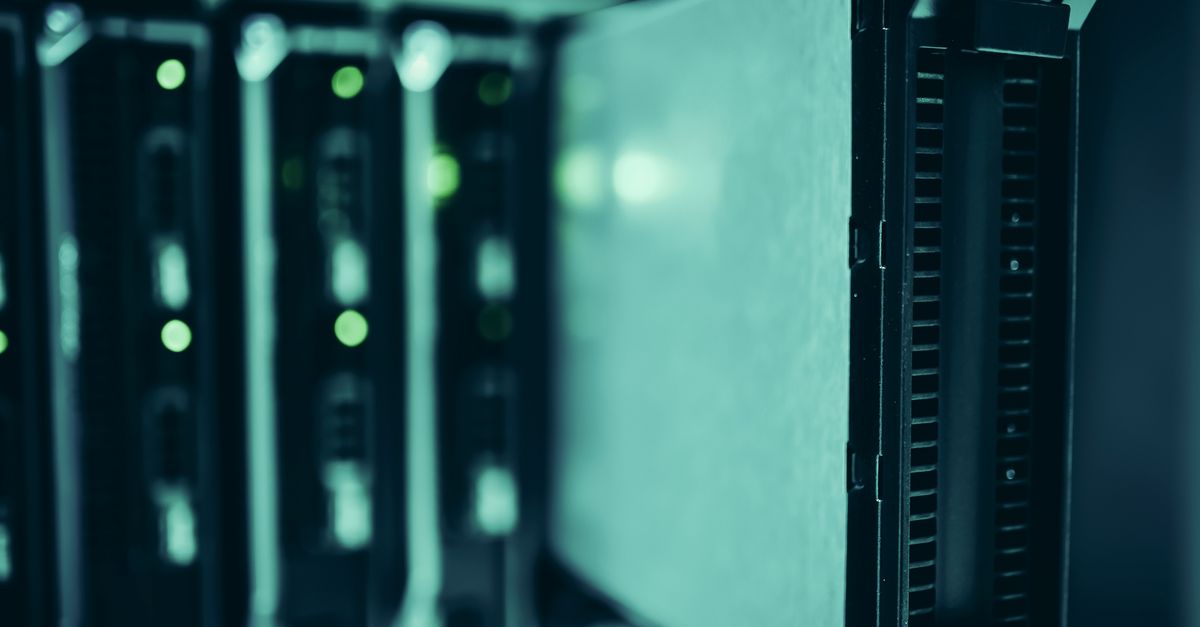
This is an announcement that marks a turning point for France and for Europe as a whole. At the end of May 2026, the Japanese group SoftBank officially confirmed a colossal investment: up to €75 billion to build a network of data centers dedicated to artificial intelligence on French soil. It is a pharaonic project that makes France the leading European destination for global AI infrastructure.
A historic investment, SoftBank's biggest bet in Europe
Announced during the Choose France summit organized by President Emmanuel Macron, this commitment represents the largest operation ever carried out by SoftBank Group in Europe. The Japanese conglomerate, founded and led by Masayoshi Son, plans to deploy a total capacity of 5 gigawatts (GW) of computing power on French territory.
The investment will unfold in two phases:
- Phase 1: €45 billion for 3.1 GW of capacity in Hauts-de-France, to be delivered by 2031;
- Phase 2: an additional envelope bringing the total to €75 billion to reach 5 GW.
To give a sense of scale: 1 GW of data center power represents roughly the annual electricity consumption of several hundred thousand households. This project is therefore taking shape on an unprecedented industrial scale.
Why France? The answer comes down to two words: nuclear energy
SoftBank's choice of France is no accident. At a time when the AI race is running into a shortage of reliable, low-carbon energy around the world, France has a major asset: its nuclear fleet. With around 70% of its electricity coming from nuclear power, the country offers a low-carbon, stable and abundant supply — exactly what AI data centers need to operate 24/7.
SoftBank explicitly cited this dimension in its official communication. Masayoshi Son and his teams assessed several European countries before choosing France, attracted by the export capacity of the French power grid and by its resilience to fluctuations in energy prices.
“France offers one of the rare environments in Europe capable of powering AI at large scale with reliable, low-carbon electricity.” — SoftBank Group, official statement, May 2026
Hauts-de-France: an emerging industrial AI hub
The first selected sites are all located in the Hauts-de-France region, historically known for its industrial fabric and its proximity to major European cities:
- Dunkirk (Loon-Plage): the largest site, benefiting from the Port of Dunkirk for equipment logistics and a direct connection to the power grid;
- Bosquel: a second computing hub in Oise;
- Bouchain: developed in partnership with EDF, close to existing energy infrastructure.
These three sites will form a unique technology cluster in Europe, able to attract AI startups, researchers and companies seeking access to massive computing power.
Leading French partners
SoftBank is not acting alone. The Japanese group has chosen to rely on two French industrial giants to bring the project to completion:
- EDF for the power supply to the Bouchain site and energy management across the project;
- Schneider Electric for the development of an industrial production cluster at the Port of Dunkirk, including two factories: one operated by SoftBank to manufacture server cabinets, the other by Schneider Electric to integrate data center power modules.
This partnership between Japanese capital and French industrial know-how illustrates the strategic dimension of the operation: it is not only about hosting servers, but about building a complete industrial ecosystem on European soil.
Thousands of jobs at stake
Beyond the investment figures, SoftBank emphasizes the social and economic impact of the project. The construction and operation of these data centers should generate thousands of highly skilled jobs across varied sectors: engineering, energy systems, robotics, operations and maintenance, and advanced manufacturing.
For Hauts-de-France, a region that has gone through painful industrial reconversions, this prospect represents a major opportunity to revive a local economic fabric around future-oriented activities.
A strong signal for Europe's AI ambitions
SoftBank's announcement comes as Europe is trying to catch up rapidly with the United States and China in the artificial intelligence race. With this investment, France positions itself as the European hub for AI infrastructure, a role Paris has claimed since the launch of its national AI strategy in 2018.
For Emmanuel Macron, who had turned the Choose France summit into a showcase for the country's attractiveness, SoftBank's commitment represents a major symbolic and economic victory. It confirms that France, thanks to its energy, talent and institutional stability, can attract the world's most ambitious technology investments.
The challenge now is to meet the deadlines: the first GW of data center capacity should be operational before 2028. France has a date with the history of AI.
SoftBank invests €75 billion in France for AI
This is an announcement that marks a turning point for France and for Europe as a whole. At the end of May 2026, the Japanese group SoftBank officially confirmed a colossal investment: up to €75 billion to build a network of data centers dedicated to artificial intelligence on French soil. It is a pharaonic project that makes France the leading European destination for global AI infrastructure.
A historic investment, SoftBank's biggest bet in Europe
Announced during the Choose France summit organized by President Emmanuel Macron, this commitment represents the largest operation ever carried out by SoftBank Group in Europe. The Japanese conglomerate, founded and led by Masayoshi Son, plans to deploy a total capacity of 5 gigawatts (GW) of computing power on French territory.
The investment will unfold in two phases:
- Phase 1: €45 billion for 3.1 GW of capacity in Hauts-de-France, to be delivered by 2031;
- Phase 2: an additional envelope bringing the total to €75 billion to reach 5 GW.
To give a sense of scale: 1 GW of data center power represents roughly the annual electricity consumption of several hundred thousand households. This project is therefore taking shape on an unprecedented industrial scale.
Why France? The answer comes down to two words: nuclear energy
SoftBank's choice of France is no accident. At a time when the AI race is running into a shortage of reliable, low-carbon energy around the world, France has a major asset: its nuclear fleet. With around 70% of its electricity coming from nuclear power, the country offers a low-carbon, stable and abundant supply — exactly what AI data centers need to operate 24/7.
SoftBank explicitly cited this dimension in its official communication. Masayoshi Son and his teams assessed several European countries before choosing France, attracted by the export capacity of the French power grid and by its resilience to fluctuations in energy prices.
“France offers one of the rare environments in Europe capable of powering AI at large scale with reliable, low-carbon electricity.” — SoftBank Group, official statement, May 2026
Hauts-de-France: an emerging industrial AI hub
The first selected sites are all located in the Hauts-de-France region, historically known for its industrial fabric and its proximity to major European cities:
- Dunkirk (Loon-Plage): the largest site, benefiting from the Port of Dunkirk for equipment logistics and a direct connection to the power grid;
- Bosquel: a second computing hub in Oise;
- Bouchain: developed in partnership with EDF, close to existing energy infrastructure.
These three sites will form a unique technology cluster in Europe, able to attract AI startups, researchers and companies seeking access to massive computing power.
Leading French partners
SoftBank is not acting alone. The Japanese group has chosen to rely on two French industrial giants to bring the project to completion:
- EDF for the power supply to the Bouchain site and energy management across the project;
- Schneider Electric for the development of an industrial production cluster at the Port of Dunkirk, including two factories: one operated by SoftBank to manufacture server cabinets, the other by Schneider Electric to integrate data center power modules.
This partnership between Japanese capital and French industrial know-how illustrates the strategic dimension of the operation: it is not only about hosting servers, but about building a complete industrial ecosystem on European soil.
Thousands of jobs at stake
Beyond the investment figures, SoftBank emphasizes the social and economic impact of the project. The construction and operation of these data centers should generate thousands of highly skilled jobs across varied sectors: engineering, energy systems, robotics, operations and maintenance, and advanced manufacturing.
For Hauts-de-France, a region that has gone through painful industrial reconversions, this prospect represents a major opportunity to revive a local economic fabric around future-oriented activities.
A strong signal for Europe's AI ambitions
SoftBank's announcement comes as Europe is trying to catch up rapidly with the United States and China in the artificial intelligence race. With this investment, France positions itself as the European hub for AI infrastructure, a role Paris has claimed since the launch of its national AI strategy in 2018.
For Emmanuel Macron, who had turned the Choose France summit into a showcase for the country's attractiveness, SoftBank's commitment represents a major symbolic and economic victory. It confirms that France, thanks to its energy, talent and institutional stability, can attract the world's most ambitious technology investments.
The challenge now is to meet the deadlines: the first GW of data center capacity should be operational before 2028. France has a date with the history of AI.
SoftBank invests €75 billion in France for AI
This is an announcement that marks a turning point for France and for Europe as a whole. At the end of May 2026, the Japanese group SoftBank officially confirmed a colossal investment: up to €75 billion to build a network of data centers dedicated to artificial intelligence on French soil. It is a pharaonic project that makes France the leading European destination for global AI infrastructure.
A historic investment, SoftBank's biggest bet in Europe
Announced during the Choose France summit organized by President Emmanuel Macron, this commitment represents the largest operation ever carried out by SoftBank Group in Europe. The Japanese conglomerate, founded and led by Masayoshi Son, plans to deploy a total capacity of 5 gigawatts (GW) of computing power on French territory.
The investment will unfold in two phases:
- Phase 1: €45 billion for 3.1 GW of capacity in Hauts-de-France, to be delivered by 2031;
- Phase 2: an additional envelope bringing the total to €75 billion to reach 5 GW.
To give a sense of scale: 1 GW of data center power represents roughly the annual electricity consumption of several hundred thousand households. This project is therefore taking shape on an unprecedented industrial scale.
Why France? The answer comes down to two words: nuclear energy
SoftBank's choice of France is no accident. At a time when the AI race is running into a shortage of reliable, low-carbon energy around the world, France has a major asset: its nuclear fleet. With around 70% of its electricity coming from nuclear power, the country offers a low-carbon, stable and abundant supply — exactly what AI data centers need to operate 24/7.
SoftBank explicitly cited this dimension in its official communication. Masayoshi Son and his teams assessed several European countries before choosing France, attracted by the export capacity of the French power grid and by its resilience to fluctuations in energy prices.
“France offers one of the rare environments in Europe capable of powering AI at large scale with reliable, low-carbon electricity.” — SoftBank Group, official statement, May 2026
Hauts-de-France: an emerging industrial AI hub
The first selected sites are all located in the Hauts-de-France region, historically known for its industrial fabric and its proximity to major European cities:
- Dunkirk (Loon-Plage): the largest site, benefiting from the Port of Dunkirk for equipment logistics and a direct connection to the power grid;
- Bosquel: a second computing hub in Oise;
- Bouchain: developed in partnership with EDF, close to existing energy infrastructure.
These three sites will form a unique technology cluster in Europe, able to attract AI startups, researchers and companies seeking access to massive computing power.
Leading French partners
SoftBank is not acting alone. The Japanese group has chosen to rely on two French industrial giants to bring the project to completion:
- EDF for the power supply to the Bouchain site and energy management across the project;
- Schneider Electric for the development of an industrial production cluster at the Port of Dunkirk, including two factories: one operated by SoftBank to manufacture server cabinets, the other by Schneider Electric to integrate data center power modules.
This partnership between Japanese capital and French industrial know-how illustrates the strategic dimension of the operation: it is not only about hosting servers, but about building a complete industrial ecosystem on European soil.
Thousands of jobs at stake
Beyond the investment figures, SoftBank emphasizes the social and economic impact of the project. The construction and operation of these data centers should generate thousands of highly skilled jobs across varied sectors: engineering, energy systems, robotics, operations and maintenance, and advanced manufacturing.
For Hauts-de-France, a region that has gone through painful industrial reconversions, this prospect represents a major opportunity to revive a local economic fabric around future-oriented activities.
A strong signal for Europe's AI ambitions
SoftBank's announcement comes as Europe is trying to catch up rapidly with the United States and China in the artificial intelligence race. With this investment, France positions itself as the European hub for AI infrastructure, a role Paris has claimed since the launch of its national AI strategy in 2018.
For Emmanuel Macron, who had turned the Choose France summit into a showcase for the country's attractiveness, SoftBank's commitment represents a major symbolic and economic victory. It confirms that France, thanks to its energy, talent and institutional stability, can attract the world's most ambitious technology investments.
The challenge now is to meet the deadlines: the first GW of data center capacity should be operational before 2028. France has a date with the history of AI.
English
French
Spanish
Chinese
Japanese
Korean
Hindi
German
Norwegian