

 English
  French
  Spanish
  Chinese
  Japanese
  Korean
  Hindi
Hindi  German
  Norwegian



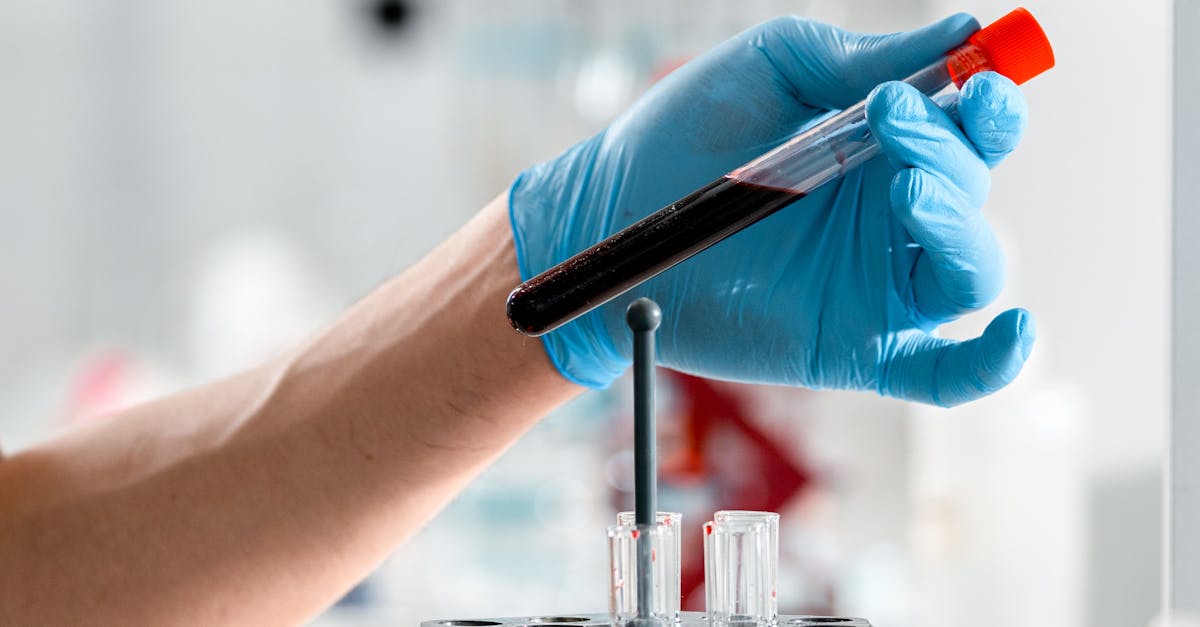
What if a simple blood draw could detect more than 50 types of cancer, often before the first symptoms even appear? That is the promise of the Galleri test, developed by the American company GRAIL. A technology that could radically transform the way we approach cancer screening — provided the clinical evidence follows.
How does the Galleri test work?
The Galleri test is based on the analysis of circulating DNA (cfDNA) present in the blood. When cancer cells develop in the body, they release fragments of DNA into the bloodstream — known as circulating tumor DNA (ctDNA). These fragments carry very specific biological signatures, in particular characteristic methylation patterns.
Methylation is a natural mechanism that regulates gene expression: certain genes are "switched off" by the addition of chemical groups. In cancer cells, these methylation patterns are profoundly altered and constitute a true molecular fingerprint. The Galleri test analyzes hundreds of thousands of these methylation sites using next-generation sequencing (NGS) combined with artificial intelligence.
The result makes it possible not only to detect whether a cancer signal is present, but also to identify the probable organ of origin of the cancer with 93.4% accuracy — enabling rapid orientation of further investigations.
A promising technology, mixed clinical results
The results of recently published clinical trials present a contrasted picture — and this is where reality becomes more nuanced than a simple wave of a medical magic wand.
The PATHFINDER 2 study, announced in October 2025, showed encouraging results: when the Galleri test was added to screenings recommended by US health authorities, it detected 7 times more cancers. The positive predictive value rose from 43% to 62%, meaning a positive result is increasingly reliable.
However, a massive trial conducted in the United Kingdom with the NHS (NHS-Galleri Trial), involving 142,000 participants, delivered disappointing results on its primary objective: the test did not significantly reduce diagnoses at advanced stages, where survival stakes are most critical. A finding that dampened some enthusiasm and served as a reminder that commercialization does not equal clinical validation.
Furthermore, the sensitivity of the test proved lower in real-world conditions (28.9%) compared to controlled conditions (51.5%), a significant gap that raises questions about its usefulness for the general population.
What types of cancers can it detect?
Galleri is capable of detecting signals associated with more than 50 types of cancer, many of which currently benefit from no systematic screening: pancreatic cancer, stomach cancer, ovarian cancer, liver cancer, biliary tract cancer, kidney cancer, esophageal cancer, among others.
Rare and difficult-to-diagnose-early cancers are precisely those for which the test performs best. For example, competing tests such as CancerSEEK achieve a sensitivity of 98% for ovarian cancer and 95% for hepatocellular carcinoma — impressive figures for diseases that are often detected too late.
In contrast, the most common cancers such as breast or prostate cancer, which already have established screening protocols, are not necessarily better detected at early stages by these new tests.
Key limitations to know
Like any medical technology, multi-cancer detection tests have significant limitations that should not be underestimated:
- False positives: a positive result does not necessarily mean that cancer is present. These erroneous results can generate anxiety, invasive biopsies, and costly imaging examinations — with their own risks.
- No proof of mortality reduction: to date, no randomized study has demonstrated that these tests actually improve the overall survival of patients.
- Not recommended for the general population: neither the US FDA, nor the French Haute Autorité de Santé (HAS), nor the British NHS currently recommends these tests for systematic screening.
And in France, when will it be available?
For now, the Galleri test is only commercially available in the United States, under the status of a laboratory-developed test (CLIA), without formal FDA approval. In Europe, only clinical trials allow access.
In France, the question of its integration into screening protocols remains open. It will depend on the results of ongoing randomized trials, cost-effectiveness analyses, and decisions by health authorities. The path toward reimbursement by Social Security is still long.
Alternatives are nonetheless emerging: the company Exact Sciences launched CancerGuard in 2026, and other players — including European laboratories — are working on their own versions of these multi-cancer tests.
A paradigm shift nonetheless
Despite its current limitations, the technology behind the Galleri test undeniably represents a paradigm shift in preventive medicine. The idea that a single blood draw could replace or complement dozens of different screening procedures — colonoscopy, mammography, CT scan, MRI — is intellectually compelling and potentially revolutionary for patients.
The real question is not "does it work?" but rather "for whom, in what context, and at what cost?" The coming years of clinical studies will provide answers. In the meantime, if you wish to access it outside a clinical trial, the test is available in the United States for approximately $950 — without reimbursement.
"Multi-cancer screening is an idea whose time has come, but the evidence of its clinical benefit is not yet there." — Dr. Otis Brawley, Columbia University
One thing is certain: the race to detect cancer early through blood analysis is only just beginning, and it could well redefine preventive medicine as we know it.